By Matt Nash, Founder, Just Seal It. 20+ years on-site. 15,000+ surfaces sealed. Featured on The Block. Published 4 May 2026.
Walk into a hardware store and ask for a concrete sealer. You'll be handed an acrylic topcoat. Maybe a polyurethane. In some states, an epoxy.
For exterior paving, pool surrounds, facades, and interior polished concrete, every one of them is the wrong product. They sit on the surface as a film. That film lasts somewhere between 12 and 24 months before UV and thermal movement start working against it. Concrete expands in summer and contracts in winter. A coating stretched over a moving slab will crack. Once it starts to peel, cleaning it up is a bigger job than the original application was.
There is a place for topical coatings. Garage floors, factory floors, and industrial surfaces where chemical resistance or a non-slip finish is the priority: epoxy and polyurethane coatings make sense in those applications. But for outdoor paving, pool surrounds, driveways, facades, and interior polished concrete, the right product penetrates the surface and works from inside the slab. No coating. No film. Nothing to peel or discolour.
Short version: Use a penetrating sealer, not a topical coating. Clean with Stone Wash diluted 1:100, rinse, and let the surface dry completely. New concrete needs 90 days before any sealer goes on. Apply two coats wet-on-wet with a low-pressure sprayer. Light foot traffic after 1 to 2 hours. Full cure at 30 days. The CCAA provides independent reference on this.
Why most concrete sealers sold in hardware stores are the wrong product
The problem with topical sealers on exterior concrete isn't that they fail immediately. They look fine at first. That's why they're still on shelves.
The problem is year two. UV degrades the film. Moisture finds its way underneath. The concrete moves through temperature cycles and the coating cracks along with it. From there it's patchy, peeling, and impossible to fix without grinding or stripping the whole surface back to bare concrete first.
Epoxy and polyurethane coatings perform well in controlled indoor environments: garages, warehouses, factory floors. For those applications, a topical coating is the correct choice. On outdoor concrete exposed to sun, rain, and temperature cycling, it's not.
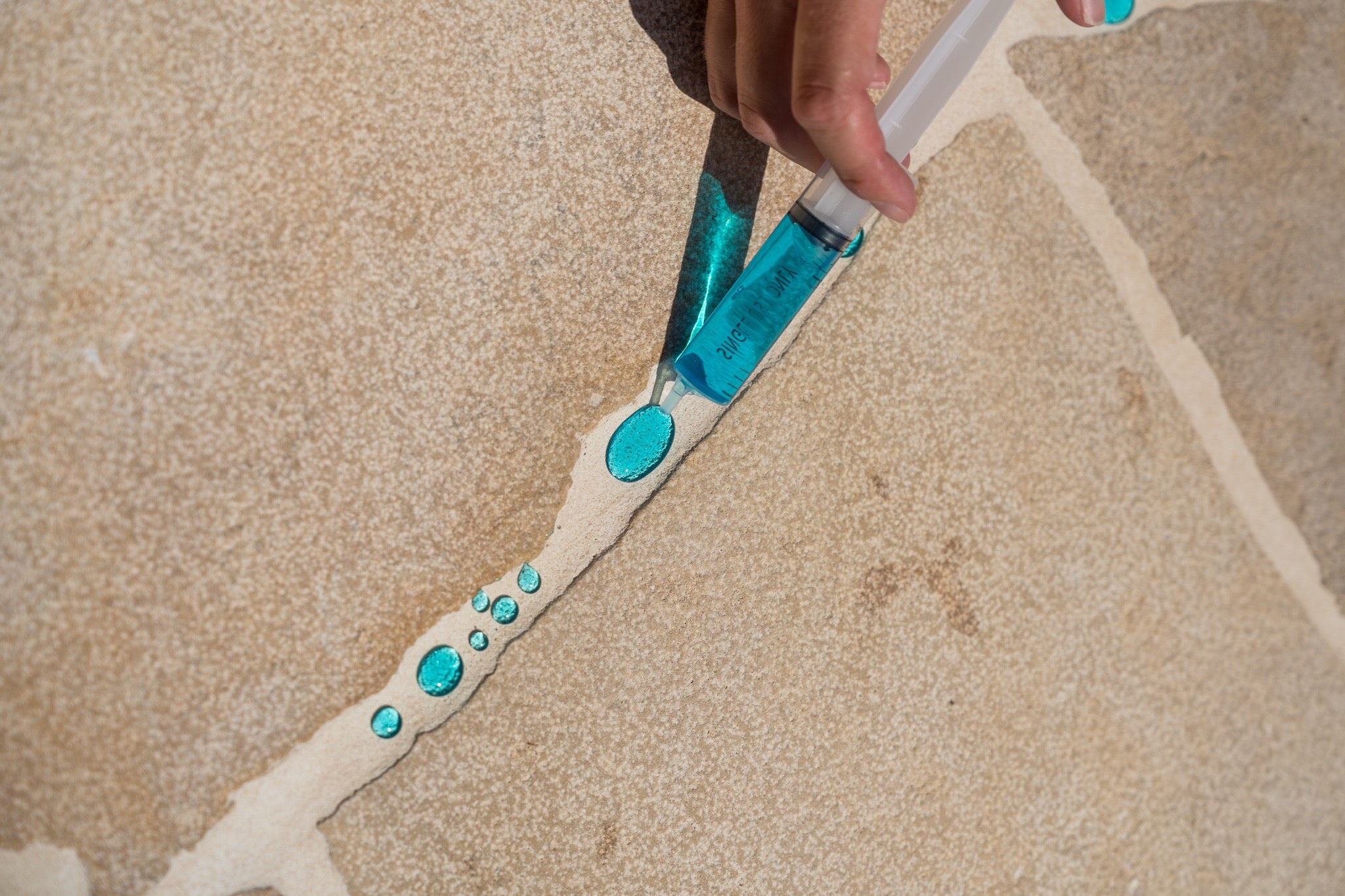
The products that actually work on outdoor concrete are penetrating sealers: formulas that chemically bond within the mineral structure of the concrete from the inside. Unlike topical coatings, there is nothing sitting on the surface to peel, flake, or delaminate. The concrete looks exactly the same before and after. Protection operates from inside the pore structure, which is the point.
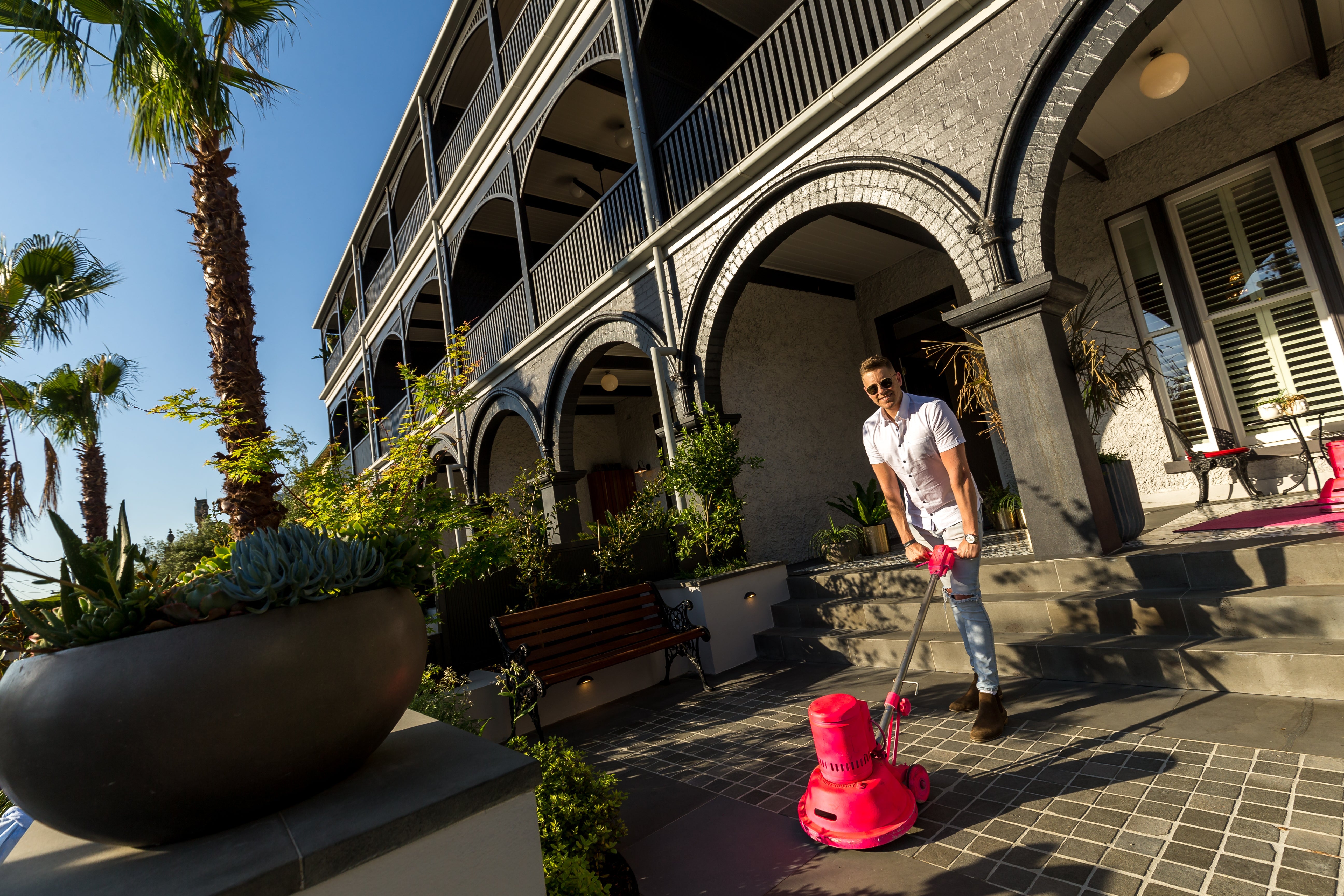
After 20 years on-site watching hardware-shelf sealers fail on good concrete, the brief for Just Seal It was straightforward: a sealer that performs on the surface, not just on the label. The same products used on prestige commercial, residential, and healthcare projects. Not the same category as what's sitting next to the paintbrushes at a hardware store.
If you can see the sealer on the surface, it's the wrong product.
New concrete: the 90-day rule and why it matters

This is the most common mistake on concrete specifically. It doesn't apply to natural stone, tile, or most other surfaces. It is a concrete problem.
When concrete is poured, the cement chemistry takes weeks to complete. During that process, mineral salts are still migrating through the slab and CO2 is still off-gassing. Penetrating sealers are breathable, so they won't lock that process in. But the sealer bonds with whatever the substrate is doing at the moment of application. Seal into concrete that's still chemically active and the bond forms against a substrate that continues to shift and settle.
The result is reduced sealer performance: uneven penetration, weaker adhesion, and a surface that needs maintenance sooner than it should. Any efflorescence that appears before sealing needs to be treated and cleaned off the surface first. It's not a reason to panic, but it is a reason to wait.
Product data sheets often list 28 days as the minimum waiting period. That is the minimum. In practice, 90 days is the reliable figure. The slab has fully cured. The off-gassing is done. The sealer bonds correctly.
Which penetrating concrete sealer do you need
Two products. Most concrete surfaces fall clearly into one or the other.
See Penetrating Stone Sealer for independent laboratory test results on sealed versus unsealed surfaces.
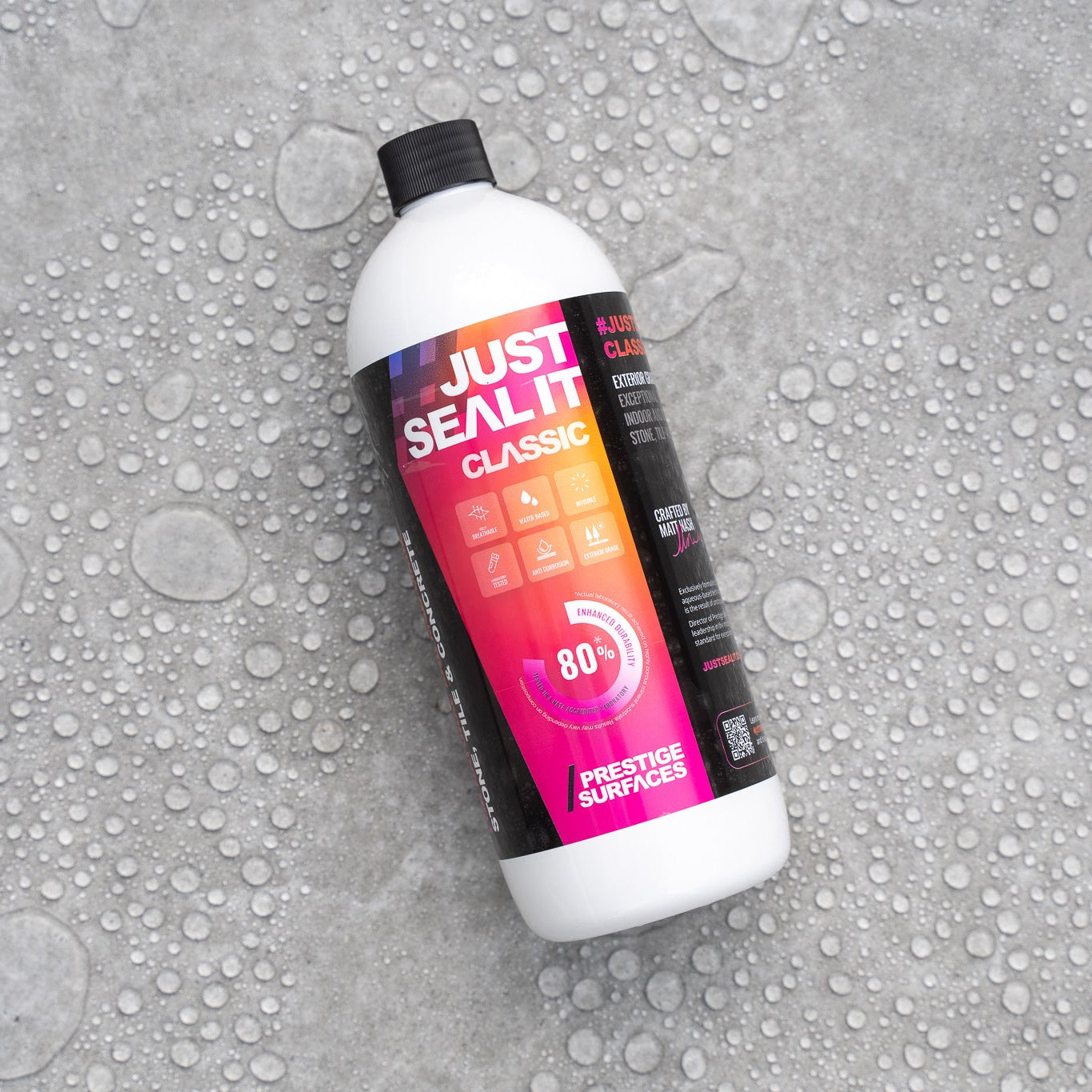
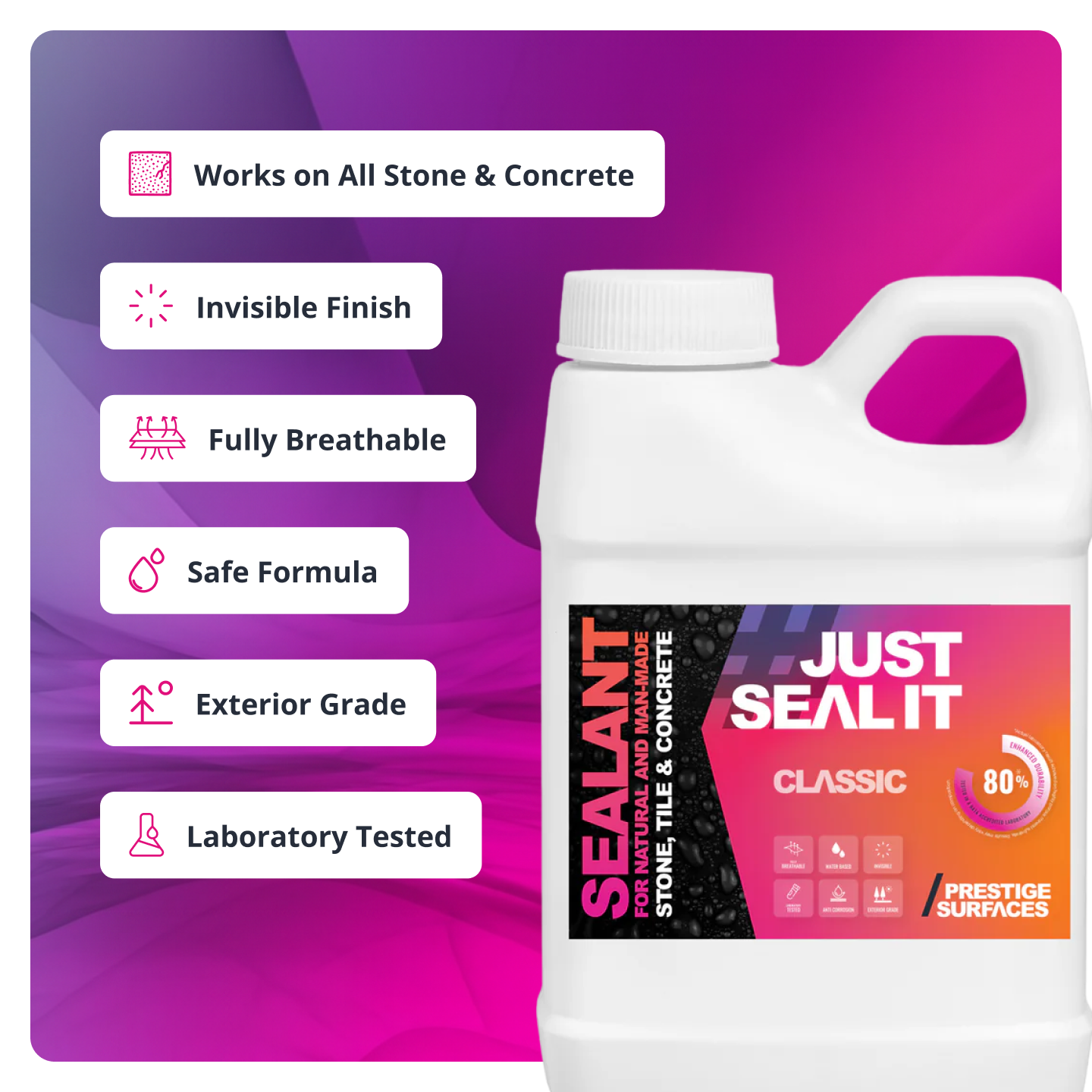
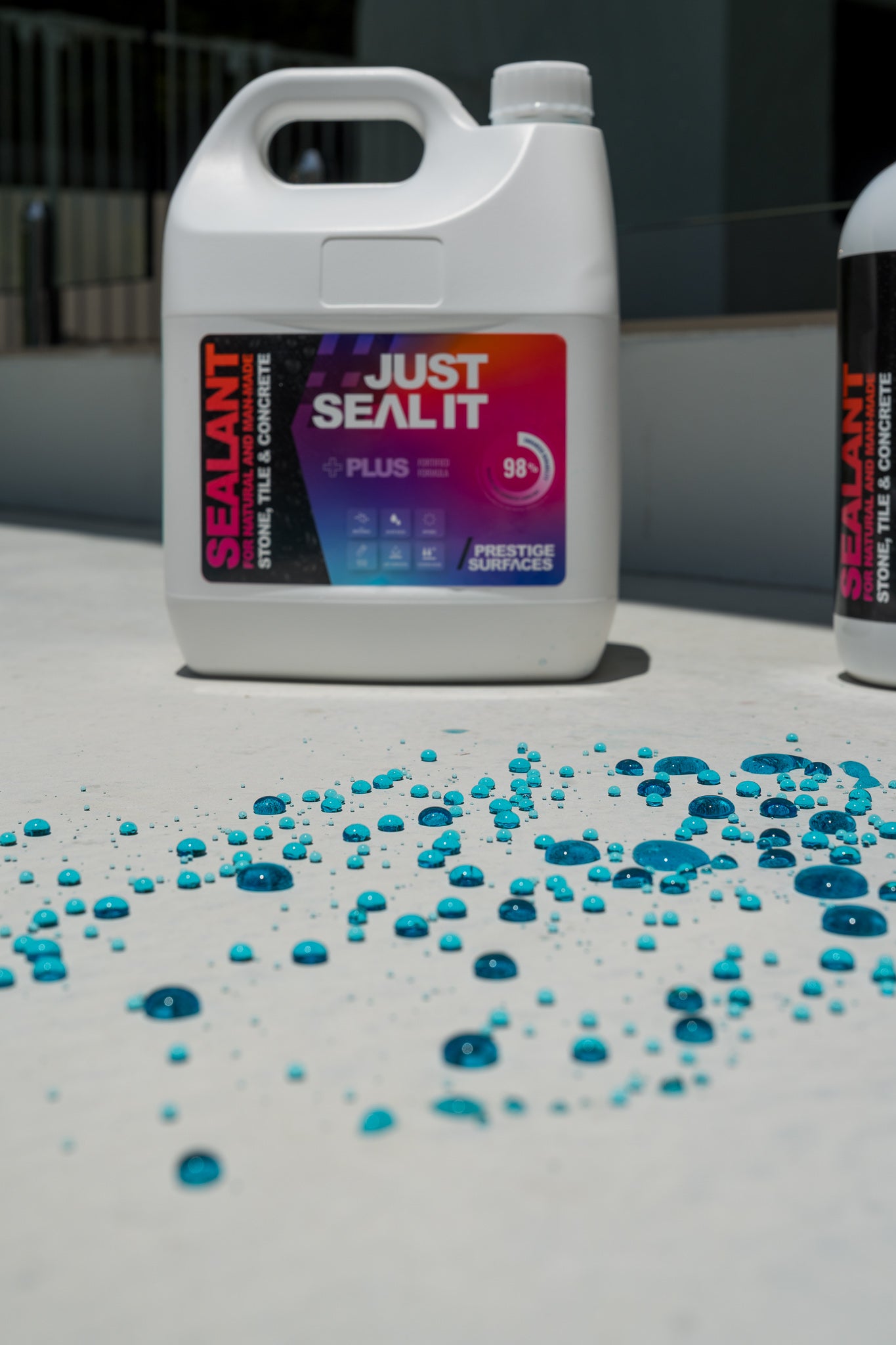
Classic Sealer covers standard residential and commercial concrete: driveways, paths, patios, steps, exposed aggregate, honed slabs, broom-finished surfaces. Water-based, PFAS-free, breathable, invisible once applied. Independently tested at a NATA-accredited laboratory. One litre covers 10m2. The NATA provides independent reference on this.
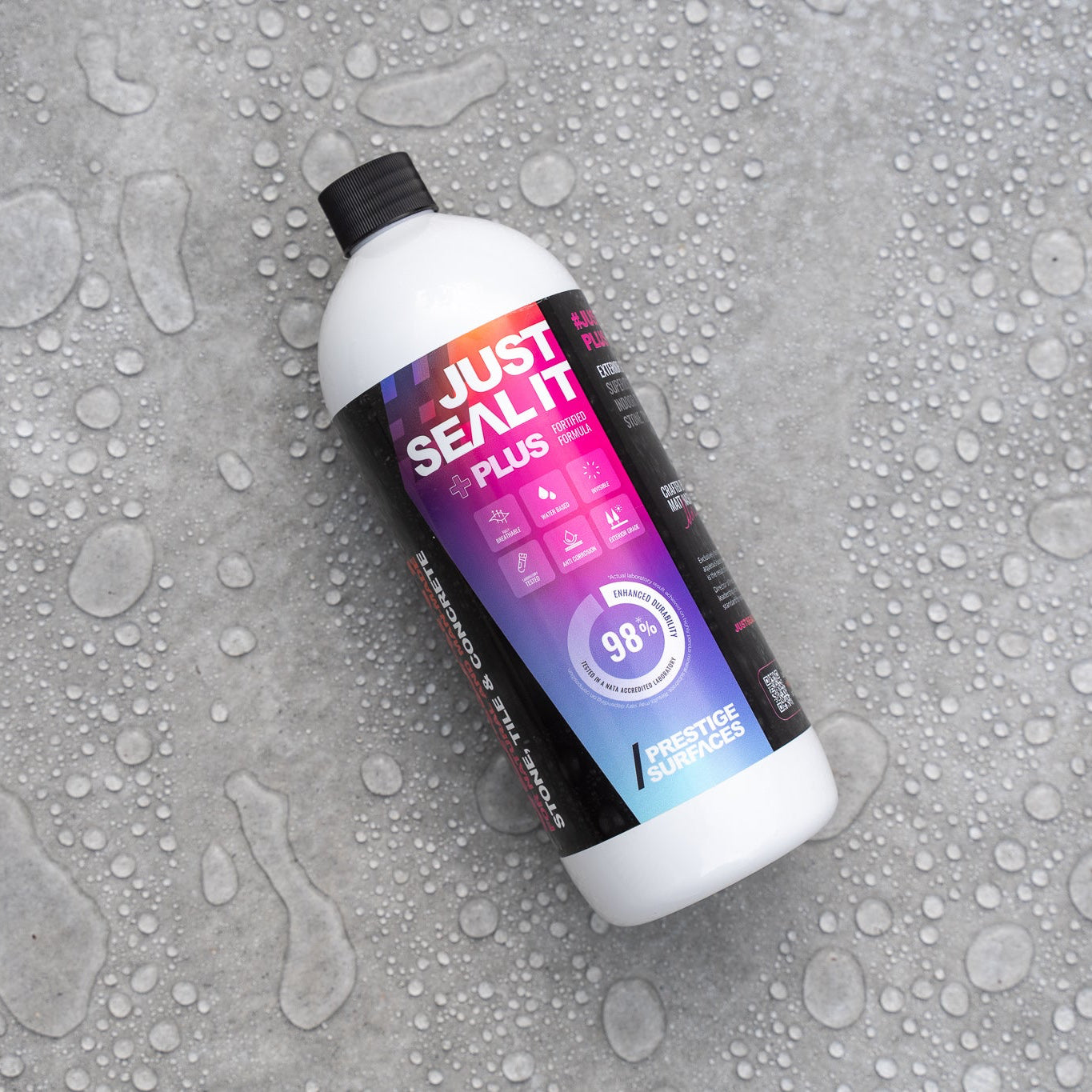
Plus Sealer is for harder conditions: pool surrounds exposed to chlorine and pool chemicals, coastal driveways and paths where salt is a factor, any concrete in high-exposure environments. Same invisible, breathable, PFAS-free base as Classic, engineered further for salt and chemical resistance. Independently tested at a NATA-accredited laboratory for salt and chemical resistance.
A note on surface type: exposed aggregate concrete is more porous than smooth or honed concrete and absorbs the first coat quickly. Don't interpret that as a reason to apply more product. Apply the second coat immediately in the opposite direction while the first is still being absorbed. Thin and even is still the rule. The sealants specification sheet covers compatible surfaces and performance data in full.
How to prepare concrete before sealing
Preparation determines the result. Everything after it is just following instructions.
Clean the surface with Stone Wash diluted 1:100 with water. One litre of concentrate covers up to 1,000m2 at that dilution. It removes grime, salt deposits, and mineral build-up without damaging the concrete. Scrub with a stiff broom or pressure washer, then rinse until the water runs clear. Low-to-medium pressure washing is fine on most concrete.
If there is visible algae or lichen, treat with sodium hypochlorite first. Rinse thoroughly, then apply diluted Stone Wash to neutralise the surface before sealing. Don't skip the neutralising step: active hypochlorite residue can interfere with the sealer bonding correctly.
Any existing efflorescence on the surface needs to be treated and removed before sealing. Address it before the wash and seal.
Once clean, the surface needs to be bone dry. Not surface-dry. Dry through the full depth of the slab. On a warm day, that is 24 hours after washing. In cooler or humid conditions, allow 48 hours. Check the surface, not the clock.
Application temperature: 10 to 30 degrees Celsius. Below that, the chemistry cures incorrectly. Above it, the product flashes off before it penetrates. Seal on a dry day. If rain is coming, wait.
How to apply concrete sealer
Apply undiluted with a low-pressure sprayer or microfibre applicator. Work left to right across the surface in even, consistent passes. Immediately apply the second coat in the opposite direction while the first is still wet.
That is the wet-on-wet method. Both coats absorb and bond together rather than forming two separate films on the surface.
Do not use a roller on textured concrete. A roller rides the high points of a broom-finished or exposed aggregate surface and misses the valleys. Product distribution ends up uneven: pooling in some areas, skipping others. Sprayer or microfibre applicator only.
Thin and even is the target. One litre per 10m2. Penetrating sealers work by absorption. Excess product that the concrete surface can't absorb stays on top and dries as a hazy residue. More product is not more protection.
After application: light foot traffic 1 to 2 hours after dry. Furniture and vehicles at 24 hours. Full cure at 30 days, after which the surface is safe for chemical exposure and pressure washing.
For a full step-by-step walkthrough with photos, see the Just Seal It application guide.
How long does concrete sealer last

Concrete expands and contracts with temperature. A coating sitting on the surface eventually cracks and separates, sometimes within a year or two. Classic Sealer and Plus Sealer work differently. The chemistry bonds within the concrete's mineral matrix, so there's nothing on the surface to crack or peel when the slab moves. What reduces over time with UV and traffic is the peak hydrophobic performance. A maintenance coat every 3 to 5 years brings that back. High-traffic surfaces and pool or coastal environments benefit from one closer to 3 years.
One number to ignore when making that assessment: whether the surface visibly beads water. Beading reduces naturally over time as foot traffic and weathering affect the surface texture. That is normal. The sealer continues protecting from inside the concrete regardless of whether you can see any surface effect. The maintenance guide has a full assessment checklist.
When not to seal concrete
Don't seal new concrete before 90 days. Penetrating sealers are breathable, but the concrete still needs to be fully cured before the sealer bonds correctly. If efflorescence appears in the meantime, treat and clean it from the surface before sealing. Sealing over it reduces penetration.
Don't seal over a dirty surface. Penetrating sealers don't form a surface film, so they don't trap contamination the way a topical coating would. But they do need open pores to bond with the concrete. Seal over dirt, salts, or algae and the sealer bonds to the contamination rather than the substrate. Clean first, let it dry, then seal.
Don't seal damp concrete. Trapped moisture prevents the sealer from bonding correctly and causes patchy or cloudy coverage.
Don't use a topical coating on outdoor concrete. It will look fine for one season. The second summer usually makes the point. Garage floors and factory floors are a different matter: a two-part epoxy or polyurethane coating is the right choice there. But exterior paving, driveways, facades, and polished interior concrete need a penetrating sealer, not a coating.
Don't reseal concrete that doesn't need it. If the surface is within its 3 to 5 year maintenance window and showing no signs of degraded protection, adding more product over a protected surface serves no purpose. The why seal guide has a straightforward checklist for this.
Frequently asked
What causes white powder (efflorescence) on sealed concrete?
Efflorescence is mineral salts migrating to the surface as moisture moves through the concrete during the curing process. Penetrating sealers are breathable, so they don't trap the process the way a topical coating would. But if you seal before the concrete has fully cured, the sealer bonds with a substrate that's still in motion. Treat any visible efflorescence first, wait the full 90 days, then seal. No stripping required.
Can you seal stamped or coloured concrete?
Yes. Penetrating sealers are safe on stamped and integrally coloured concrete and don't alter the surface appearance. Avoid topical sealers on decorative concrete: they add a visible coating over the surface texture that changes the sheen and often looks worse than no sealer at all. A penetrating sealer protects without changing how the surface looks.
Does concrete sealer work on exposed aggregate?
Yes. Exposed aggregate is more porous than smooth concrete and benefits more from sealing. Apply two coats wet-on-wet using a low-pressure sprayer. The first coat will absorb quickly into the aggregate surface. That's normal. Don't add more product to compensate. Apply the second coat immediately in the opposite direction while the first is still being absorbed.
How do you remove an old topical coating before applying a penetrating sealer?
Mechanical grinding or a chemical stripper formulated for the coating type. Once the topical coating is fully removed and the surface is clean and dry, the penetrating sealer can be applied normally. Applying a penetrating sealer over an existing topical coating doesn't work: it sits on the film rather than penetrating the concrete below.
Does sealing concrete pavers stop weeds growing in the joints?
No. A penetrating sealer protects the surface of the paver, not the joint material. For weed control in paver joints, the joint needs to be treated and filled separately. Polymeric sand is the standard approach. Sealing the pavers afterwards protects the paver face from staining and weathering.
Can you seal a concrete driveway yourself?
Yes. Clean with Stone Wash diluted 1:100, rinse, wait until the surface is bone dry, apply two coats wet-on-wet with a low-pressure sprayer. For a standard driveway, a 4L bottle of Classic Sealer covers 40m2. The process takes a few hours. The result depends almost entirely on how clean and dry the surface is before you start.
What is the difference between Classic Sealer and Plus Sealer on concrete?
Classic Sealer is the right choice for standard residential driveways, patios, paths, and steps. Plus Sealer is for pool surrounds, coastal driveways, and surfaces with regular exposure to salt or pool chemicals. Both are penetrating, invisible, PFAS-free, and water-based. The difference is the level of chemical and salt resistance in the formula.
How do you know when concrete needs resealing?
For most surfaces, a maintenance coat every 3 to 5 years is the right interval. High-traffic surfaces and pool or coastal environments may need it closer to 3 years. If you're unsure, email us with a photo.
Still stuck? Get the right product

Not sure which sealer suits your concrete, how much you'll need, or whether the surface needs cleaning first: email hello@justsealit.com.au with a photo and we'll tell you. Most questions take five minutes to answer. We'd rather you get it right the first time than buy twice.