By Matt Nash, Founder, Just Seal It. 20+ years on-site. 15,000+ surfaces sealed. Featured on The Block. Published 11 May 2026.
Grouted porcelain needs sealing. The grout is porous, water finds it, and the problems that follow are well documented: efflorescence, stained joints, grout that deteriorates faster than it should. The tile face is dense and does not absorb much, but the grout absolutely does. The Tile Council of North America provides independent reference on this.
Sealing is a single pass across the whole surface. The grout gets closed off. The tile gets covered. The result is an installation that resists efflorescence, cleans faster, and stays looking right for longer.
Short version: Apply a penetrating sealer to the whole tiled surface, tile and grout together. One coat, then a second coat while the first is still wet. The sealer closes off the grout, stops water getting trapped underneath, and keeps efflorescence out of the joints.
The honest answer: the tile is fine, the grout is the issue

Porcelain is manufactured by firing clay and other materials at extremely high temperatures. The result is dense, with very low porosity. Water sits on top. Stains struggle to get in. That part is accurate.
There is one important exception. Unglazed porcelain, which covers most timber-look tiles, outdoor stone-look pavers, and matte-finish surfaces, does not have a glazed top coat. It is denser than natural stone but it does have surface porosity. In these cases a penetrating sealer bonds with the tile face as well as the grout. The protection is more comprehensive and the benefit is closer to sealing natural stone. If your porcelain is unglazed or matte finish, sealing is straightforward and recommended regardless of the setting.
Where it gets more complicated is the grout. Grout is porous. In a grouted installation, which covers most of them, you have a dense tile sitting in a porous matrix. Water finds the grout, gets underneath, and the problems start from there.
In a dry interior setting with no moisture pressure, this may not matter much. But put that same installation outside, or in a wet area, and unsealed grout becomes a maintenance problem quickly.
Sealing the whole surface, tile and grout as one, is the right approach. The tile will not absorb the sealer in the same way a porous stone would. But the grout will, and that is what you are protecting.
Why wet areas and exterior settings are different

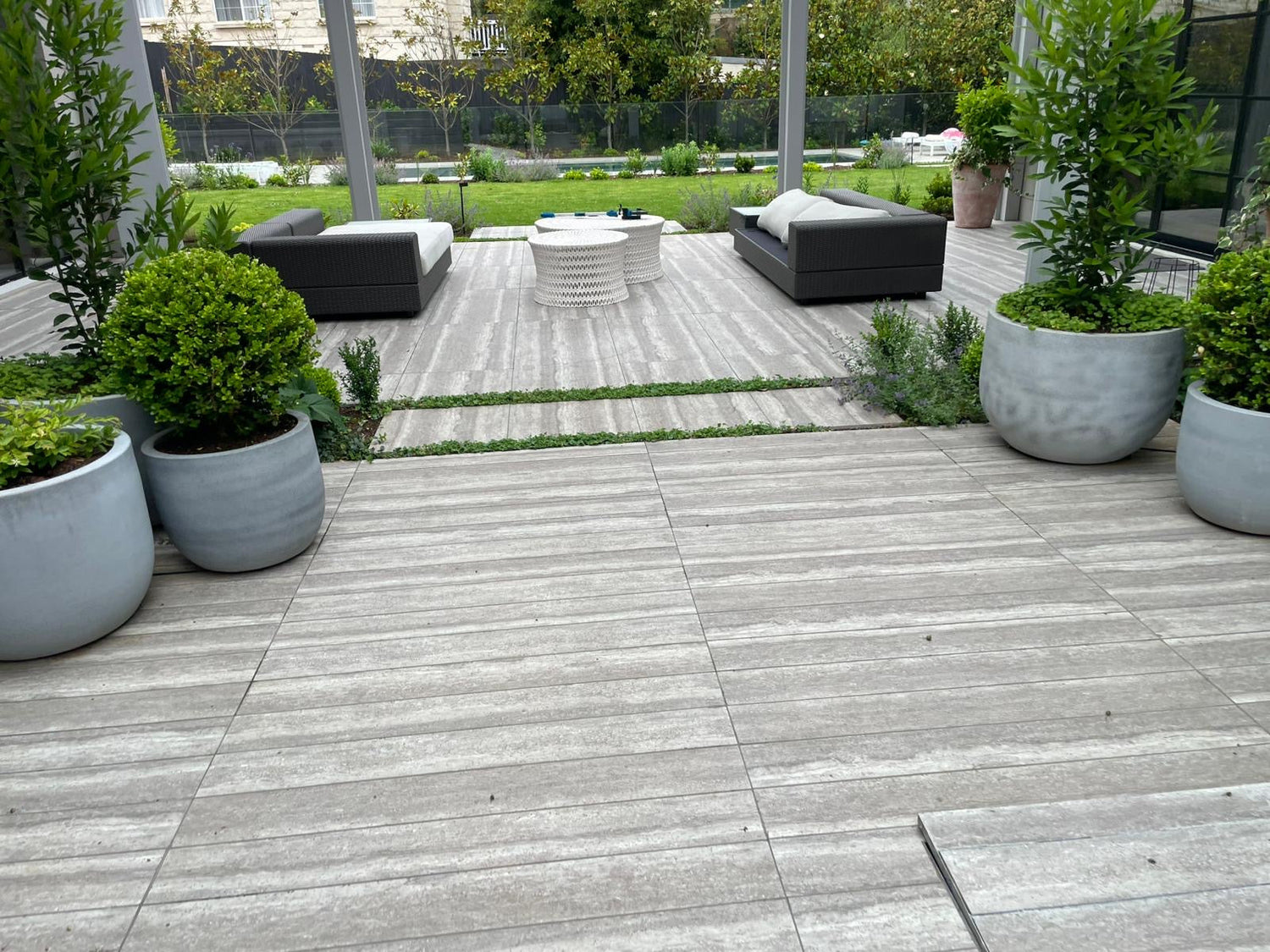
Pool surrounds. Outdoor entertaining areas. Alfresco floors. Bathroom floors and walls. These are all settings where water is constant, not occasional.
In these environments, water does not just sit on the surface. It finds the grout joints, works its way underneath the tiles, and sits there. When it evaporates back out, it carries dissolved mineral salts with it. Those salts deposit on the surface as white, powdery staining. That is efflorescence.

That comparison is most relevant for porous materials, but the principle applies to any grouted surface: water access causes damage. Remove the access and you remove most of the problem.
For a porcelain pool surround or an outdoor alfresco floor, sealing is not optional. The grout will deteriorate faster than it should, and efflorescence will follow. In most cases it is visible within the first year or two.
Efflorescence: what it is and why the grout is the culprit

Efflorescence is the white, chalky deposit that appears on and around grout lines. Most people think it is a cleaning problem. It is not. It is a moisture problem.
Water enters through the grout, moves through the bedding layer underneath, picks up dissolved salts from the substrate, and carries them back to the surface as it evaporates. The salts stay behind. You scrub them off, they come back. Until you fix the moisture access, the cycle does not stop.


Sealing the grout closes off the path. Once the sealer is bonded within the grout, it resists moisture infiltration, salt crystal migration, and the mineral cycling that drives efflorescence. The look of the tile and joint stays unchanged. The efflorescence stops. That is the primary reason to seal a grouted porcelain installation: moisture control at the joint level, not stain resistance on the tile face.

If you already have efflorescence on a tiled surface, clean it first. Use Stone Wash diluted at 1:100 as your standard cleaner. For heavy mineral deposits, a diluted acid wash may be needed first. Be cautious on any surface with calcium carbonate content. Rinse thoroughly. The surface must be bone dry before sealing. Sealing over residual moisture traps it in.
How to seal porcelain tiles and grout
Use a penetrating sealer. A penetrating sealer chemically bonds within the grout's mineral structure rather than sitting on the surface. Protection operates from the inside out: the grout is closed off without any change to the tile face or joint appearance.
Unlike topical coatings, there is nothing sitting on the surface to peel, flake or delaminate. The protection is within the grout matrix itself. Film-forming sealers look good initially on a glossy tile face. Then moisture works underneath, the coating lifts, and reapplication is difficult because you are sealing over a compromised grout surface. A penetrating sealer eliminates that failure mode.
See Penetrating Stone Sealer for independent laboratory test results on sealed versus unsealed surfaces. The NATA provides independent reference on this.
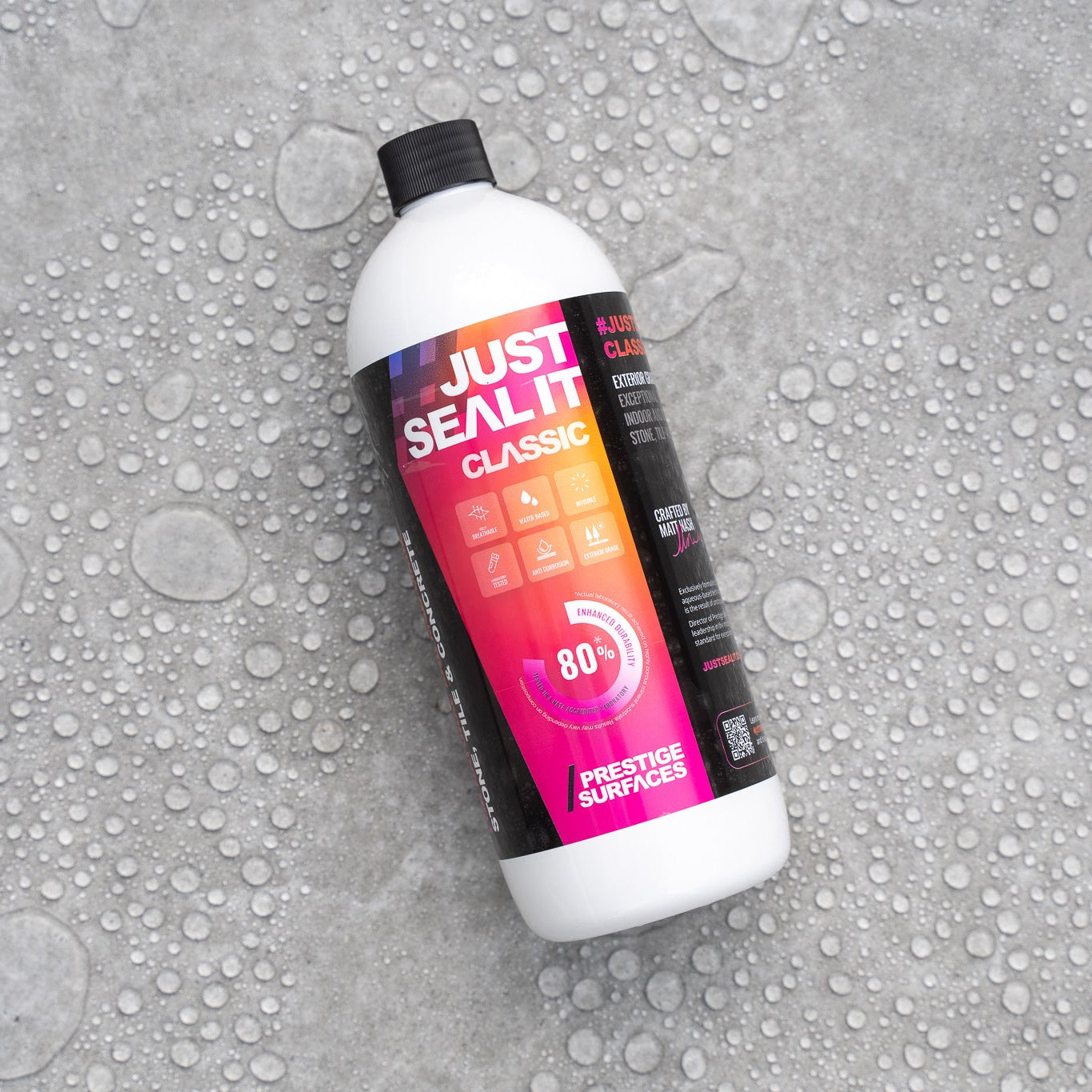
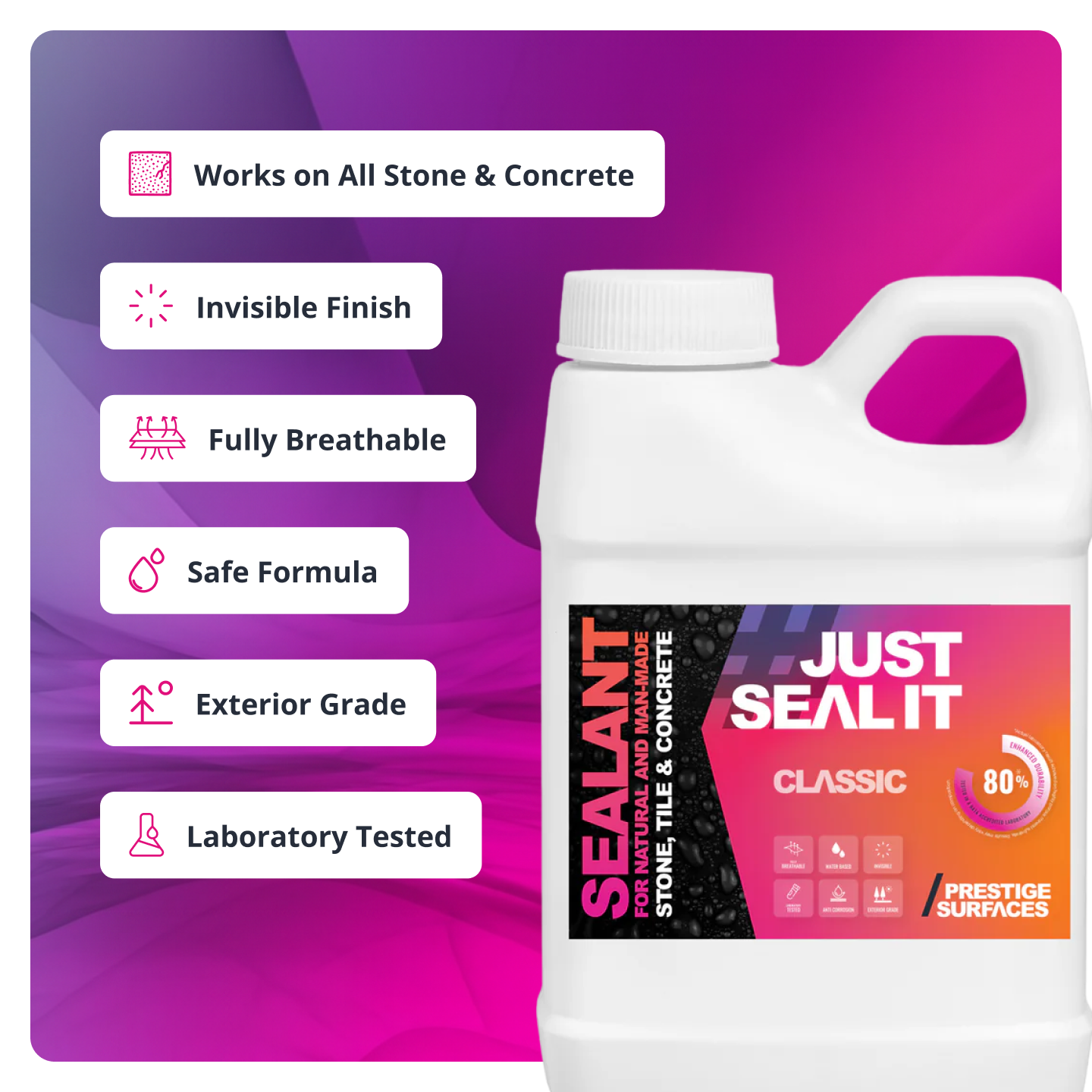
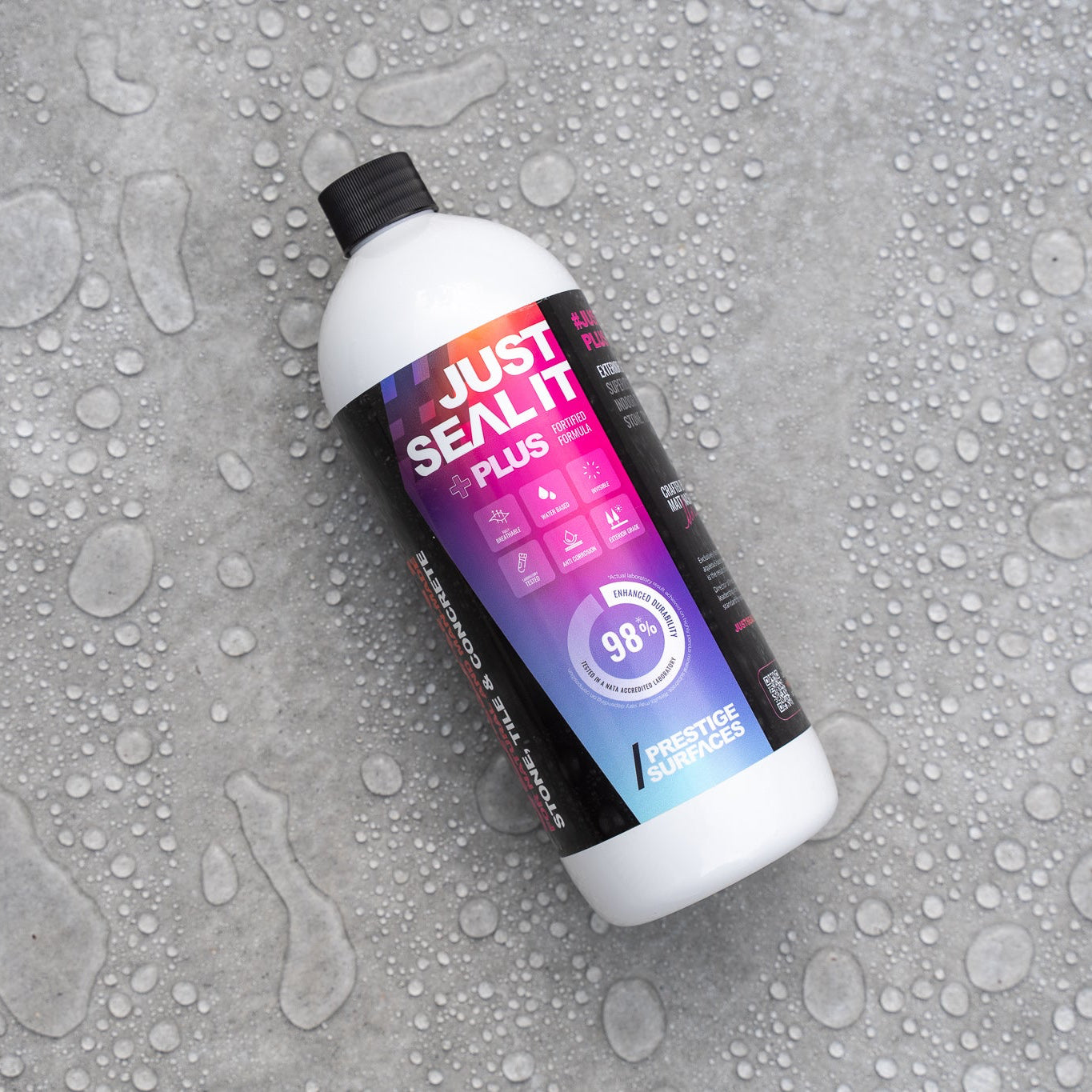
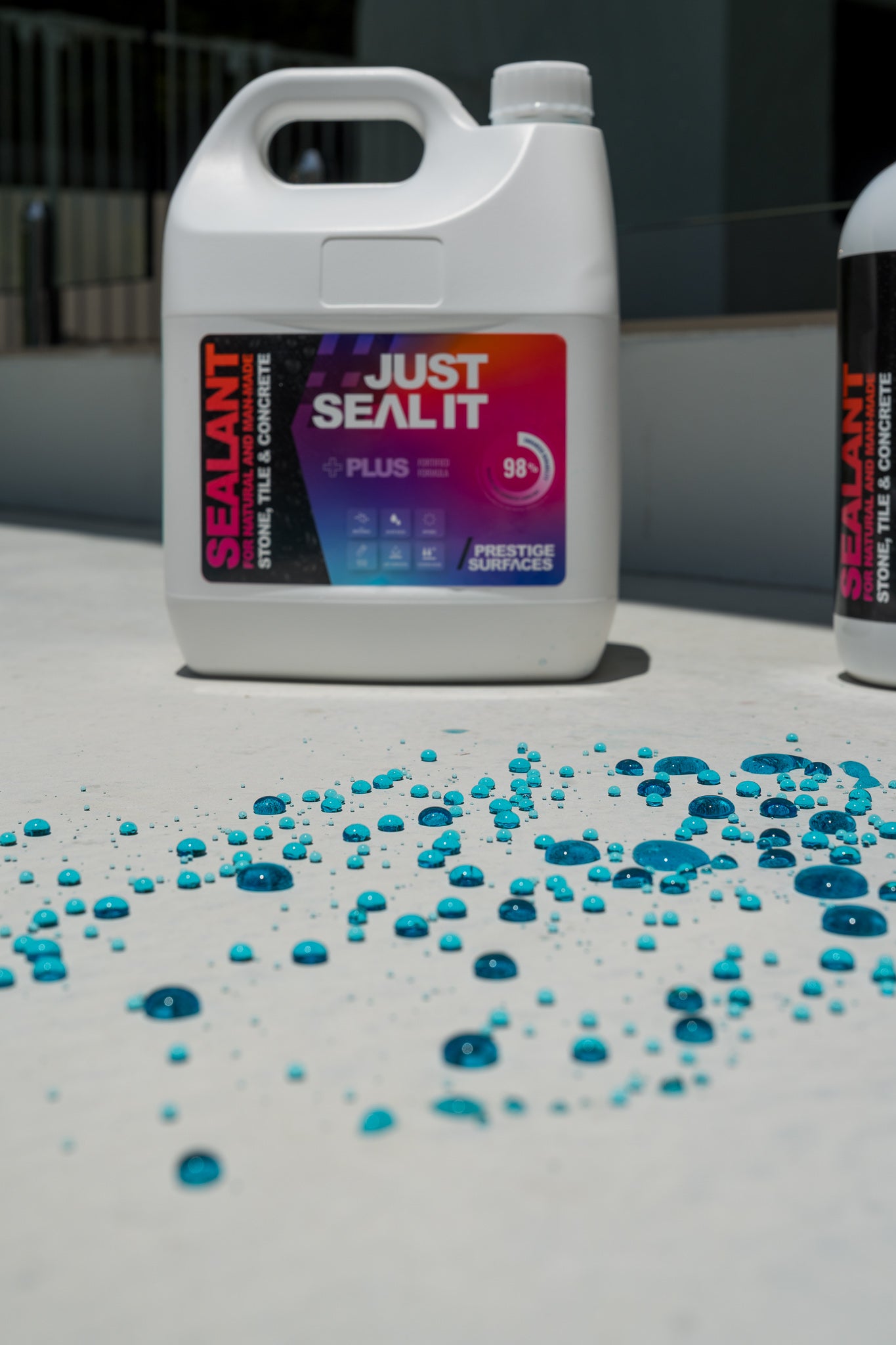
Just Seal It Classic Sealer works well on grouted porcelain, indoor and outdoor. For pool surrounds and coastal or high-exposure settings, use Plus Sealer for additional salt and chemical resistance.
Application process:
- Clean the surface thoroughly. Remove any existing efflorescence, dirt, and residue.
- Allow to dry completely. Bone dry. Not just surface dry.
- Temperature between 10 and 30°C. Do not seal in direct sun on a hot day.
- Apply the first coat across the whole surface, tile and grout together, using a microfibre applicator or low pressure sprayer, left to right.
- Apply the second coat immediately, while the first is still wet, working in the opposite direction.
- Avoid pooling in the grout lines. Work it in evenly.
- Light foot traffic after 1 to 2 hours. Full cure in 30 days.
You do not seal just the grout lines. You apply to the whole surface as a single pass. The sealer will penetrate into the grout and bond there. On the tile face it will sit briefly, then absorb into any surface porosity or evaporate. The result is invisible. No change to the tile appearance. See the full application guide for detailed steps.
The maintenance benefit is real and worth saying plainly. Sealed porcelain cleans faster. Dirt and surface staining do not bond to the grout in the same way. Algae and mould have less to grip onto. A rinse deals with what used to take a scrub. The surface stays looking newer for longer. That holds for any outdoor tiled area, but it is most obvious on porcelain where the tile itself is already easy to clean and the grout is the only weak point.
Other things that help: caulking, irrigation, drainage
Sealing the grout is the primary fix. But water access does not only come through the surface. It also comes from underneath and around the edges.
Check the joins. Movement joints at perimeters and between tile fields should be caulked, not grouted. Caulk flexes. Grout cracks. A cracked perimeter joint lets water in from the side regardless of how well the surface is sealed above.
Check irrigation. Sprinklers hitting tiled surfaces regularly will overwhelm any sealer over time. Redirecting irrigation away from tiled areas extends the sealer life considerably.
Check drainage. Water pooling on an outdoor tiled surface after rain is a problem. Adequate fall across the surface, typically 1 in 100 minimum, which means water moves off rather than sitting and working its way into joints.
Sealing addresses the surface. These three things address the sources. Together, the installation stays in good condition without much ongoing maintenance. For guidance on long-term care, the maintenance guide covers the full picture.
What sealing does for a porcelain installation long term
Porcelain is an excellent product. Dense, tough, and resistant on the tile face. In exterior and wet area settings the tile will outlast most materials. The grout is the variable.
After 20 years working on hard surfaces, the installations that stay looking good are the ones that were sealed early and maintained. The ones that develop efflorescence, stained grout, and deteriorating joints were almost always left unsealed, or sealed once and never again.
Sealing does not change the tile. It does not change the appearance. It closes off the grout so water cannot get underneath. That is the only thing it needs to do, and it does it well. For unglazed porcelain pavers, it also protects the tile face from embedded dirt and staining, which is a genuine bonus on a matte surface.
The practical outcome: the surface cleans faster, the grout stays consistent in colour, and you do not get white efflorescence streaks appearing after the first wet winter. Anyone who has tried to deal with established efflorescence on an outdoor tiled area knows it is not a quick job. Prevention is easier by a significant margin.
Seal it once properly, reseal every 3 to 5 years, and the installation stays easy to maintain. See the guide on why sealing exterior paving matters for more context.
Frequently asked
Does porcelain tile need to be sealed?
The grout does, and that drives the answer. Grout is porous regardless of how dense the tile is. In a wet area or exterior setting, unsealed grout allows water to work its way underneath, leading to efflorescence and deterioration. Since you seal the whole surface as a single pass, the recommendation is straightforward: seal it. For any outdoor or wet area installation it is the right call.
Should I seal the grout on porcelain tiles?
Yes. Grout is porous regardless of what tile surrounds it. Unsealed grout in a wet area or exterior setting allows water to get underneath the tiles, which leads to efflorescence and grout deterioration. Sealing closes off the grout and stops that cycle.
What happens if I do not seal porcelain tile grout?
In a dry interior setting, not much. In a wet area or outdoors, water gets in through the grout, travels underneath, and comes back out as efflorescence: white, chalky deposits on and around the grout lines. Over time the grout deteriorates and becomes harder to clean.
Can I use a penetrating sealer on porcelain tiles?
Yes. A penetrating sealer is the right product. It absorbs into the grout, bonds with the substrate, and leaves the tile face unchanged. Do not use a topical or wet look coating. It will sit on the impermeable tile face, look uneven, and eventually peel.
Does outdoor porcelain tile need to be sealed?
Yes, if it is grouted. Outdoor installations are exposed to rain, moisture, and ground water. Unsealed grout will allow water to work its way underneath the tiles. Sealing the whole surface, tile and grout together, reduces ongoing maintenance significantly.
How do I stop efflorescence on porcelain tiles?
Clean the existing deposits first using Stone Wash at 1:100 dilution, or a diluted acid cleaner for heavy mineral build-up. Allow to dry completely. Then seal the whole surface with a penetrating sealer to close the grout and remove the moisture pathway. Also check perimeter caulking and any irrigation hitting the surface.
How often should I reseal porcelain tile grout?
Every 3 to 5 years. Sealed correctly, the grout stays protected for years without special attention. The maintenance guide covers how to assess whether a maintenance coat is needed.
Is porcelain a good choice for outdoor and wet area use?
Yes. Porcelain is tough, dense, and resistant to surface staining. The grout is the variable in an outdoor installation. Sealed correctly and maintained on a 3 to 5 year cycle, a grouted porcelain outdoor area performs well and stays easy to clean. Unglazed porcelain outdoor pavers benefit from sealing on the tile face as well as the grout.
Still stuck? Get the right product

Not sure which sealer suits your surface, how much you will need, or whether your surface needs cleaning first: email hello@justsealit.com.au with a photo and we will tell you. Most questions take five minutes to answer. We would rather you get it right the first time than buy twice.