By Matt Nash, Founder, Just Seal It. 20+ years on-site. 15,000+ surfaces sealed. Featured on The Block. Published 13 May 2026.
Bluestone is dense. But dense doesn't mean impervious. Left unsealed, it absorbs water, salt, and contaminants from the day it goes down.
Most people seal it once, assume the job is done, and don't think about it again until something goes wrong. Usually that's a stain that won't shift, or mortar joints crumbling from frost and moisture.
Short version: Bluestone needs a penetrating sealer, not a topical coating. Clean the surface with Stone Wash, let it dry completely, then apply two coats of Classic Sealer wet-on-wet. For pool surrounds or coastal exposures, use Plus Sealer. Full cure takes 30 days. A maintenance coat every 3 to 5 years keeps performance at its peak.
Does bluestone need to be sealed?

Yes. The question is when, not whether.
Bluestone is a volcanic basalt. Hard and dense compared to travertine or limestone, but it still has a porous mineral structure that absorbs water and contamination over time. In outdoor conditions, that means moisture working into the joints, salt ingress from pool water or coastal air, and organic growth getting a foothold in the surface.
Seal it before those things get in and the surface stays clean and easy to maintain. Don't seal it, and you're dealing with staining, efflorescence, and joint deterioration that are harder and more expensive to fix than the original seal job would have been.
The question of whether to seal comes up most with honed or sandblasted finishes, where the surface is more open-grained and absorbs faster. With a flamed or sawn finish, the surface is slightly more forgiving. In both cases, a penetrating sealer is still the right call outdoors.
If you're not sure where your surface sits, check why sealing exterior paving matters and what happens when you skip it.
Why bluestone absorbs more than it looks

Bluestone looks solid. That's part of why people assume it doesn't need sealing.
The surface is smooth. The colour is dark and uniform. It doesn't look porous. But porosity isn't visible to the naked eye. At a microscopic level, the mineral structure has gaps that water, salts, and contaminants move through over time.
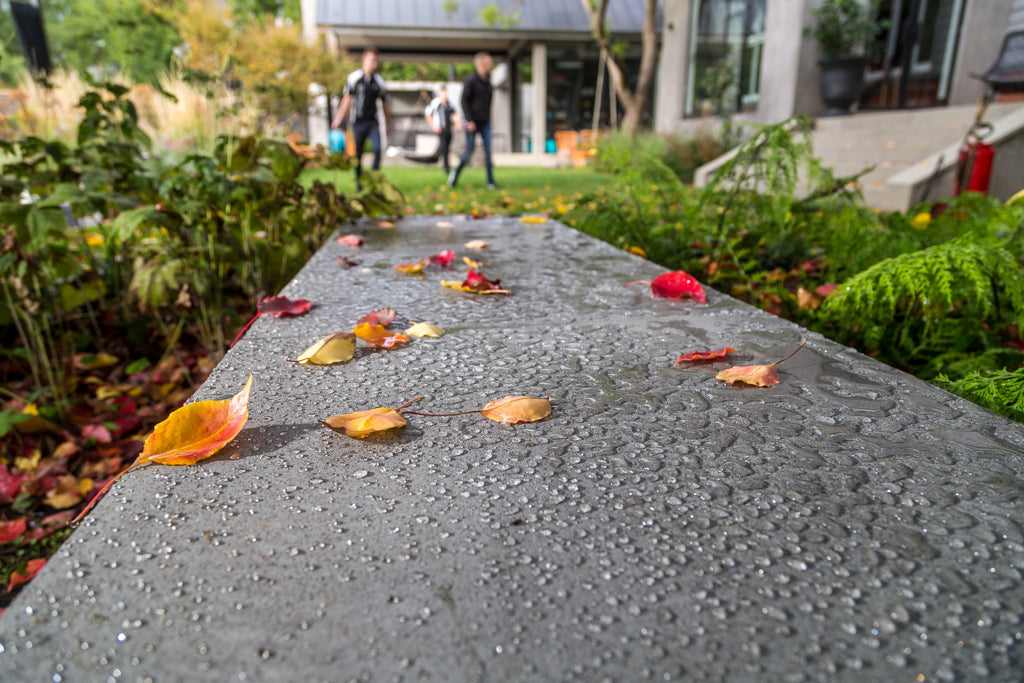
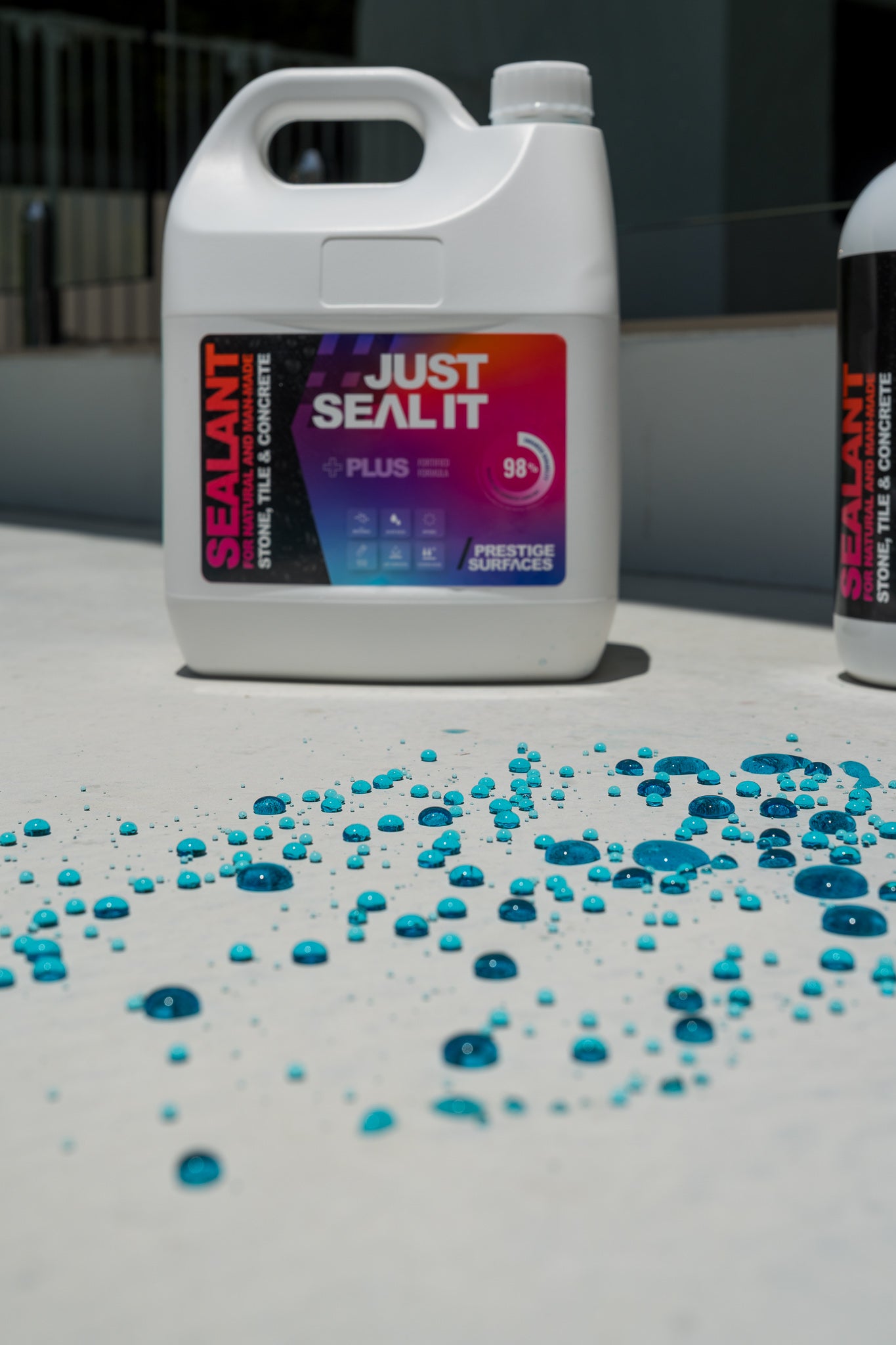
The test is simple. Drop water on an unsealed piece and watch. On most honed bluestone, it absorbs within seconds. That same absorption happens every time it rains, every time the path gets washed down, every time a pool splashes over the edge.
That gap becomes significant over 10 or 15 years of outdoor exposure.
The mechanism that drives that damage is water-borne. When water moves into unsealed bluestone, it carries dissolved mineral salts. As moisture evaporates, those salts crystallise inside the capillary structure of the stone. The crystals expand and contract with temperature changes, forcing the pore walls apart from within. Efflorescence is the visible sign. That is why surfaces left unsealed look different five years in, not one.
Bluestone also contains iron compounds from its basalt composition. In a consistently wet environment without protection, that iron can oxidise and leave rust-coloured marks in the surface. Not common, but worth knowing before installation goes in unsealed.
Penetrating vs topical: why one works and one doesn't
There are two types of sealer on the market. One protects bluestone properly. The other causes problems.
A penetrating sealer chemically bonds within the mineral structure of the stone using modified silicone technologies. It doesn't sit on top. You can't see it after application. The surface still looks and feels like bluestone because the sealer is working inside it, creating a barrier that moisture and contaminants can't pass through. It's fully breathable, so moisture vapour can still escape from below.
A topical sealer does the opposite. It coats the surface. That coating sits on top of the stone and, over time, traps moisture beneath it. The result is peeling, whitening, and a surface that looks like it has a plastic film over it. Stripping a failed topical sealer off bluestone costs more than a proper penetrating application would have.
If you can see the sealer after it's cured, it's the wrong product. A correctly applied penetrating sealer is invisible. That's not a side effect. That's what it's supposed to do.
For more on how this works at the mineral level, read how penetrating stone sealer protects from inside the stone.
Which bluestone sealer to use
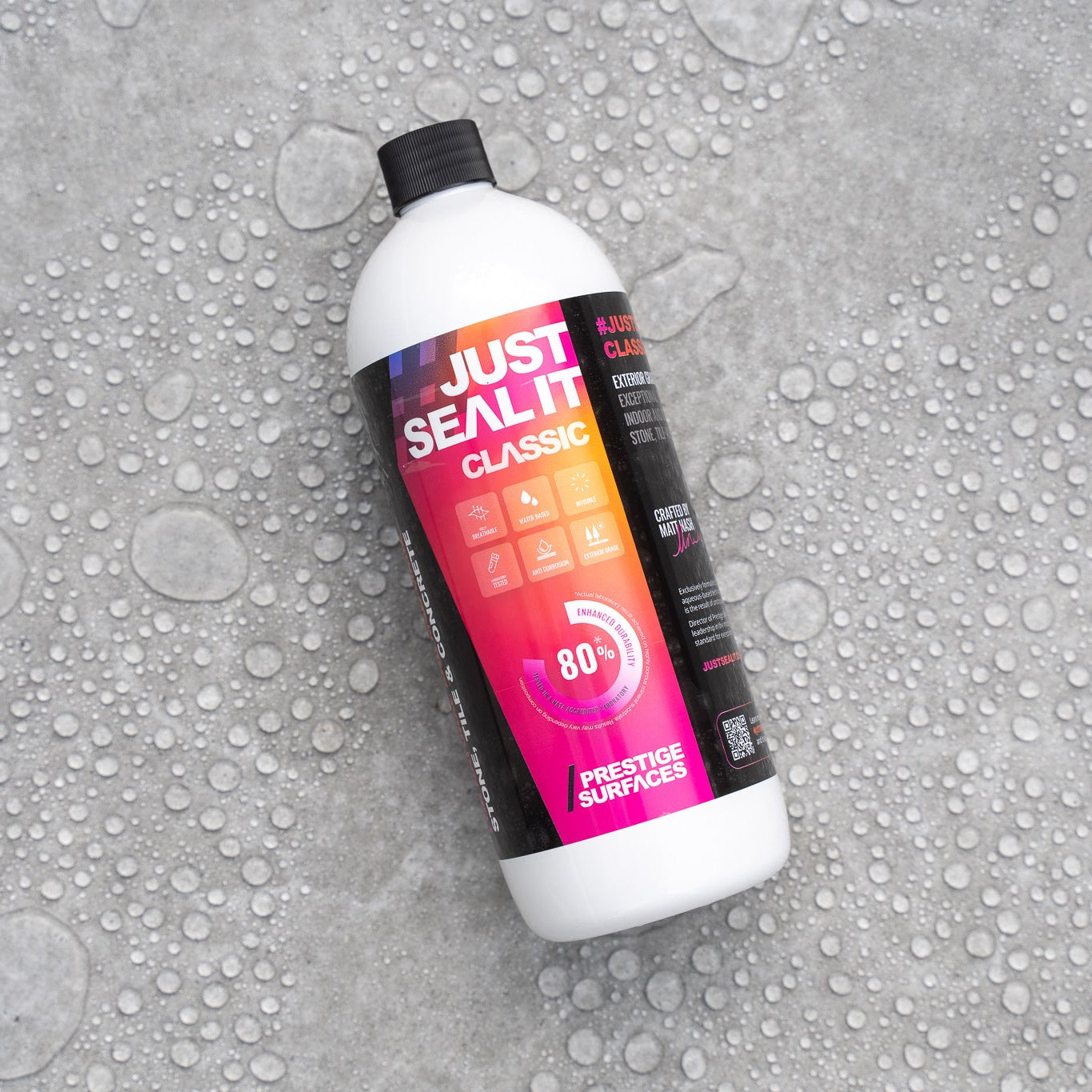
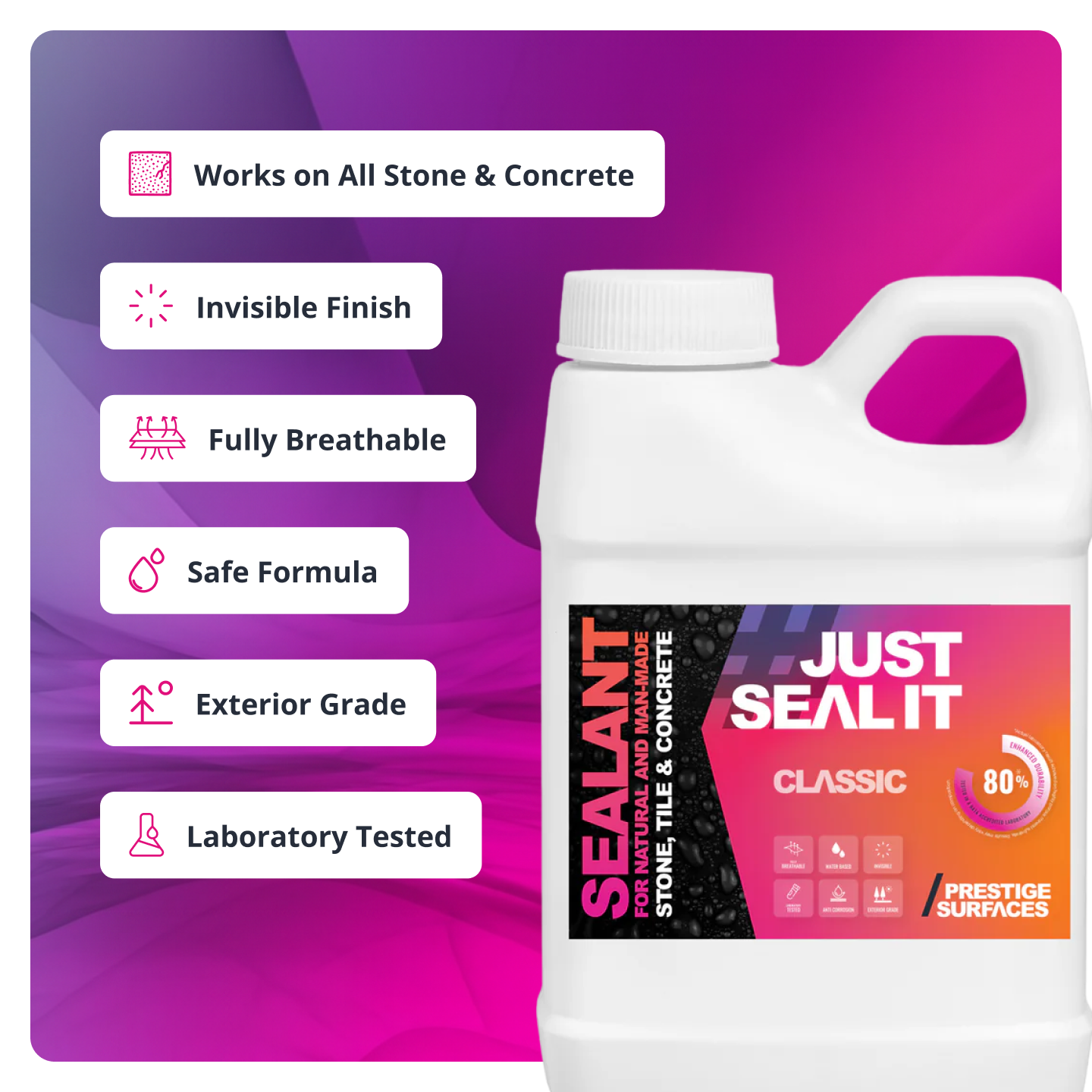
For most outdoor bluestone, driveways, paths, courtyards, and garden paving, Classic Sealer handles it. Penetrating, water-based, invisible finish. PFAS-free. Lab-tested to up to 80% enhanced durability at a NATA-accredited laboratory.
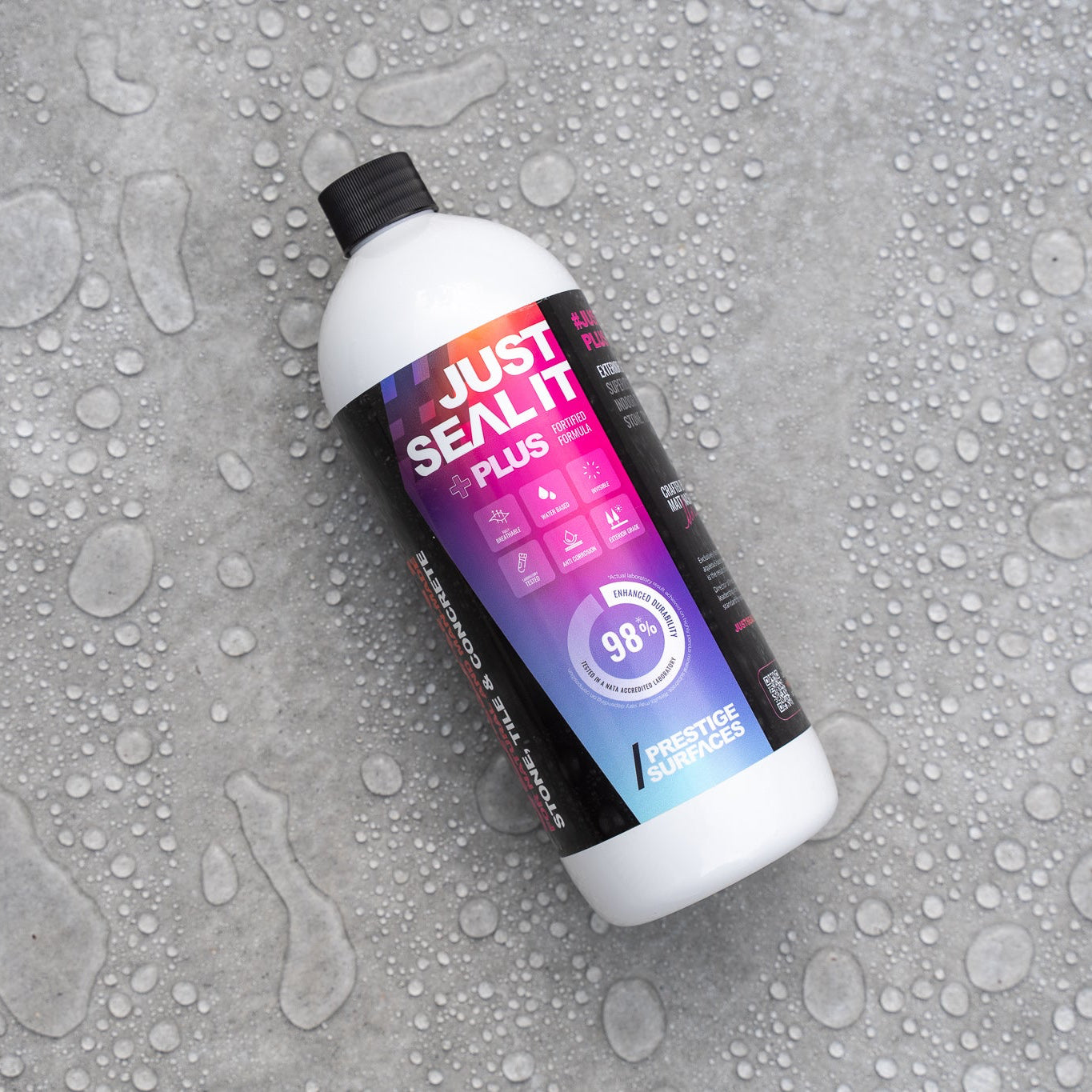
For bluestone in harsher environments, Plus Sealer is the call. Pool surrounds, coastal properties, or any area with regular exposure to salt, chlorine, or sustained harsh weather. Same invisible, breathable, PFAS-free base as Classic, engineered with higher salt and chemical resistance. Lab-tested to up to 98% enhanced durability on highly porous mineral substrates.
The product selector walks through the decision in a few questions. Or email a photo to hello@justsealit.com.au and we'll tell you directly.
How to prepare bluestone before sealing
Sealing over a dirty surface prevents the sealer from penetrating fully. There's no way to recover from that without stripping and starting again. Clean first. Dry completely. Then seal.
For general grime, moss, and surface contamination, dilute Stone Wash 1:100 with water and work it into the surface with a stiff brush or low-pressure sprayer. Let it dwell for 10 to 15 minutes, then rinse thoroughly with clean water.
If there's visible algae, lichen, or heavy biological growth, treat with a sodium hypochlorite solution first. Rinse completely, then follow with Stone Wash to neutralise the surface before sealing. Bluestone is not acid-sensitive in the way limestone or travertine are, so standard cleaning products are fine. But always rinse well before sealer goes on.
After cleaning, the surface must be bone dry before sealer is applied. Not surface-dry. Dry through, including the substrate beneath. That timeline varies with weather, drainage, and the thickness of the stone. In cool, shaded conditions it can take longer than expected. Don't rush it. Sealing over residual moisture traps it in, which is one of the few problems a penetrating sealer can't fix after the fact.
The full preparation and application guide covers cleaning sequences and drying conditions in detail.
How to apply bluestone sealer

Temperature matters. Apply between 10 and 30 degrees Celsius. Below 10, the chemistry doesn't cure properly. Above 30, the sealer dries too fast and coverage becomes uneven. In direct sun on a 35-degree day, wait for early morning or full shade.
Test a small inconspicuous area first. Apply one coat, let it dry 24 hours, and check. On some finishes, the sealer deepens the colour slightly as it soaks in. Most clients prefer it. But confirm before you commit to the full surface.
Apply two coats, wet-on-wet. First coat with a low-pressure sprayer or microfibre applicator, working left to right. Second coat goes on immediately after in the opposite direction. Don't let the first coat dry before the second goes on. The wet-on-wet method ensures even penetration across the full surface.
Don't pool the sealer. If it's sitting in puddles, spread it out with the applicator. Excess sealer left to dry on top of the stone can leave a slightly darker patch where it didn't penetrate fully.
For highly porous or honed finishes, a third coat can go on once the second has dried. This is worth doing on surfaces that soak up sealer quickly. Don't use a roller at any stage.
Light foot traffic is fine 1 to 2 hours after the surface feels dry. Furniture: 24 hours. Vehicles: 48 hours. Full cure, including resistance to chemicals and pressure washing: 30 days.
How long does bluestone sealer last
When bluestone is freshly installed and freshly sealed, it looks good either way. Sealed or not. You won't really notice a difference in year one.
The difference shows later.
Fast forward three to five years. Surfaces that were sealed and maintained properly clean up easily. Minimal staining. Still holding their natural look. The ones that weren't sealed, or that had one coat applied at installation and never maintained, start to look different. More staining. More organic growth between joints. More wear in high-traffic areas that are harder to reverse.
Classic Sealer bonds within the dense mineral structure of bluestone rather than sitting on the surface. Nothing to wear off or peel away. What reduces over time, particularly under UV and salt or pool exposure, is the peak hydrophobic performance. A maintenance coat every 3 to 5 years keeps it at peak levels. Coastal installs and pool surrounds benefit from one closer to the 3-year mark.
The signal to reseal is not beading behaviour. Beading reduces naturally over time as the surface weathers. That's normal. The sealer is still working internally even when visible beading has dropped off. The real indicators are whether the surface is absorbing liquids when it previously didn't, or whether cleaning is getting noticeably harder. See the maintenance and resealing guide for a full schedule.
Sealing bluestone around pools and coastal properties

Pool surrounds are the toughest environment for any outdoor surface. Salt chlorination pushes corrosive crystals into porous stone. Chlorine degrades surface bonds over time. UV is constant. The surface is wet more often than it's dry.
Standard outdoor conditions are manageable with Classic Sealer. Pool surrounds and coastal properties are not standard conditions. After years watching Classic Sealer hold up well in most situations, we engineered Plus Sealer specifically for those environments. Higher salt resistance. Higher chemical resistance. Same invisible, breathable, PFAS-free finish.
The application process is identical. The difference is in penetration depth and the bond that forms after 30 days. You won't see the difference on day one. You'll see it in year three.
For coastal bluestone, the threats are similar: salt air, wind-driven moisture, UV. Any bluestone within a few kilometres of the coast gets the same recommendation. Plus Sealer, applied every 3 to 5 years depending on exposure. The Cement Concrete and Aggregates Australia guidelines on outdoor paving in marine environments echo this: salt is the primary accelerant of surface degradation in coastal conditions.
If you're unsure which product your environment calls for, email a photo and the location to hello@justsealit.com.au. We'll tell you in a few minutes.
Frequently asked
Does bluestone need to be sealed?
Yes. Bluestone is porous at a microscopic level despite its dense appearance. Left unsealed outdoors, it absorbs water, salt, and contaminants that cause staining, joint deterioration, and biological growth over time. A penetrating sealer at installation, maintained every 3 to 5 years, prevents those problems from taking hold.
What is the best sealer for bluestone pavers?
A penetrating, water-based sealer. For most outdoor applications including driveways, paths, and courtyard paving, Classic Sealer from Just Seal It handles the job. For pool surrounds and coastal properties, Plus Sealer offers higher salt and chemical resistance. Avoid topical or wet-look coatings: they sit on the surface, trap moisture, and eventually peel.
How often should you reseal bluestone?
Every 3 to 5 years for outdoor bluestone in normal conditions. Pool surrounds and coastal exposures warrant more regular attention. The indicator is not beading behaviour. It's whether the surface absorbs liquids it previously repelled, or whether routine cleaning is becoming harder than it used to be.
Can you seal bluestone yourself?
Yes. Penetrating sealers are designed for DIY application. Clean the surface thoroughly, let it dry completely, then apply two coats wet-on-wet with a low-pressure sprayer or microfibre applicator. The two mistakes to avoid are sealing over a damp surface and applying in temperatures outside the 10 to 30 degree Celsius window.
What happens if you don't seal bluestone pavers?
The surface absorbs moisture and contamination from day one. Over time: staining that's difficult to remove, moss and algae in the joints, salt efflorescence as moisture migrates through the stone, and potential iron staining from the basalt mineral composition. None of it is catastrophic in year one. It compounds. Restoring an unsealed surface five years in costs significantly more than sealing it at installation.
Should bluestone be sealed before or after installation?
After. The surface needs to be fully set, cured, and dry before sealer is applied. On freshly laid bluestone, wait for the bedding compound and pointing mortar to fully cure. Any installation residue, including grout haze, must be cleaned off before sealing. Whatever is on the surface when you seal bonds in along with the sealer.
What are the pros and cons of sealing bluestone?
Pros: stain resistance, easier routine cleaning, protection against salt and chemical damage, longer surface life. Cons: a cost at installation and reapplication every few years. That's the full list. The cost of sealing is modest. The cost of not sealing shows up three to five years later and is harder to reverse.
Can you seal bluestone around a pool?
Yes, and it's strongly recommended. Pool surrounds face constant moisture, chlorine or salt, and UV exposure. Use Plus Sealer for any bluestone around a pool. It's engineered specifically for chemical and salt resistance in high-exposure environments. Standard-grade sealers degrade faster under sustained pool chemistry.
Still stuck? Get the right product
Not sure which sealer suits your surface, how much you'll need, or whether your surface needs cleaning first: email hello@justsealit.com.au with a photo and we'll tell you. Most questions take five minutes to answer. We'd rather you get it right the first time than buy twice.