By Matt Nash, Founder, Just Seal It. 20+ years on-site. 15,000+ surfaces sealed. Featured on The Block. Published 10 May 2026.
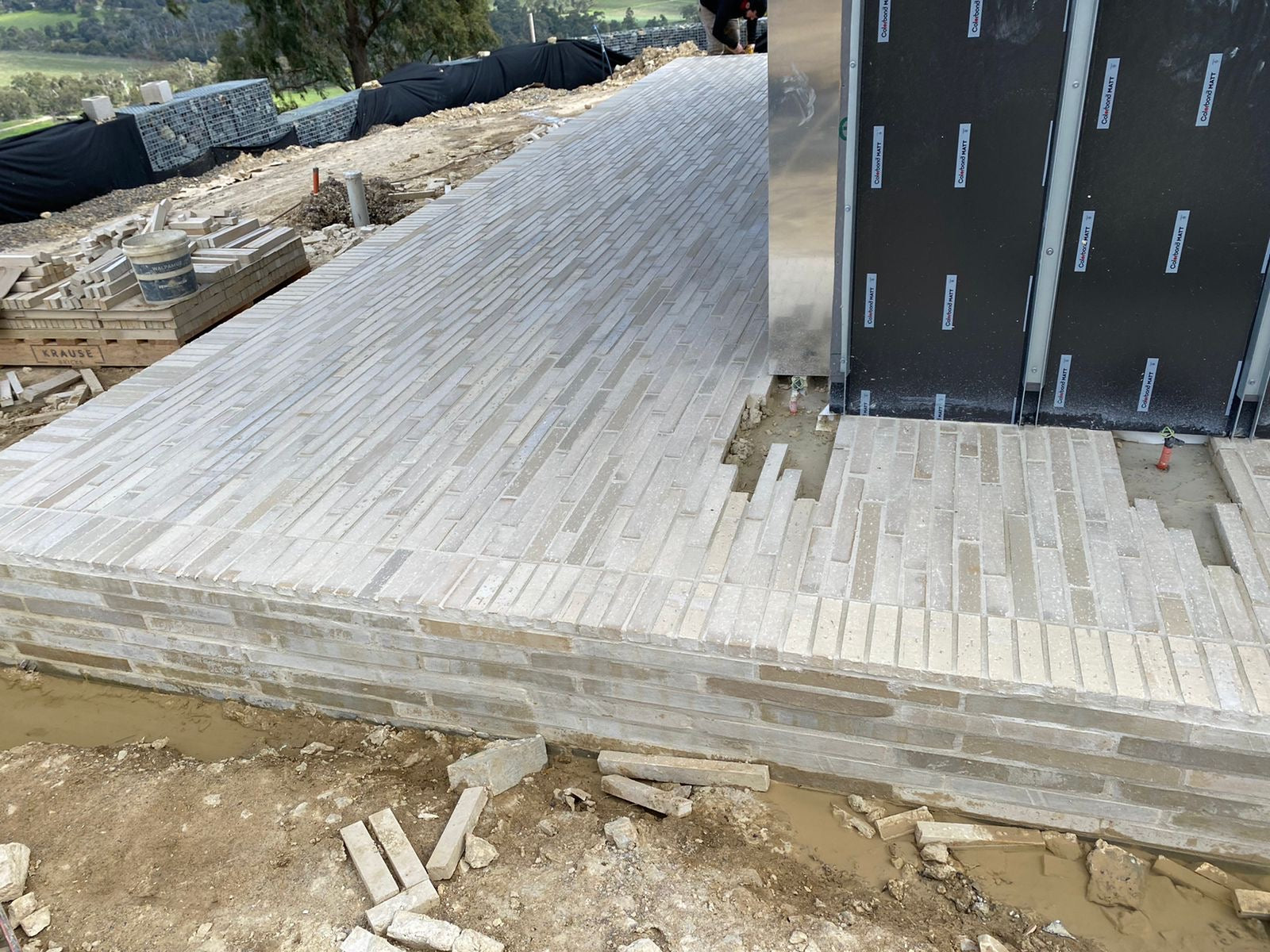
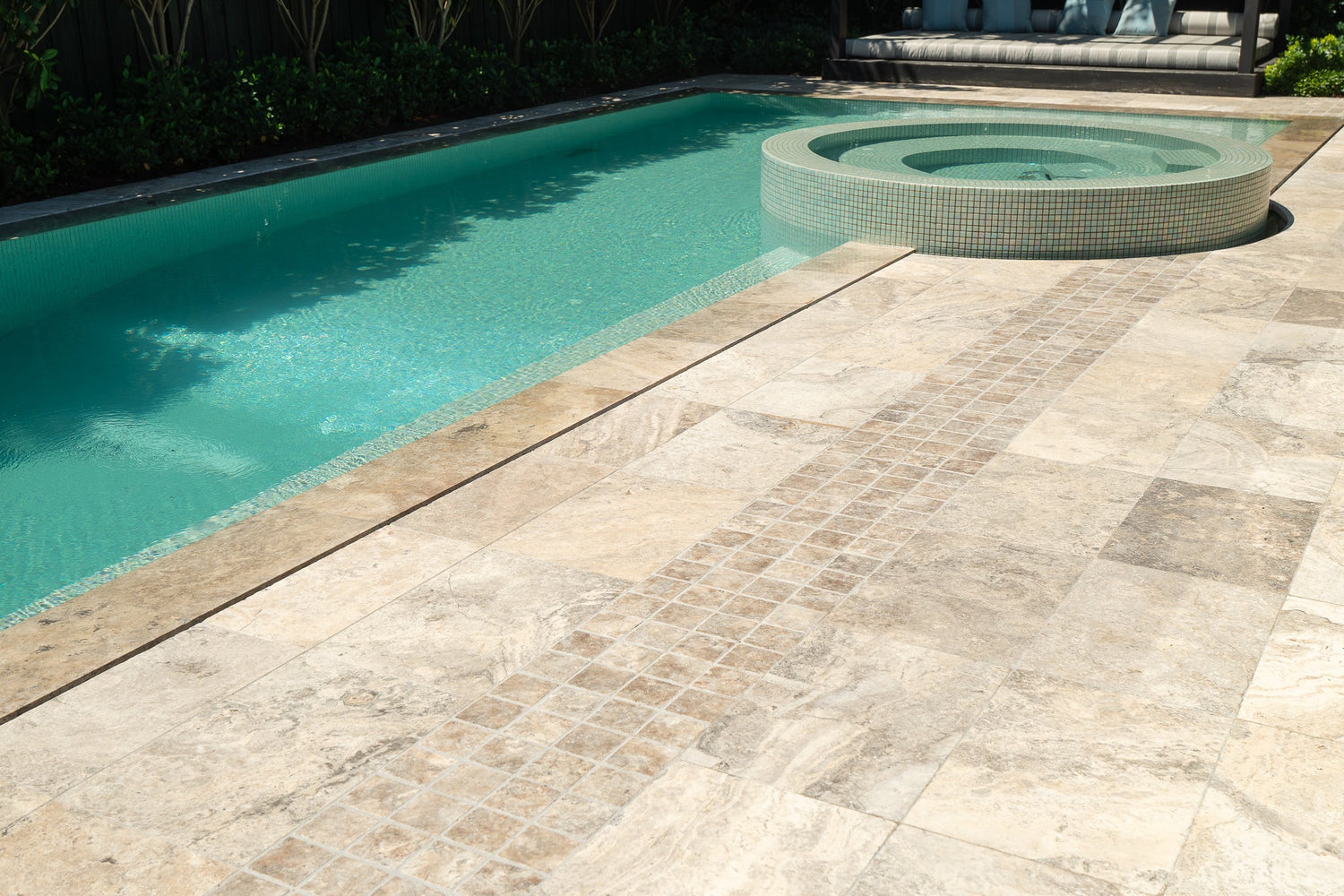
Travertine is one of the most commonly used natural stones in residential and commercial projects worldwide: pool surrounds, outdoor pavers, interior floor tiles, garden steps. It also happens to be one of the most porous. Without a travertine sealer applied correctly, the surface absorbs contamination, develops efflorescence, and deteriorates in ways that are expensive to reverse.
Most people find that out three to five years after installation. The good news is that sealing travertine is straightforward when the right product and process are used.
Short version: Clean with Stone Wash diluted 1:100, allow the surface to dry completely, then apply Classic Sealer in two coats wet on wet. For pool surrounds or coastal installs, use Plus Sealer instead. Light foot traffic is fine after 1-2 hours. Full cure takes 30 days. A maintenance coat every 3 to 5 years keeps protection at full strength.
Why travertine needs a sealer

Travertine forms from mineral springs depositing calcium carbonate over thousands of years. That process leaves the stone full of channels and pores. Under a microscope it looks like a sponge. Around a pool or on a driveway, it acts like one.
When travertine is first installed, it looks fine either way. Sealed or not. The difference doesn't show up straight away.
It shows up three to five years later.
Unsealed travertine pavers and tiles absorb pool chemicals, soil, and surface contamination over time. The colour shifts. The pores deepen with soiling that won't clean out. The stone that was a premium choice at install starts to look like a maintenance problem.
The mechanism is water-borne. Moisture moving through unsealed travertine carries dissolved mineral salts. As moisture evaporates at the surface, those salts crystallise inside the stone's capillaries. The crystals expand and contract with temperature changes, forcing the pore walls apart from within. In pool environments, pool chemicals compound the damage, working deeper into the pore structure with each wet-dry cycle. Efflorescence, the white chalky deposit that forms on the surface, is the visible sign of that process.
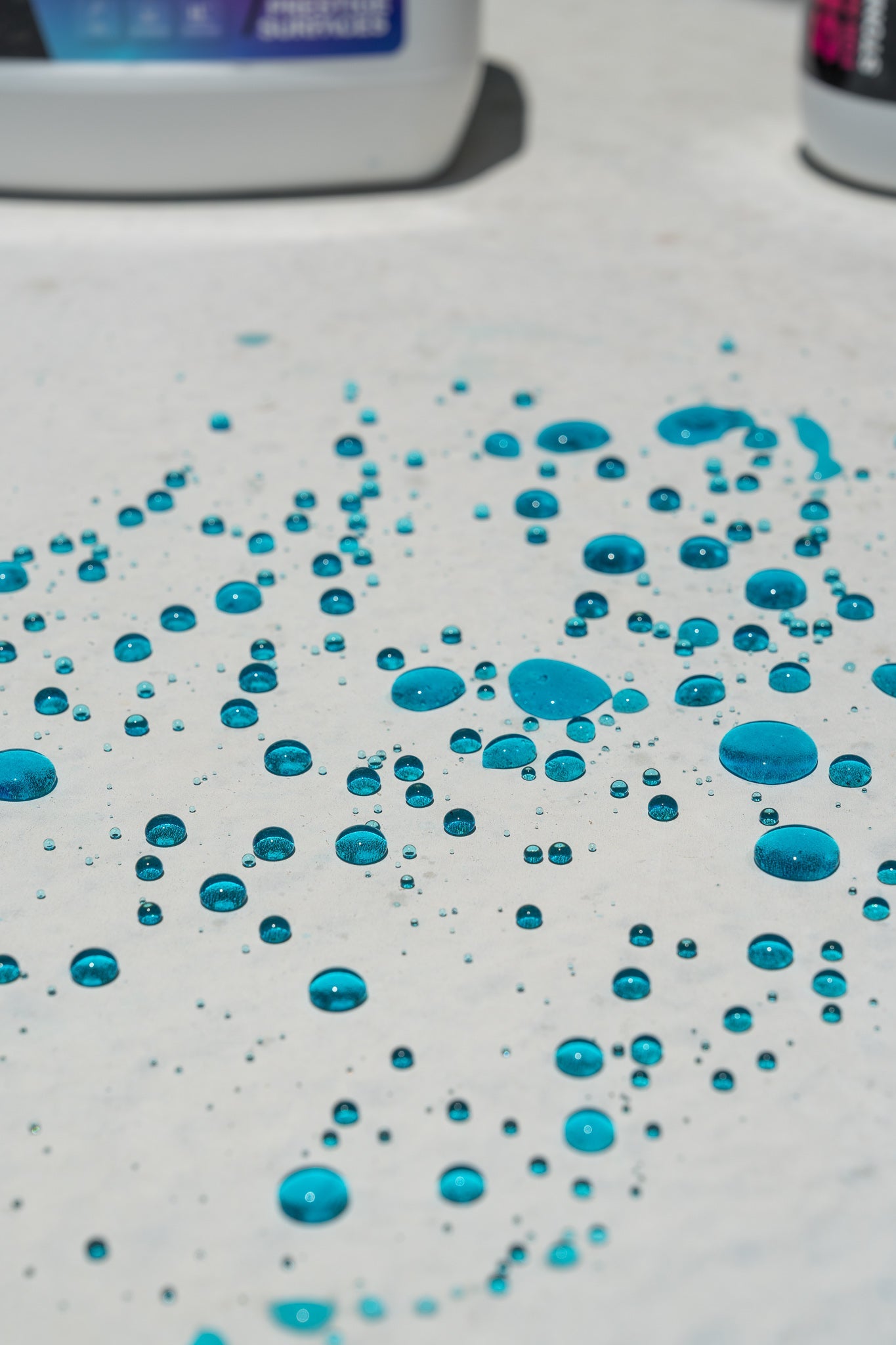
A penetrating travertine sealer fills those channels from below, blocking contamination before it can settle. The stone stays protected without any visible coating on top.
For more on why sealing is worth doing before damage starts, read why seal exterior paving.
How to clean travertine before sealing
Sealing over a dirty surface prevents the travertine sealer from penetrating fully. If sealer was applied over a contaminated surface, clean it back properly before sealing again.
The standard cleaner for travertine is Stone Wash, diluted 1:100. Apply with a mop or brush, work it in, and rinse completely. It handles organic staining, surface build-up, and general soiling without damaging the stone.
If there is visible algae or lichen on the surface, treat with sodium hypochlorite first. Rinse thoroughly, then follow with Stone Wash to neutralise residue before it dries.
One thing to watch: travertine contains calcium carbonate. Acid-based cleaners react with calcium carbonate and etch the surface permanently. Use pH neutral cleaners only. Stone Wash is pH neutral and safe for all travertine. If you are unsure what a product contains, do not use it on travertine. Cement Concrete & Aggregates Australia outlines substrate chemistry considerations for protective surface treatments if you need further reference.
After cleaning, the surface needs to be completely dry. Not just surface dry. Bone dry. If moisture is still in the stone when you seal it, you will lock it in. On a warm, still day, 24-48 hours after washing is typically enough. In cooler or more humid conditions, allow longer. There is no fixed number of hours. When in doubt, wait.
The best sealer for travertine tiles and pavers
Use a penetrating sealer. Not a topical one.
Penetrating sealers soak into the stone and protect from below. They leave no surface film, do not change how the stone looks, and do not peel. Topical sealers sit on top, trap moisture in the pores, and eventually fail. On travertine specifically, which needs to breathe, a topical sealer makes the problem worse. You end up with bubbling, peeling, and a surface that looks worse than it would have left unsealed.
There is no version of this where a topical coating is the better long-term choice on natural stone. The products that cause the most callbacks in this industry are topical sealers on porous stone.
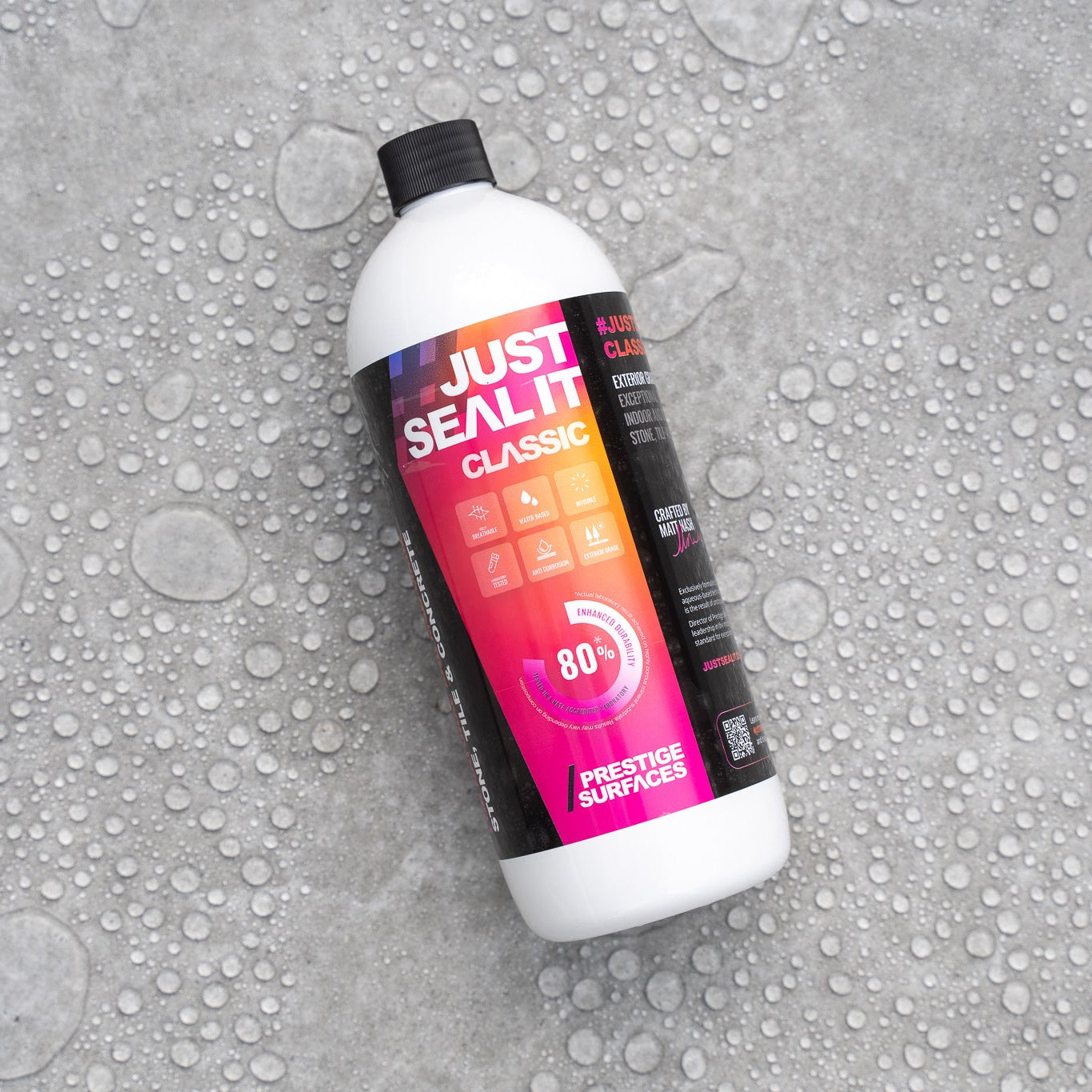
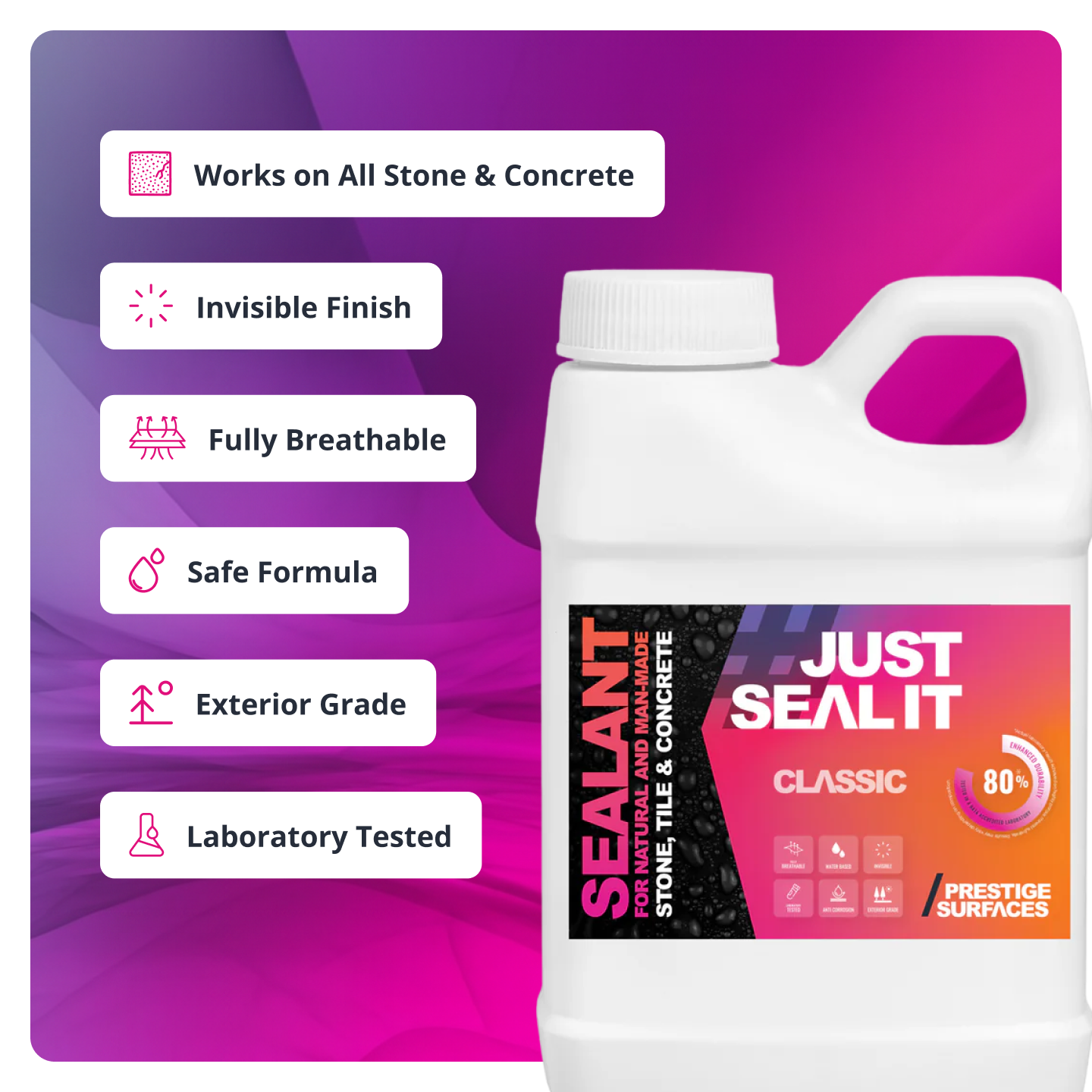
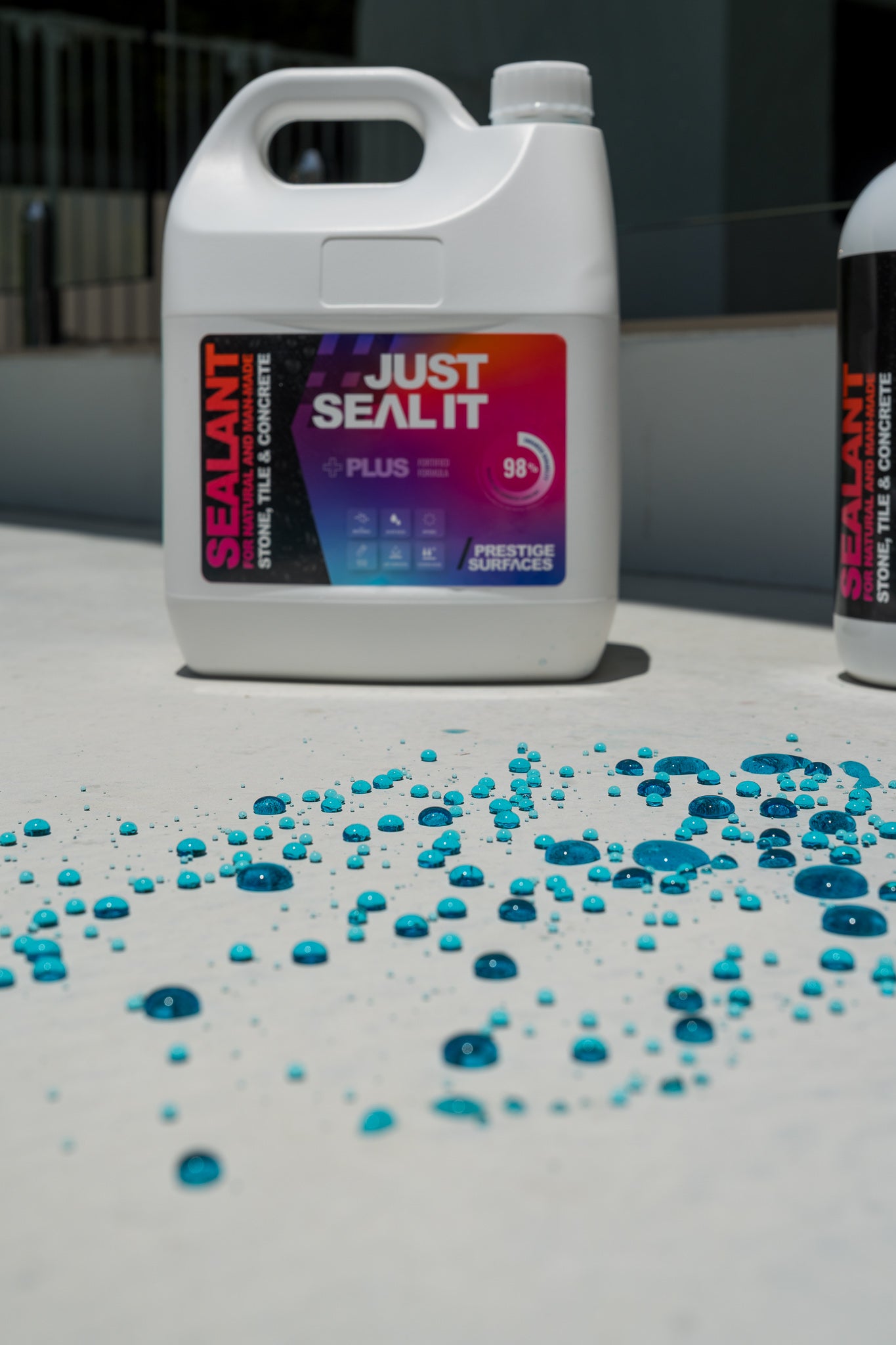
Classic Sealer: Just Seal It Classic Sealer is the right travertine sealer for most applications: indoor floor tiles, outdoor pavers, patios, garden paths, and standard pool surrounds. It chemically bonds within the mineral structure of the stone using modified silicone technologies, soaks to 11mm depth, leaves no surface film, and never flakes, yellows, or peels. Tested to up to 80% enhanced durability at a NATA-accredited laboratory. The NATA provides independent reference on this.
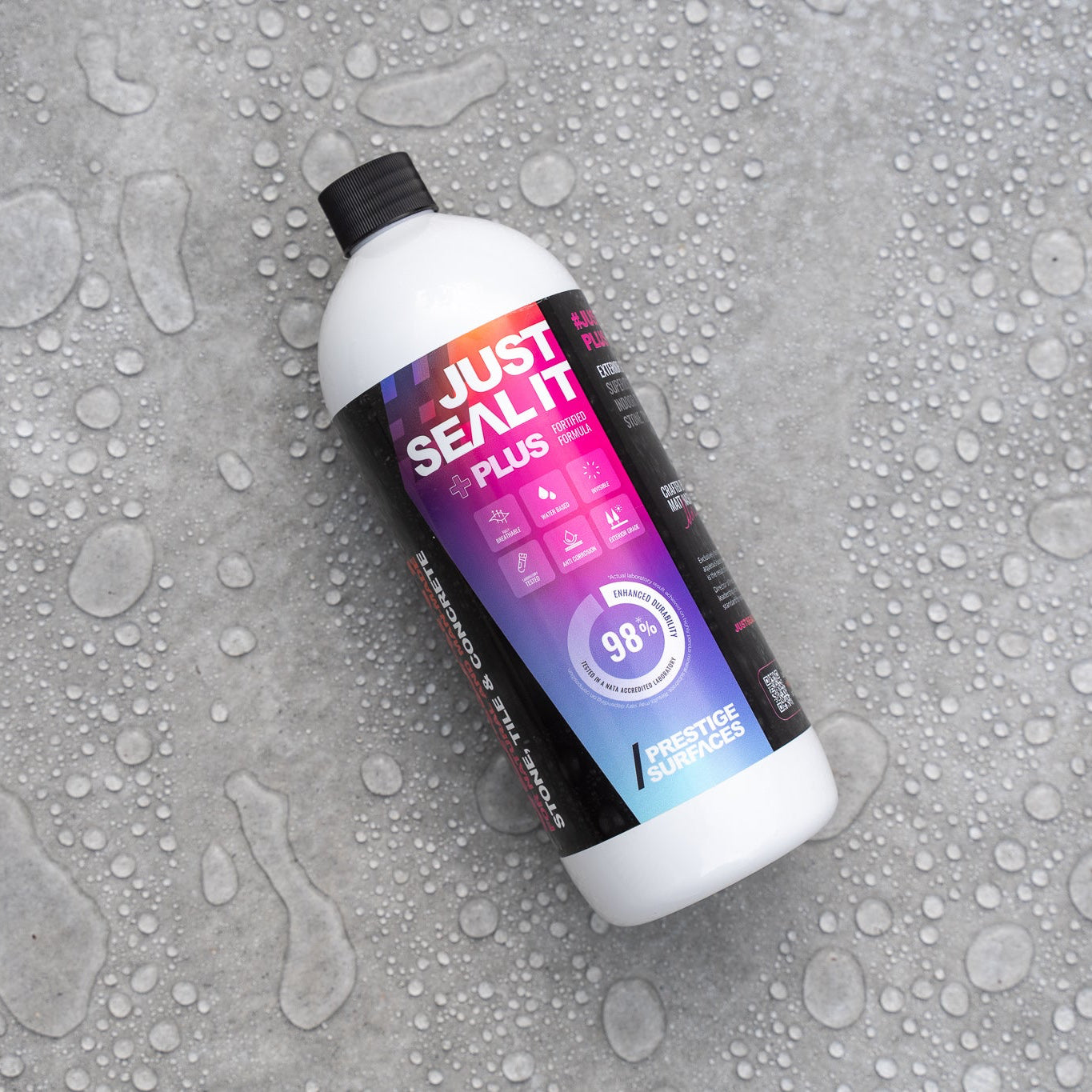
Plus Sealer: for travertine in harsher environments, Plus Sealer provides additional resistance. Pool surrounds with regular chemical exposure, coastal properties, and high-traffic outdoor pavers benefit from the higher-formula version. Tested to up to 98% enhanced durability on highly porous mineral substrates.
If in doubt between the two, use Plus Sealer for anything near a pool or the coast. Classic Sealer for everything else.
See Penetrating Stone Sealer for independent laboratory test results on sealed versus unsealed surfaces.
How to apply travertine sealer

Apply between 10 and 30 degrees Celsius. Below 10 or above 30, the sealer will not cure correctly. Check the forecast before you start.
Apply the first coat undiluted, working left to right. Use a low pressure sprayer or a microfibre applicator. Do not use a roller. Rollers distribute product unevenly and can leave excess that dries as residue on the surface.
While the first coat is still wet, apply the second coat immediately in the opposite direction. Wet on wet application ensures even penetration across the full surface. Do not let the first coat dry before starting the second.
On very porous travertine, the first two coats absorb quickly and the surface still looks thirsty. Apply a third coat the same way. That is normal for fresh or highly porous stone.
Coverage: 1L covers 10m2, 4L covers 40m2. The full step-by-step process is in the clean and seal guide. To work out how much travertine sealer you need, use the area measurement guide.
Curing time and what to avoid
The sealer surface dries within one to two hours. Light foot traffic is fine after that. Furniture can go back at 24 hours. Vehicles and heavy loads need 48 hours.
Full cure takes 30 days. During that period, avoid pressure washing, harsh chemical cleaners, and abrasive contact. The sealer is still forming its chemical bond with the stone.
After 30 days the travertine sealer has cured deep into the stone and will hold for years. Normal cleaning and maintenance can resume.
Visible surface beading reduces over weeks and months after application. That is normal and expected. Protection operates internally, inside the stone, regardless of what is visible on the surface. For guidance on what to watch for over time, see the maintenance guide.
Maintenance coat: when and how often
How long protection lasts depends on the surface texture, environment and traffic levels. There's no honest single answer. What we can say is that the chemistry is extremely durable. Classic Sealer and Plus Sealer bond within the mineral structure of the travertine rather than sitting on the surface, which is why they won't peel, flake or delaminate. A maintenance coat every 3 to 5 years keeps performance at peak levels regardless of conditions.
For most surfaces, every 3 to 5 years is the right interval. High-traffic areas and pool or coastal environments may benefit from one closer to 3 years. Low-traffic indoor travertine may not need one for considerably longer.
You can apply a new coat of travertine sealer directly over an existing penetrating sealer. Clean the surface thoroughly, let it dry, and apply as usual. No stripping required. Topical or wet-look coatings are the exception: those must be stripped before you apply a penetrating sealer, because a penetrating sealer cannot reach the stone if a film is sitting on top.
Frequently asked
Do travertine tiles need to be sealed?
Yes. Travertine is highly porous and absorbs contamination easily. Without sealing, surface damage accumulates over years and becomes difficult to reverse. Sealing new travertine is straightforward. Trying to restore unsealed travertine after years of exposure is much harder and more expensive.
What is the best sealer for travertine?
A penetrating sealer that soaks into the stone and leaves no surface film. Just Seal It Classic Sealer is the right choice for most travertine applications: floor tiles, outdoor pavers, patios, garden steps. For pool surrounds and coastal installs, Plus Sealer provides additional salt and chemical resistance. Both are tested at a NATA-accredited laboratory.
How often should travertine be resealed?
A maintenance coat every 3 to 5 years is the right interval for most travertine. High-traffic surfaces and pool or coastal environments may need it closer to 3 years. If you're unsure, email us with a photo.
Does sealing travertine change its colour?
A penetrating sealer leaves no surface film and does not change the colour or appearance of travertine. The stone looks the same before and after. Colour-enhancing and topical sealers do change appearance. That is a different product category.
Can I seal travertine tiles myself?
Yes. Clean the surface thoroughly, let it dry completely, then apply two coats wet on wet. The main mistakes are sealing over a dirty surface, sealing before the stone is dry, and using a topical sealer by mistake. Avoid those three and the process is straightforward.
What happens if travertine is not sealed?
Unsealed travertine absorbs pool chemicals, organic staining, and atmospheric contamination. Over 3 to 5 years the colour can shift and the pores may deepen with soiling that becomes progressively harder to clean out. Efflorescence can become a recurring problem.
How long does travertine sealer last?
How long protection lasts depends on the surface texture, environment and traffic levels. What we can say is that the chemistry is extremely durable. Classic Sealer and Plus Sealer bond within the mineral structure of the travertine rather than sitting on the surface, which is why they won't peel, flake or delaminate. A maintenance coat every 3 to 5 years keeps performance at peak levels. The sealer never flakes, yellows, or peels.
Can travertine be sealed outdoors?
Yes. Most travertine installs are outdoors on pool surrounds, patios, driveways, and garden paths. Classic Sealer suits standard outdoor conditions. For pool surrounds with regular chemical exposure or coastal properties with salt exposure, Plus Sealer provides additional durability.
What is the difference between sealing travertine tiles and travertine pavers?
The same sealer works on both. The difference is exposure: travertine pavers in a driveway or pool surround take more traffic and moisture from below, so Classic Sealer or Plus Sealer in two coats is appropriate. Travertine floor tiles indoors absorb less environmental contamination and typically need a maintenance coat less frequently.
Still stuck? Get the right product

Not sure whether Classic or Plus suits your travertine, how much you'll need, or whether your surface needs cleaning first: email hello@justsealit.com.au with a photo and we'll tell you. Most questions take five minutes to answer. We'd rather you get it right the first time than buy twice.