By Matt Nash, Founder, Just Seal It. 20+ years on-site. 15,000+ surfaces sealed. Featured on The Block. Published 9 May 2026.
Brick is porous by nature. That's not a defect. It's how the material is fired. The problem is when moisture carries dissolved salts through those pores, deposits them on the surface, and leaves a white crust that scrubbing won't shift. A penetrating brick sealer blocks that process before it starts.
Most brick sealing mistakes come down to one of two things. Using the wrong product type. Or sealing before the efflorescence is dealt with. Either way, the result is the same: a surface that looks worse than it did before, and the job needing to be done again.
Short version: Use a penetrating, water-based brick sealer, not an acrylic or film-forming coating. Clean the surface first with Stone Wash diluted 1:100. If efflorescence is present, treat it before sealing. Let the surface dry completely, then apply Classic Sealer in two wet-on-wet coats. For brick in coastal areas or near pool chemistry, use Plus Sealer instead. Light foot traffic is fine after 1 to 2 hours. Full cure takes 30 days.
What unsealed bricks actually absorb

Fired clay brick has a porous matrix. Water moves through it. So do the salts and minerals dissolved in that water.
In an outdoor setting, this means rain soaks in, carries ground salts upward as it evaporates, and deposits them at the surface. That's efflorescence. In a driveway or path, it means tannins from leaf litter and other contaminants absorb directly into the brick.
The mechanism that drives that damage is specific. Dissolved mineral salts travel with moisture through the brick's pore structure. As moisture evaporates at the surface, those salts crystallise inside the capillaries. The crystals expand and contract with temperature changes, forcing the pore walls apart from within. That internal pressure is what causes brick face spalling and mortar joint deterioration over years of outdoor exposure. Efflorescence, the white deposit on the surface, is the visible sign of that process. The Natural Stone Institute documents this salt crystallisation mechanism across masonry materials.
Left long enough, the damage becomes structural. Salt and chemical exposure does the equivalent damage slowly, from the inside.
A penetrating brick sealer reduces that process by blocking the moisture pathway into the masonry.
Why film-forming sealers fail on brick
Walk into a hardware store asking for a brick sealer and you're likely to be handed an acrylic coating. It goes on like paint. It looks sealed. And for about 12 months, it probably is.
Then the brick starts moving. All masonry expands and contracts with temperature changes. The acrylic film stretched over the surface doesn't move with it. It cracks. Moisture gets under the film and can't escape. The coating starts to peel.
On brick specifically, this is worse than on concrete. Brick has a rough, irregular face that makes adhesion inconsistent to begin with. The peeling tends to take some of the brick surface with it.
The right brick sealer chemically bonds within the pore structure of the masonry using modified silicone technologies. No film. No coating. Unlike topical coatings, there is nothing sitting on the surface to peel, crack, or delaminate. Protection built into the brick itself.
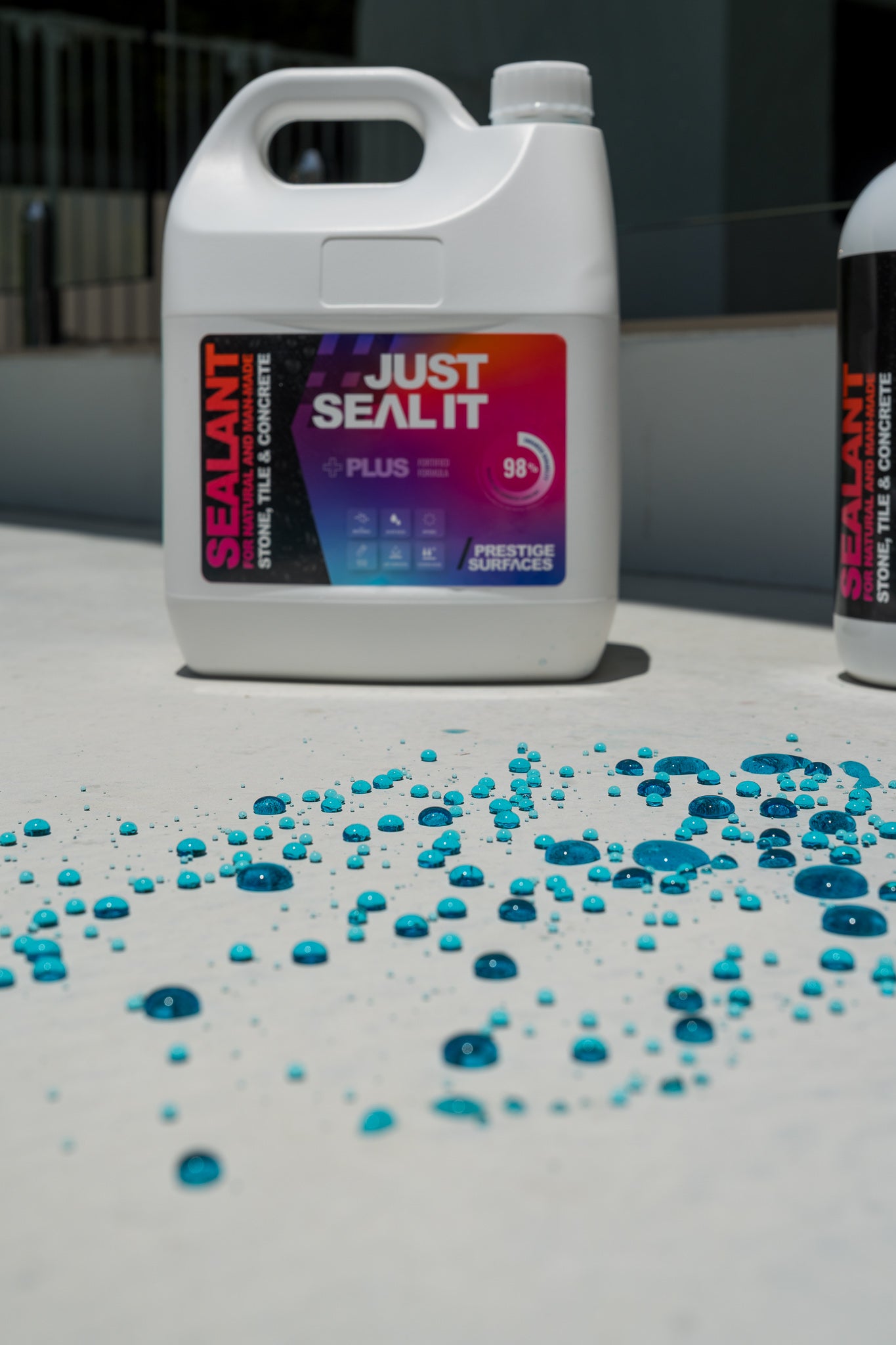
If the surface looks wet, shiny, or coated after sealing, a topical product was used. A penetrating sealer that's working correctly looks like nothing at all.
Efflorescence: what it is and whether sealer stops it

Efflorescence is the white, chalky deposit that forms on brick and masonry when soluble salts migrate to the surface with moisture and crystallise as the water evaporates. It's common on new brickwork in the first 12 to 24 months. It's also common on older brick that's been exposed to persistent moisture from poor drainage or rising damp.
A penetrating brick sealer prevents new efflorescence by reducing how much moisture can enter the masonry in the first place. Less moisture movement means fewer salts carried to the surface.
What sealer does not do is remove existing efflorescence. If the white deposits are already there, the surface needs to be cleaned and treated before sealing. Sealing over efflorescence prevents the sealer from bonding fully with the mineral structure. The surface will look worse, not better, and the job will need to be stripped and started again.
For active rising damp or a drainage problem, sealing is the wrong first step. Fix the water source. Then seal.
Which brick sealer do you need?
15,000+ surfaces sealed. Free worldwide shipping.
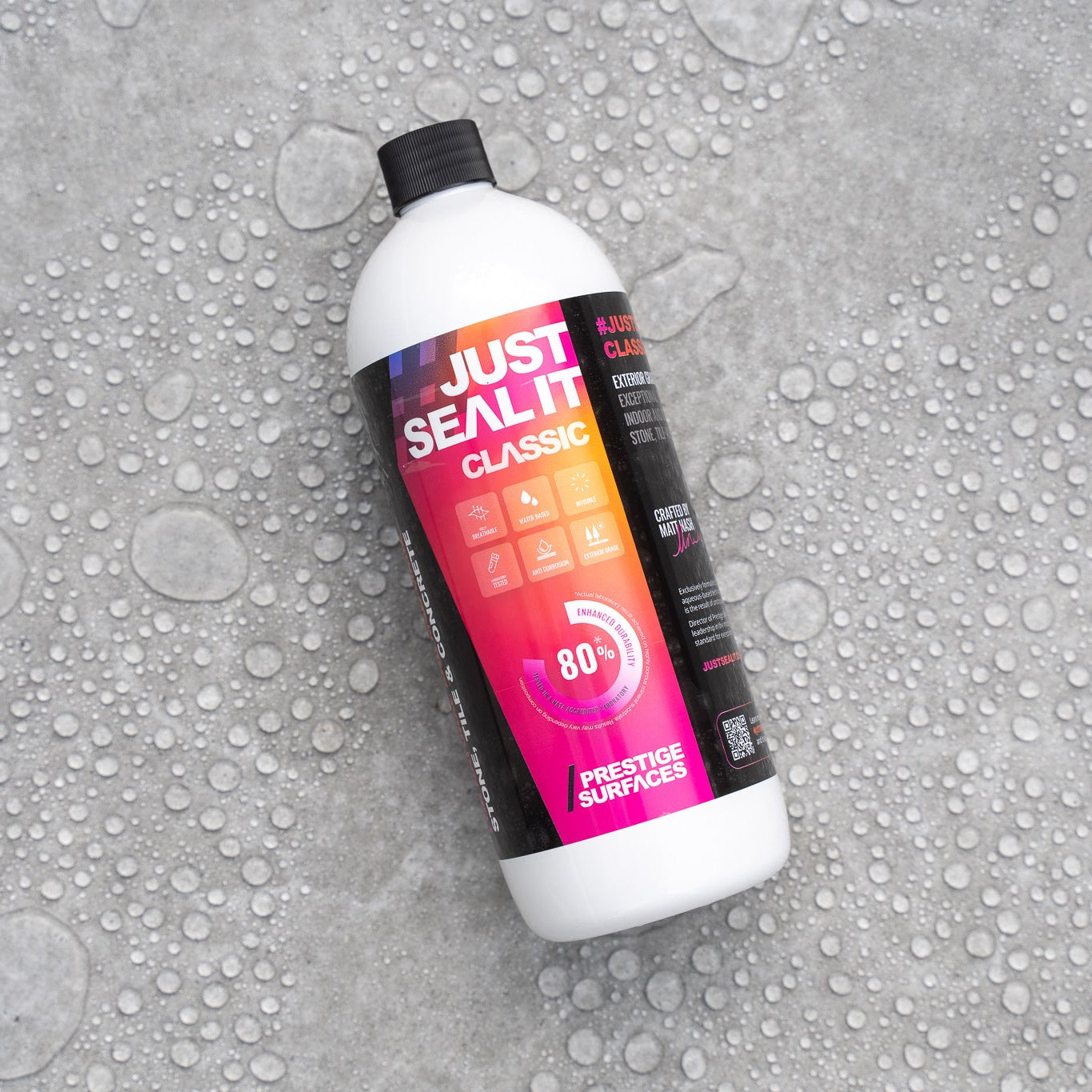
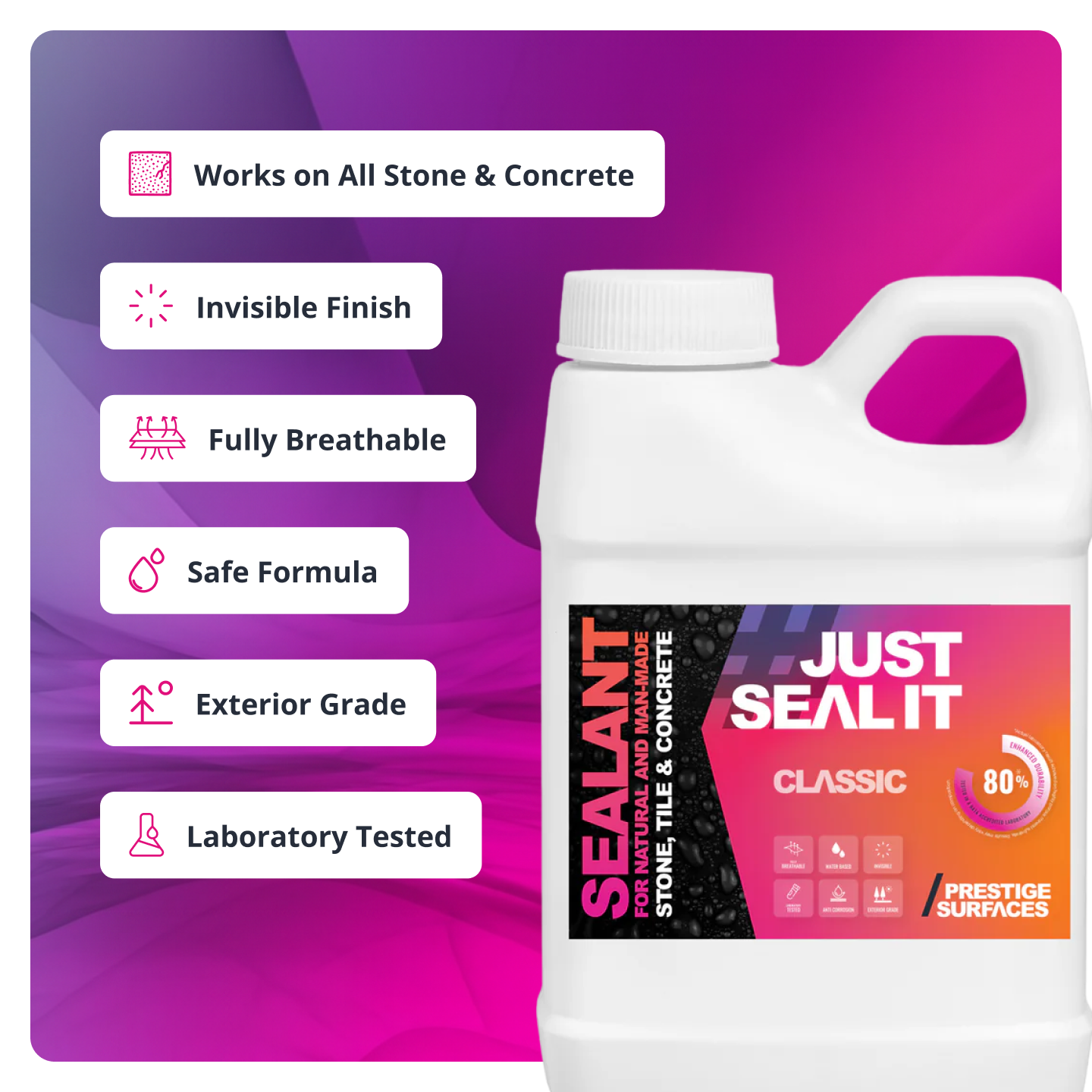
Classic Sealer
Driveways, paths, garden walls, outdoor entertaining areas. Most brick surfaces in most conditions.
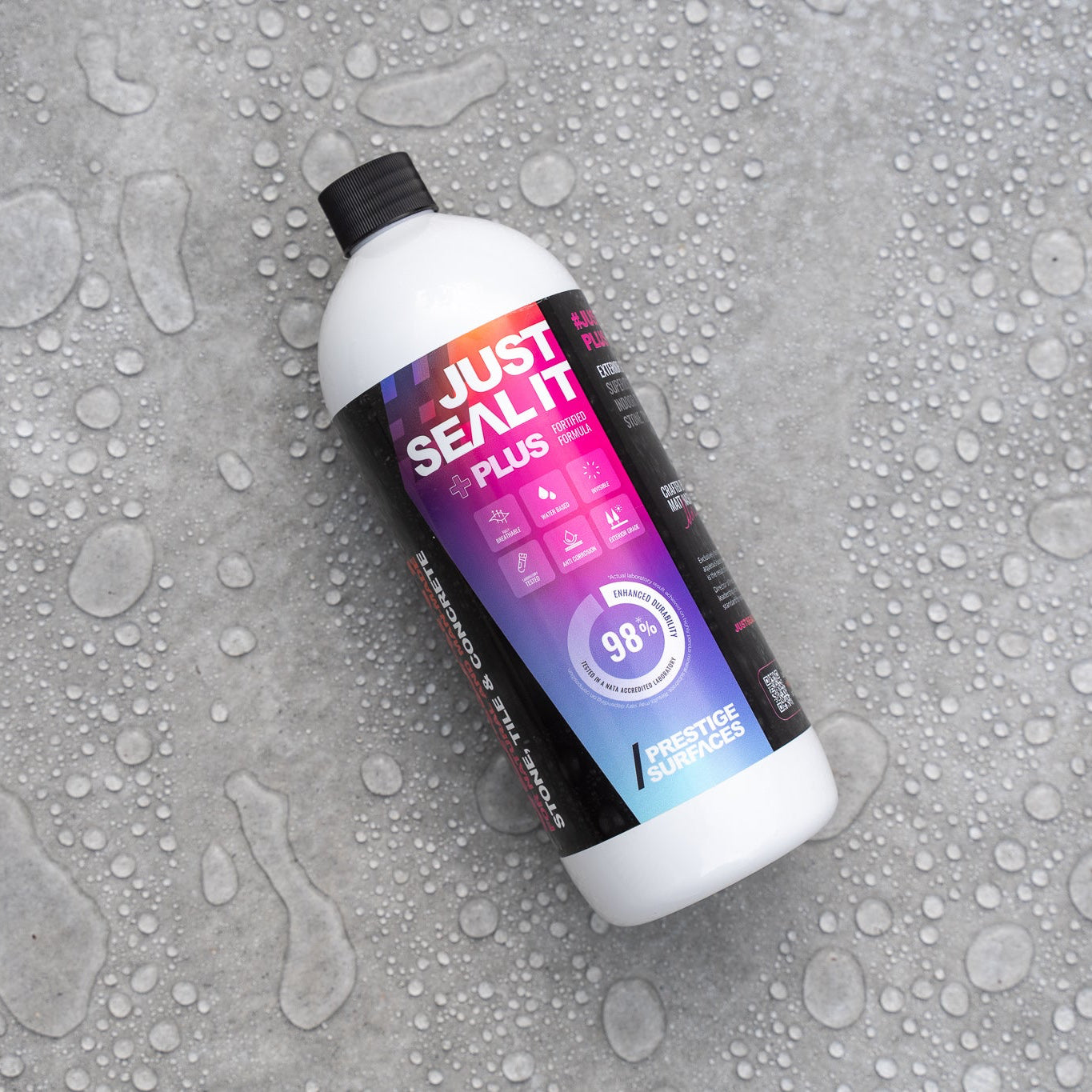
Plus Sealer
Coastal homes, pool areas, brickwork exposed to salt air or pool chemicals.
Brick pavers vs face brick: different jobs, same principle

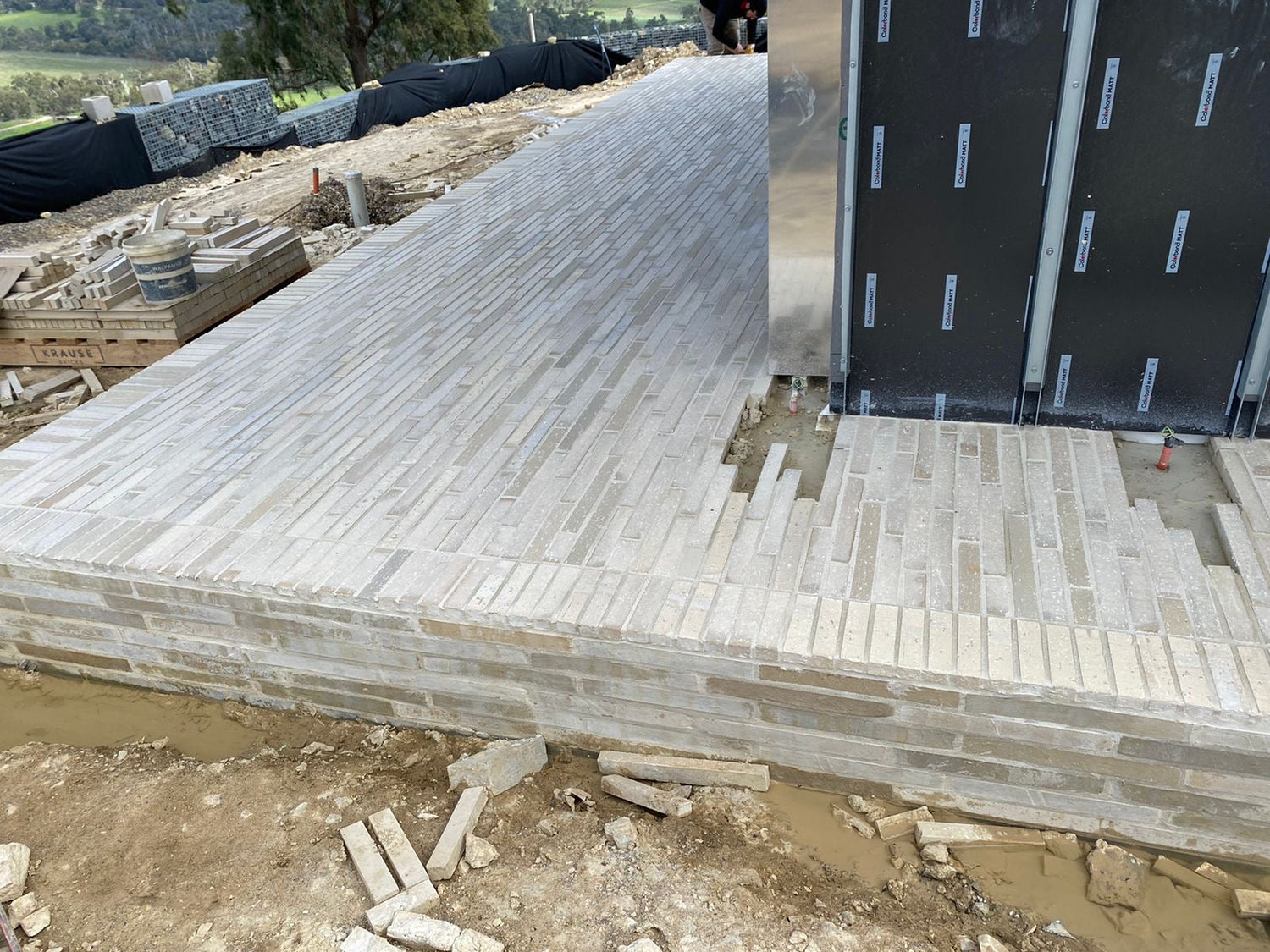
Brick paver sealing and face brick sealing use the same product type: penetrating, water-based. But the exposure is different.
Brick pavers in a driveway or path take traffic and repeated wetting from below as well as above. The priority is stain resistance and preventing moisture ingress from the ground up. A 4L of Classic Sealer covers 40m2 / 430 sq ft, enough for most residential driveways in two to three applications.
Face brick on a wall or feature structure is exposed primarily to rain and wind. Salt air if you're near the coast. The priority is efflorescence prevention and keeping the mortar joints from deteriorating. Same product, same application method, slightly different surface geometry. You'll use more product per square metre on rough-textured face brick than on pavers.
Retaining walls and garden borders sit somewhere between the two. They're in contact with soil moisture from behind and exposed to weather from the front. If the drainage behind the wall is working, a penetrating sealer manages the rest. If it isn't, the water pressure will find a way through regardless.
How to clean brick before sealing
For general dirt, grime, and organic staining, clean with Stone Wash diluted 1:100 with water. Apply, scrub, rinse thoroughly.
If there's visible algae, lichen, or mould, treat with sodium hypochlorite first. Let it dwell, rinse it off, then follow with Stone Wash to neutralise. Don't seal over biological growth. The sealer will lock the staining in permanently.
For efflorescence, use a diluted acid-based cleaner to dissolve the salt deposits, then rinse and neutralise. Check first: some bricks contain calcium carbonate, and acid-based cleaners react with it. When in doubt, test in a small area and check the brick specification before applying.
After cleaning, the surface must be completely dry before sealing. In warm conditions that's typically 24 to 48 hours. In cooler or humid weather, allow longer. Sealing damp brick traps moisture inside and the result is worse than not sealing at all.
For full prep guidance, see the How to Clean and Seal Guide.
See Penetrating Stone Sealer for independent laboratory test results on sealed versus unsealed surfaces.
How to apply brick sealer, step by step
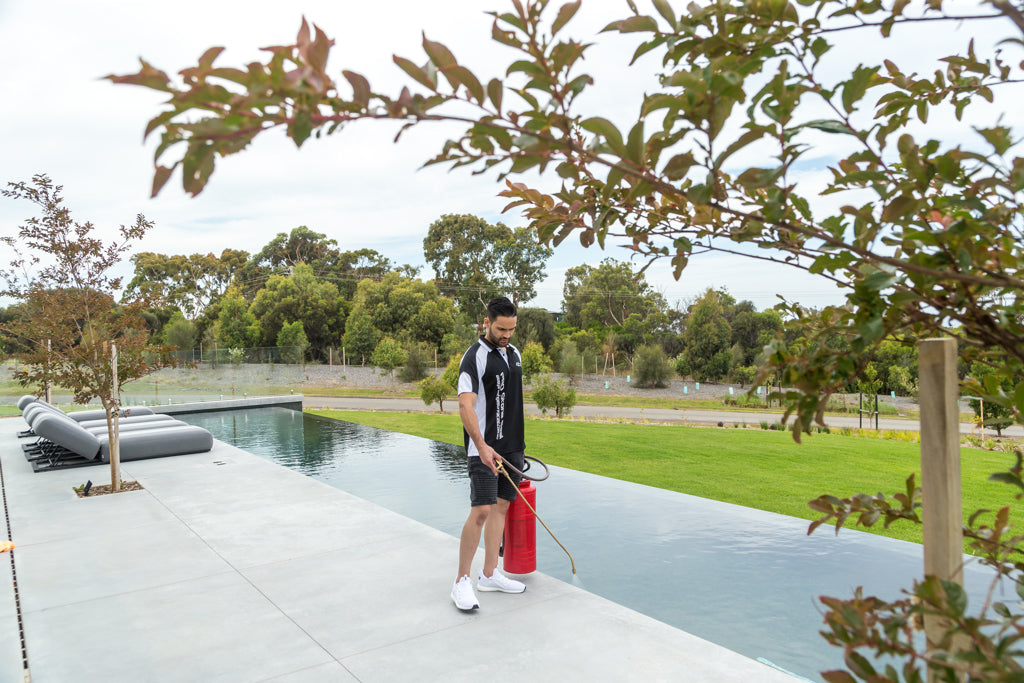
Apply undiluted at 10 to 30 degrees Celsius. Below 10 degrees, the chemistry doesn't work correctly. Above 30 degrees, the sealer dries before it can penetrate fully.
Use a low-pressure sprayer or microfibre applicator. Do not use a roller. Rollers push product into surface irregularities without distributing it evenly across the face.
Apply the first coat in one direction: left to right across the surface. Before the first coat dries, apply the second coat in the opposite direction. This wet-on-wet method ensures complete, even penetration. On rough-textured brick or very porous old brick, a third coat is worth doing once the first two have been absorbed.
Avoid pooling. Excess product sitting on the surface will dry as a white residue. If you see pooling, redistribute it immediately with the applicator.
For the full application walkthrough and coverage calculator, read the application guide. To estimate how much you'll need, use the area measurement guide.
How long brick sealer lasts on exterior surfaces

How long protection lasts depends on the brick type, surface texture, environment and traffic levels. There's no honest single answer. What we can say is that the chemistry itself is extremely durable. Unlike coatings, Classic Sealer and Plus Sealer bond within the mineral structure of the masonry rather than sitting on the surface, which is why they won't peel, flake or delaminate. A maintenance coat every 3 to 5 years keeps performance at peak levels regardless of conditions.
Surface water effects (the way water sits on a freshly sealed surface) reduce naturally over weeks and months after application. This is normal. Protection works internally regardless of what the surface looks like from outside.
After 3 to 5 years in high-exposure conditions (coastal, poolside, constant traffic), an optional top-up maintains peak surface performance. This isn't a reseal from scratch. A single additional coat brings the hydrophobic performance at the surface back to optimal.
For guidance on when a top-up is actually needed versus when the brick still has full protection, see the maintenance guide.
Acrylic and polyurethane coatings typically need replacing every 12 to 24 months. The cleanup when they fail (stripping a peeling topcoat off rough brick) takes considerably longer than applying a penetrating sealer did. Think Brick Australia and Cement Concrete and Aggregates Australia both note moisture management as a primary factor in masonry durability. Penetrating sealers address it without the maintenance cycle.
Frequently asked
Do bricks need to be sealed?
Fired clay brick is porous and absorbs moisture, salts, and staining. Sealing isn't mandatory, but unsealed brick in an outdoor setting will deteriorate faster, stain more easily, and develop efflorescence over time. If the brickwork is exposed to weather, traffic, or soil contact, sealing is worth doing.
Does a brick sealer prevent efflorescence?
A penetrating sealer reduces moisture ingress, which is what carries dissolved salts to the surface. Less moisture movement means less efflorescence. It won't remove deposits that are already there. Those need to be cleaned off first. Sealing over existing efflorescence prevents the sealer from bonding fully with the mineral structure.
What's the best sealer for brick pavers?
A penetrating, water-based sealer. Classic Sealer covers most residential brick paver applications: driveways, paths, outdoor entertaining areas. For pavers near a pool or in a coastal environment, Plus Sealer provides the additional salt and chemical resistance those conditions need.
Will sealer change how my bricks look?
A penetrating sealer should be invisible once dry. It doesn't alter the colour, texture, or natural appearance of the brick. If a sealer gives brick a wet or shiny look, it's a topical product. Not the right type for brick.
Can you seal old bricks that already have efflorescence?
Not without treating the efflorescence first. Clean off the deposits with a diluted acid-based cleaner (after checking the brick isn't calcium carbonate-sensitive), rinse, neutralise, let dry completely, then seal. Skipping that step and sealing over the staining will make it permanent.
How long does brick sealer last?
How long protection lasts depends on the surface, environment and traffic levels. What we can say is that the chemistry is extremely durable. Classic Sealer and Plus Sealer bond within the mineral structure of the masonry rather than sitting on the surface, which is why they won't peel, flake or delaminate. A maintenance coat every 3 to 5 years keeps performance at peak levels. That's very different from a topical coating, which typically needs replacing every 12 to 24 months.
What's the difference between sealing brick pavers and face brick?
The same penetrating sealer works on both. The difference is exposure: pavers take traffic and moisture from below, so stain resistance and ground moisture blocking are the priority. Face brick on a wall is exposed to rain and wind, so efflorescence prevention and mortar protection matter more. Application method and product choice are the same either way.
Can I apply brick sealer myself?
Yes. Clean the surface thoroughly, make sure it's completely dry, apply two wet-on-wet coats with a low-pressure sprayer or microfibre applicator at 10 to 30 degrees. The most common DIY mistakes are sealing over a damp or dirty surface and using a film-forming product instead of a penetrating one. Get those two things right and the rest is straightforward.
Still stuck? Get the right product

Not sure whether Classic or Plus suits your brick, how much you'll need, or whether your surface needs efflorescence treatment first: email hello@justsealit.com.au with a photo and we'll tell you. Most questions take five minutes to answer. We'd rather you get it right the first time than buy twice.