By Matt Nash, Founder, Just Seal It. 20+ years on-site. 15,000+ surfaces sealed. Featured on The Block. Published 6 May 2026.
Picture framing on natural stone pavers is permanent. A dark shadow forms around the edge of each individual paver, making a clean installation look like a grid of framed artwork rather than a continuous stone surface. Once it appears, no cleaning product removes it. The CCAA paving guidelines provides independent reference on this.
This is a penetrating stone sealer problem. Specifically, a lack of one. Grout water enters the unprotected edges of the paver during installation, deposits minerals inside the stone, and the shadow is there for good.
Short version: Before laying any natural stone, seal all six sides of every paver with a penetrating stone sealer. Top, base, and all four edges. Do the same for any cuts made on-site. The only reliable way to prevent picture framing of any type is dip sealing before installation.
What is picture framing in natural stone paving?

Picture framing is a dark border that appears along the perimeter of individual pavers, following the joint line and fading toward the centre of each stone. From above, the paving looks like a series of framed pictures rather than a uniform surface.
It is not a surface stain. Surface stains sit on top of the stone and respond to cleaning. Picture framing is inside the stone, below the surface, within the pore structure.
That distinction matters. Surface stains can usually be removed. Picture framing cannot.
Why does picture framing happen?
Grout water is not clean water. It contains dissolved cement, calcium, and other minerals from the grout mix. When fresh grout is pressed into joints around unsealed natural stone, that water migrates sideways into the open pores at the paver's edge.
As the grout dries and the water evaporates, the dissolved minerals are left behind. They set inside the pore structure of the stone. Permanently.
Grout stays porous long after it has cured. It continues to absorb water throughout its life. Each wet-dry cycle pushes more mineral-laden water into those edge pores, adding to the deposit. The shadow deepens over time.
This is why picture framing often becomes more pronounced in the first year or two after installation, particularly on paving that gets regular rainfall or irrigation.
When grout sets inside the pores
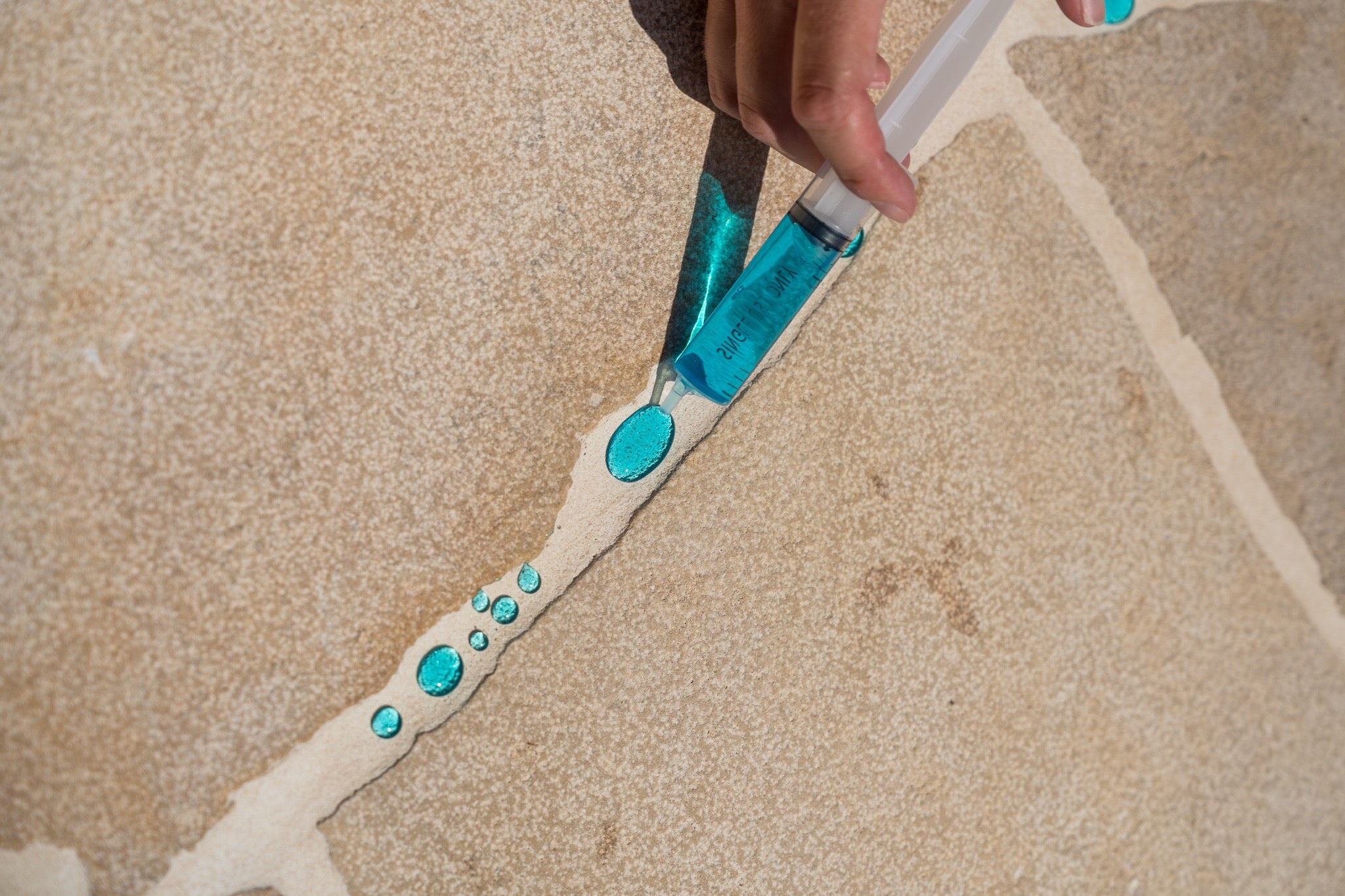
The picture framing described above is caused by mineral-laden water migrating into the stone. A second and distinct version looks identical but has a different cause: actual grout material physically embedded inside the stone's pores during installation.

This happens on highly porous stone when grout is applied around the perimeter of each tile rather than across the full face. On a surface with large open pores, the grout mix doesn't stay neatly in the joint. It gets pressed into the pore structure at the tile edges and sets solid. The result is a permanent border following every joint line, visually indistinguishable from the mineral version.

No amount of cleaning removes it. The particles are set inside the pore structure. Acid washing may etch the surface grout slightly but cannot extract material that has hardened deep inside the stone. There is no chemical solution to this type of picture framing.

The solution is not cleaning. It is flood grouting. Rather than grouting the joints alone, grout the entire face of the substrate. When grout covers the whole paver face uniformly, the pores fill evenly across the entire surface. There is no distinct border to separate the edge from the centre. The result is a uniform finish. This is a deliberate technique used on highly porous stone installations specifically to eliminate the picture frame effect at the joint lines.
Picture framing from moisture

Not all picture framing is caused by minerals or grout. On some stone, particularly granite, what looks like picture framing can be a moisture effect: the cut edges absorb and hold moisture differently to the finished face, producing a visible shadow that follows the joint pattern.
The cut edges of a paver are more porous than the finished face. That raw, sawn surface absorbs moisture readily and holds it longer than the denser finished face. The centre dries off while the edges stay wet. That moisture differential creates a visible border following every joint line. Granite paving is the most common example on-site.
The key difference from the mineral and grout versions: moisture picture framing can improve on its own. On well-drained installations in good conditions, the effect can fade significantly over several months as the stone reaches moisture equilibrium. It won't always disappear completely, but it is not necessarily permanent.

Sealing can temporarily make existing picture framing more visible. This is not the sealer causing the problem. It happens because the thorough cleaning done before sealing brings the surface into sharp relief. The effect generally settles as the sealer cures and the surface equilibrates.
If picture framing is present, sealing with a penetrating sealer is still the right call. Penetrating sealers are breathable: they don't trap moisture or vapour underneath. A film-forming coating over a surface with active moisture movement creates a different and harder problem.
The only reliable way to prevent picture framing of any type is dip sealing before installation. All six sides, every paver, cuts included.
Why it cannot be fixed once it appears
The mineral and grout-embedded types have no remedy. The minerals are inside the stone, not on the surface. Cleaning products cannot reach them. Acid washing may slightly lighten a stain on the face of the paver, but the discolouration at the edges runs into the pore structure where no surface treatment reaches.
Some operators have tried poultice treatments with inconsistent results. Grinding exposes fresh stone at the face but does not reach the affected zone at the edge. The standard position in the stone industry is that once picture framing has developed, it is permanent.
Replacing affected pavers or living with the appearance are the only realistic options. Stone paving does not need to be particularly large for that to be an expensive problem. A single limestone paving installation we've quoted came in at $47,251.98 for 50m2. Sealing before installation costs a fraction of that.
Which natural stones are most at risk?
All natural stone is porous to some degree. The more porous the stone, the faster picture framing develops and the more pronounced it becomes.
Limestone and sandstone are among the most porous common paving stones. Contact with grout water for even a short period is enough to begin mineral deposition at the edges.
Travertine has natural voids in addition to its pore structure. Grout water moves quickly into the stone edges.
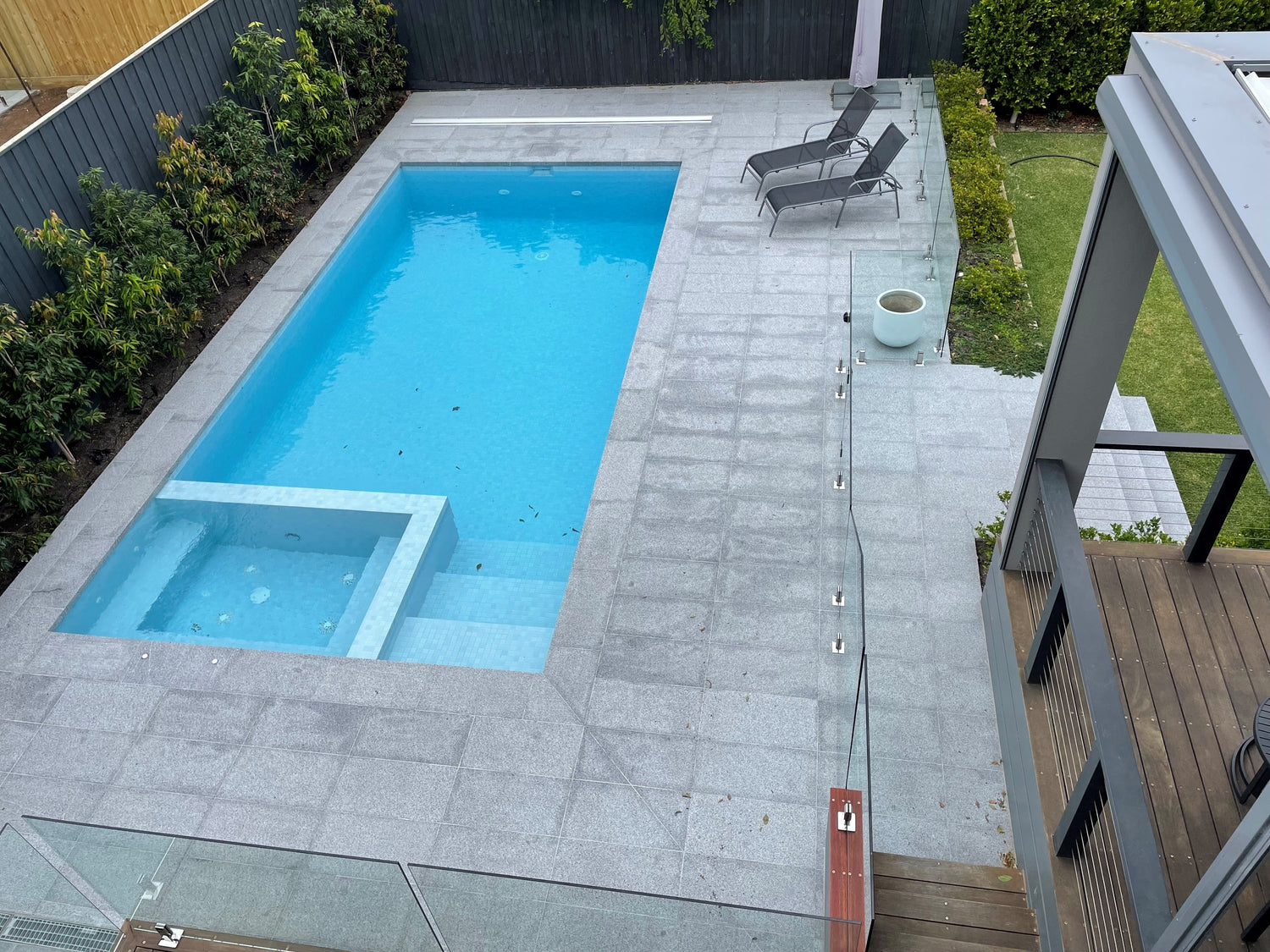
Granite is often considered dense and low-absorption. It is denser than limestone, but the cut edge of a granite paver absorbs significantly more than the finished face. Pool surrounds in granite are regularly affected. Prolonged contact with grout mortar at the edges is enough. Granite is also the most common surface for moisture-related picture framing.
Bluestone and basalt are denser still, but not immune. Darker colouring can make the framing less obvious initially. The mineral deposition still occurs.
The key point: density of the finished face does not predict absorption rate at the cut edge. Every natural stone should be treated as porous at the edge until laid and grouted with proper protection in place.
Dip sealing: all six sides before installation
Before any paver is laid, apply a penetrating stone sealer to all six sides: the face, the base, and all four edges.
This is called dip sealing when the paver is submerged in sealer. It can also be done by brush or roller on each face individually. The result is the same: every surface that will contact mortar, grout, or ground moisture is protected before installation begins.
A penetrating sealer chemically bonds within the mineral structure of the stone rather than coating the surface. The protection forms from inside the pore structure: invisible, with no change to the stone's appearance. When grout water reaches the treated edge during installation, it cannot penetrate. The minerals stay in the grout where they belong.
Allow the sealer to penetrate and begin to cure before placing the pavers. For Just Seal It products, light foot traffic is possible 1 to 2 hours after the surface is dry to touch. The application guide covers timing under different temperature and humidity conditions.
The base face matters. Ground moisture travels upward through the bedding material throughout the life of the installation. Sealing the base before laying protects against this long-term moisture source as well as picture framing from below.
Don't forget the cuts
This is where most installations go wrong.
Pavers are pre-sealed before delivery or on-site before laying begins. Then cuts are made. The cut face is fresh, unprotected stone with open pores running across the full width of the paver. Every paver cut on-site and laid without treating that cut edge is a candidate for picture framing on that line.
Seal cut edges immediately after cutting, before the paver is placed. A brush application of penetrating sealer on the cut face takes less than a minute per paver. Allow to penetrate, then lay.
This step is consistently skipped because it adds time on a busy installation day. The result shows up at every cut line around the perimeter, at steps, at curves, and at feature edges. Those tend to be the most visible parts of the finished paving.
Which penetrating stone sealer to use
Two things determine the right product: the sealer chemistry and the exposure environment.
See Penetrating Stone Sealer for independent laboratory test results on sealed versus unsealed surfaces.
On chemistry: penetrating sealers bond to mineral surfaces from within the pore structure. Unlike topical coatings, there is nothing sitting on the surface to peel, flake or delaminate. Film-forming sealers look good initially. Then moisture works underneath, the coating lifts, and reapplication becomes difficult because you are sealing over a compromised surface. A penetrating sealer eliminates that failure mode entirely.
If you can see the sealer on the stone, it is the wrong type.
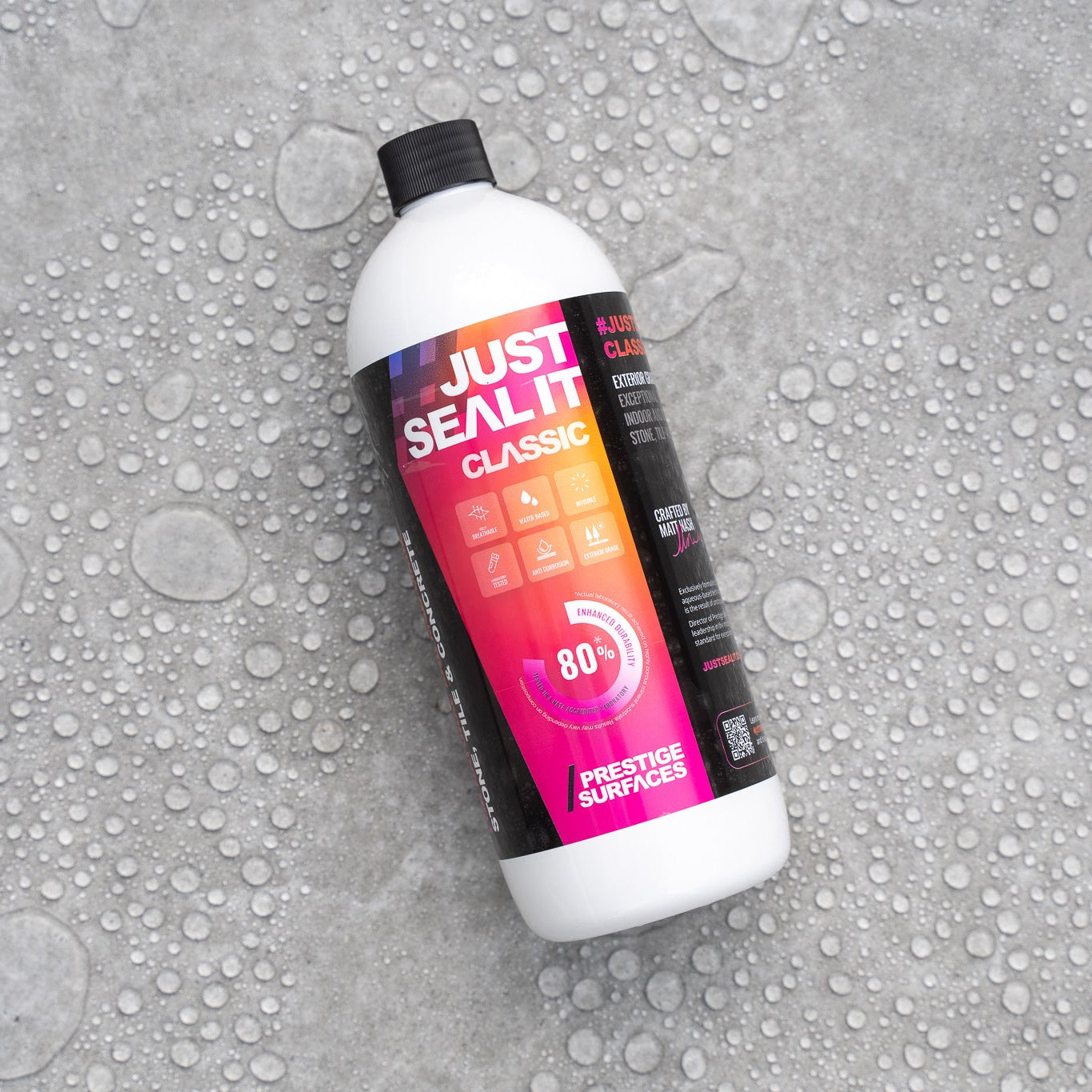
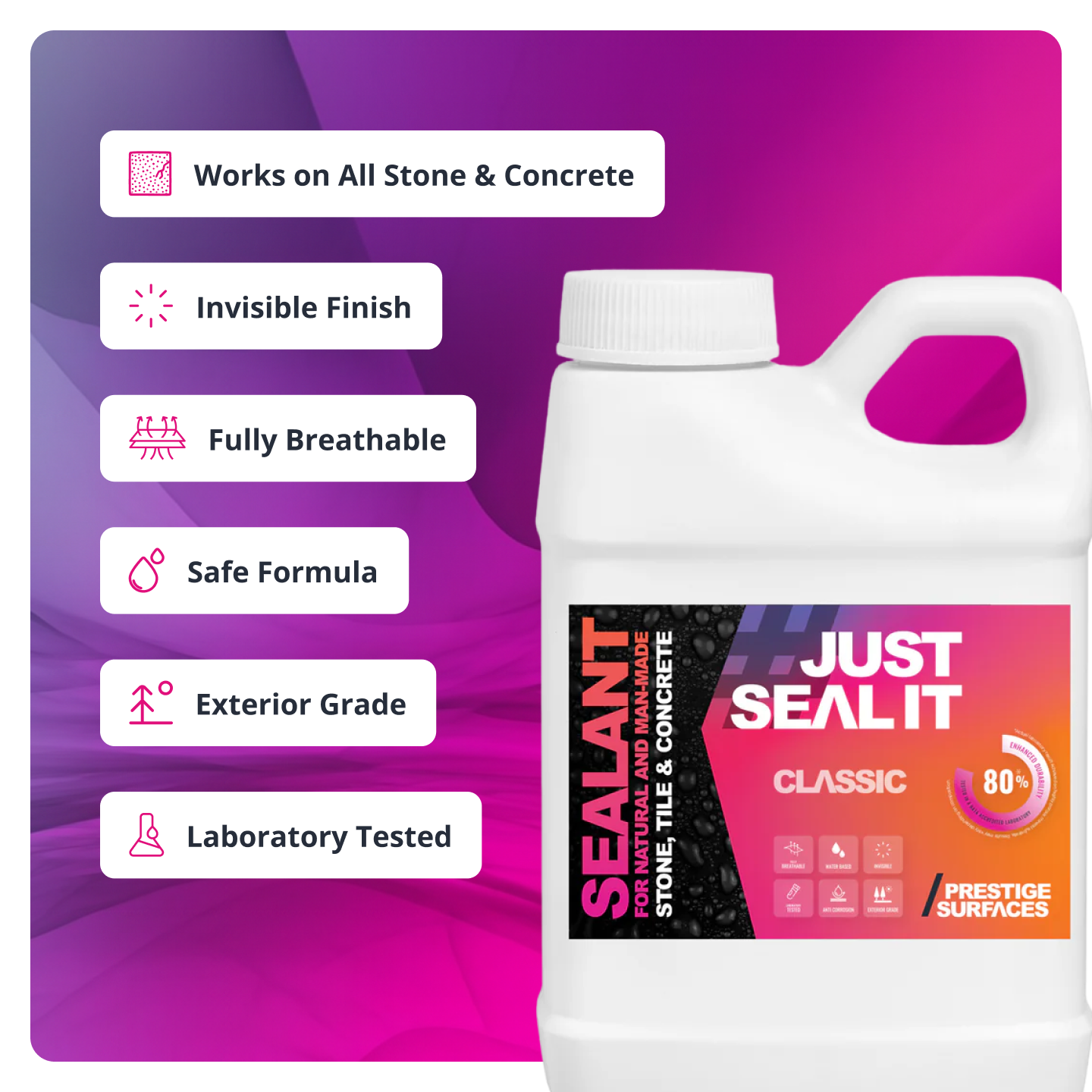
Classic Sealer handles most natural stone paving installations. Up to 80% enhanced durability in NATA-accredited laboratory testing. Invisible, breathable, PFAS-free. The NATA provides independent reference on this.
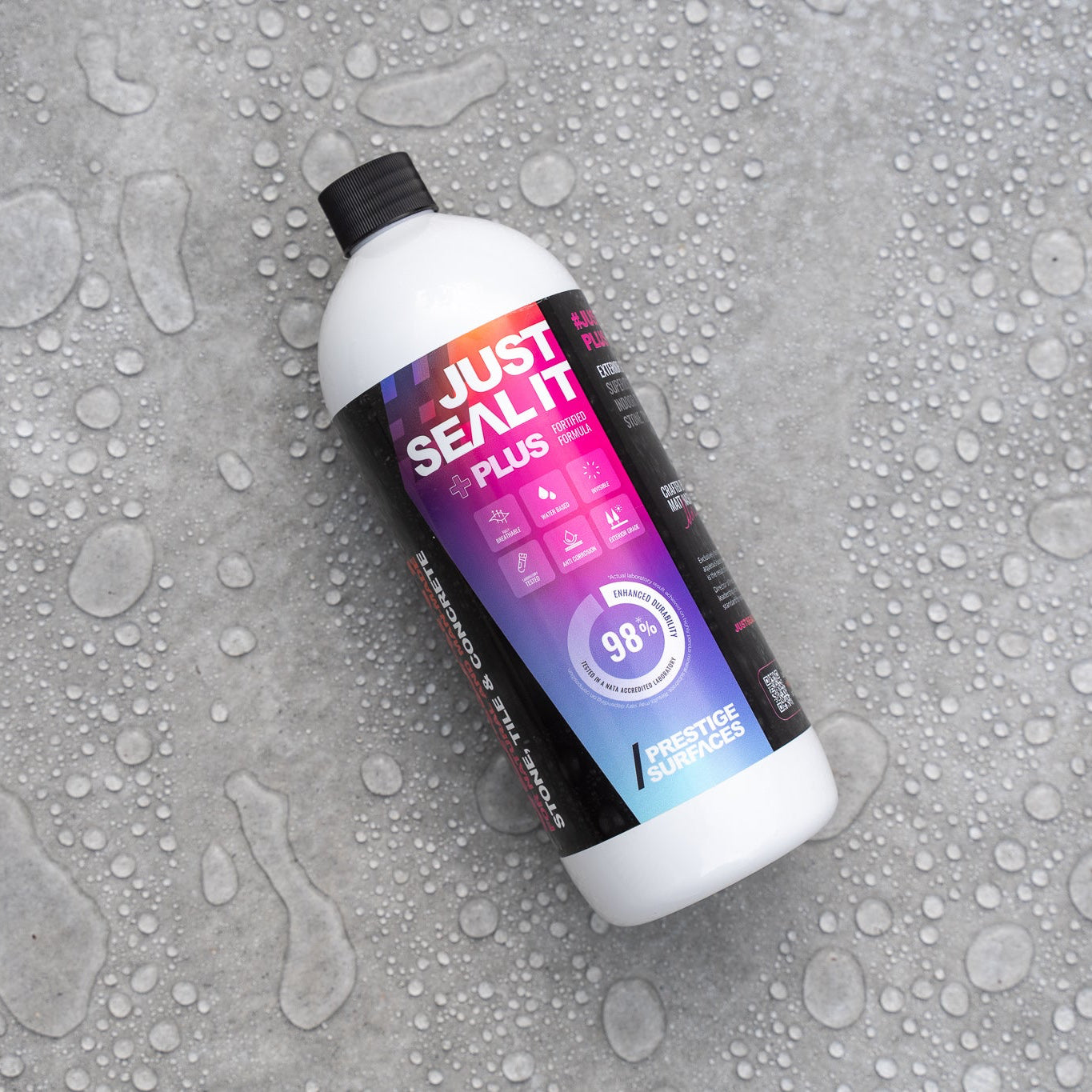
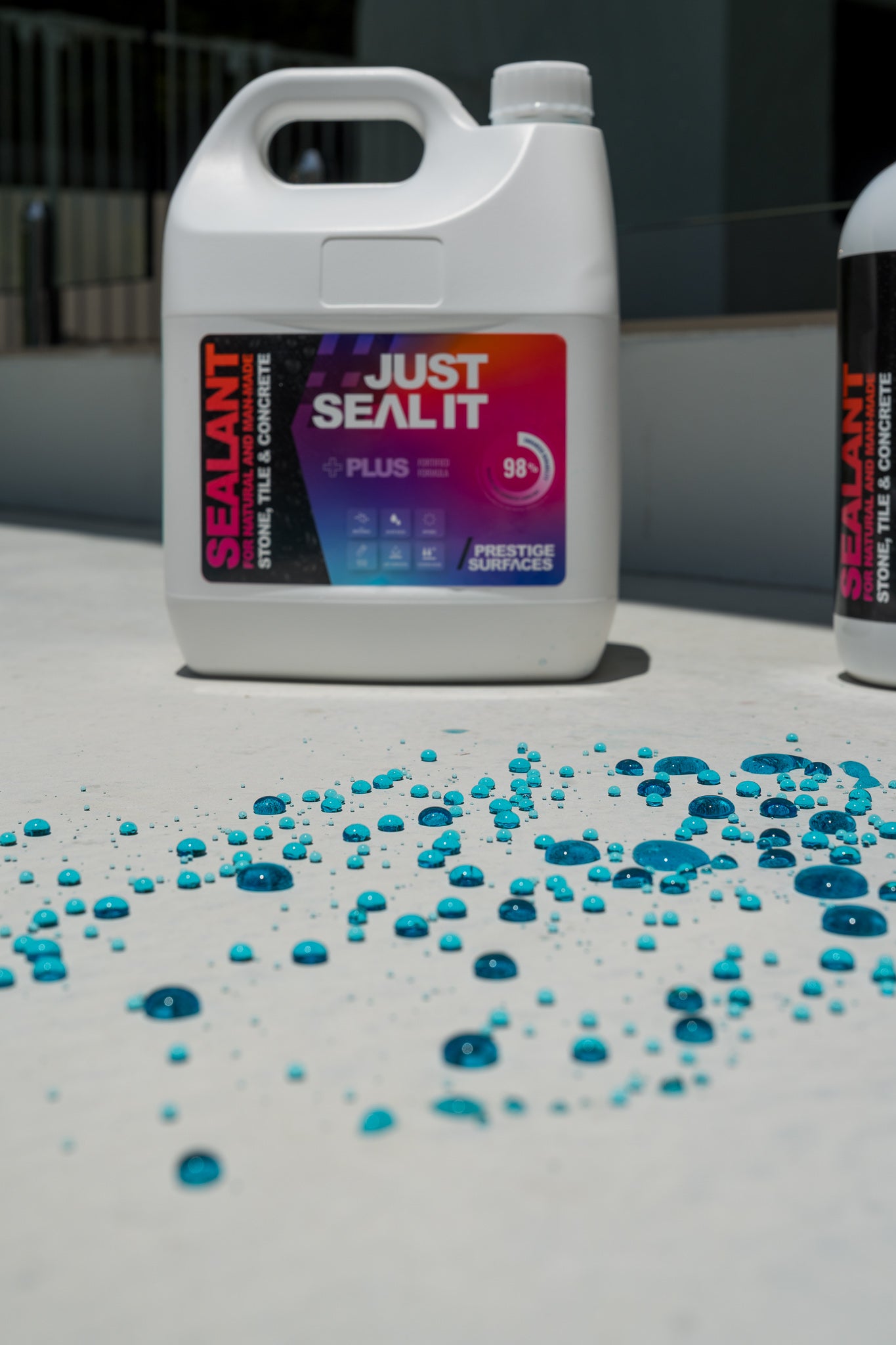
For pool surrounds, coastal environments, or stone in high-exposure outdoor conditions: Plus Sealer is formulated for tougher situations. Up to 98% enhanced durability on highly porous mineral substrates in NATA-accredited testing.
Both are penetrating, water-based, and PFAS-free. Neither will alter the natural appearance of the stone when applied correctly. The product selector can help if you are not sure which suits your specific installation.
For the broader case on why exterior paving should be sealed, the resources guide covers the long-term argument in detail.
After installation: the surface seal
Pre-installation dip sealing handles the picture framing risk during grouting. It does not replace the surface seal applied after the installation is complete.
Once the pavers are laid and the cement-based grout has cured (28 days minimum), apply a seal to the finished surface from above. This covers minor abrasion from the installation process, seals the grout joint faces, and adds the protection the surface needs for foot traffic, weather, and regular use.
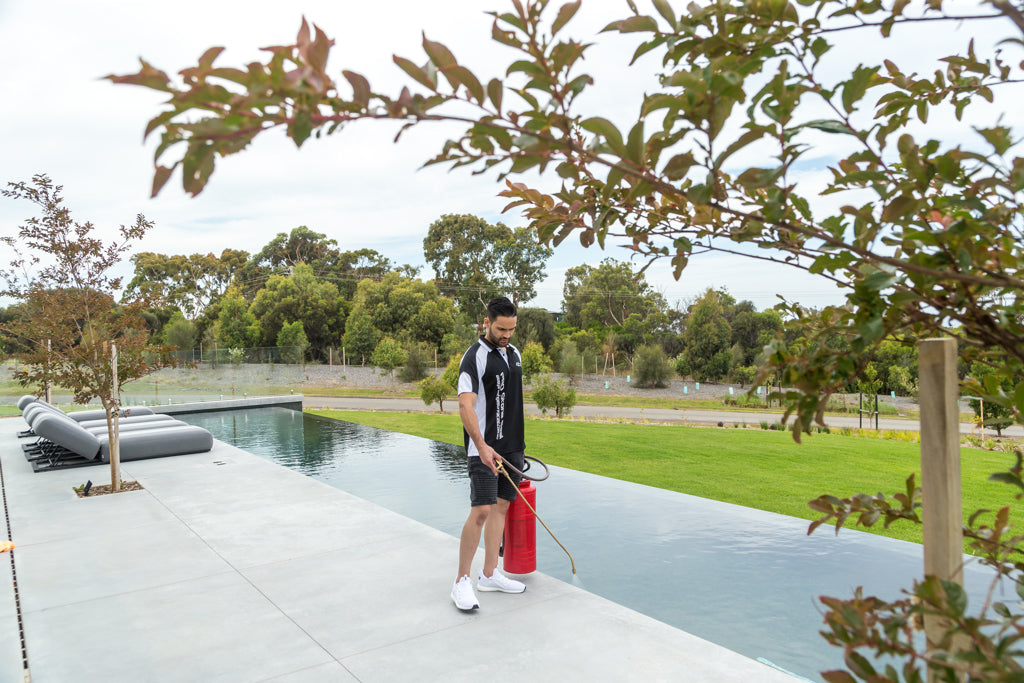
Two coats, wet-on-wet, using a low-pressure sprayer or microfibre applicator. Full details in the application guide.
When stone is first installed, it looks good either way. Sealed or not. The difference shows later. The chemistry itself is extremely durable. How long protection performs depends on traffic, environment, and exposure. A maintenance coat every 3 to 5 years keeps performance at peak levels. Surfaces protected correctly clean up easily years on: minimal staining, still holding their natural appearance. The ones that were not sealed properly are harder to get back.
For ongoing care once the surface seal is in place, see the maintenance guide.
Frequently asked
What is picture framing in natural stone paving?
Picture framing is a dark border that appears along the perimeter of individual pavers, following the joint line. It is caused by minerals from grout water depositing inside the pore structure of the stone edge during installation. It is not a surface stain and cannot be removed by cleaning.
Can picture framing in pavers be fixed?
In most cases, no. Mineral picture framing and grout embedded in pores are both permanent. Moisture-related picture framing on granite and similar dense stone can improve over several months as the stone dries out and reaches equilibrium. Prevention before installation is the only reliable approach for the mineral and grout versions.
Does all natural stone get picture framing?
All natural stone is porous to some degree and all natural stone is susceptible. Limestone, sandstone, and travertine are most vulnerable due to high porosity. Granite and bluestone are denser but still affected at the cut edges, which absorb water more readily than the finished face. Granite is also the most common stone for moisture-related picture framing.
What causes picture framing from grout in the pores?
On highly porous stone, grout material can physically embed itself in the large surface pores during installation rather than staying in the joint. No cleaning or acid washing removes it. The solution is flood grouting: grouting the entire face of the substrate uniformly so there is no distinct border between the edge and the centre of each paver.
What is dip sealing and how does it work?
Dip sealing is the process of submerging natural stone pavers in a penetrating sealer before installation, coating all six sides. It can also be done by brush or roller on each face. The sealer enters the stone's pore structure and creates a hydrophobic barrier, blocking grout water from penetrating the edges during installation.
Should you seal pavers before or after installation?
Both. Seal all six sides of each paver before installation to prevent picture framing during grouting. Then apply a surface seal to the finished installation once the grout has fully cured (28 days minimum for cement-based grout). The two applications serve different purposes.
Do cut edges of pavers need to be sealed separately?
Yes. A cut edge exposes fresh, unsealed stone with open pores running across the full paver width. Any paver cut on-site must have the cut face sealed before it is laid. This is the most commonly skipped step in the process and the most common cause of picture framing at perimeter and detail cuts.
Can sealing make picture framing worse?
Sealing can temporarily make existing picture framing more visible. This happens because thorough cleaning before sealing brings the surface into sharp relief. It generally settles as the sealer cures. A penetrating sealer is the right product if framing is present: breathable, it does not trap moisture underneath the way a film-forming coating would.
How does a penetrating stone sealer prevent picture framing?
A penetrating sealer enters the stone's pore structure and bonds to mineral surfaces from within, forming a hydrophobic barrier. When grout water reaches the treated edge during installation, it cannot penetrate the pores. The minerals from the grout stay in the joint and are not deposited inside the stone.
Does sealing natural stone before installation change its appearance?
No. A penetrating sealer applied correctly leaves no visible residue and does not alter the natural colour or finish of the stone. The face, base, and edges will look the same after sealing as before. The protection is internal and invisible. If the stone looks coated or different after sealing, excess product was applied or the wrong sealer type was used.
Still stuck? Get the right product

Not sure which sealer suits your surface, how much you will need, or whether your stone needs cleaning before sealing: email hello@justsealit.com.au with a photo and we will tell you. Most questions take five minutes to answer. We would rather you get it right the first time than buy twice.