By Matt Nash, Founder, Just Seal It. 20+ years on-site. 15,000+ surfaces sealed. Featured on The Block. Published 15 April 2025.
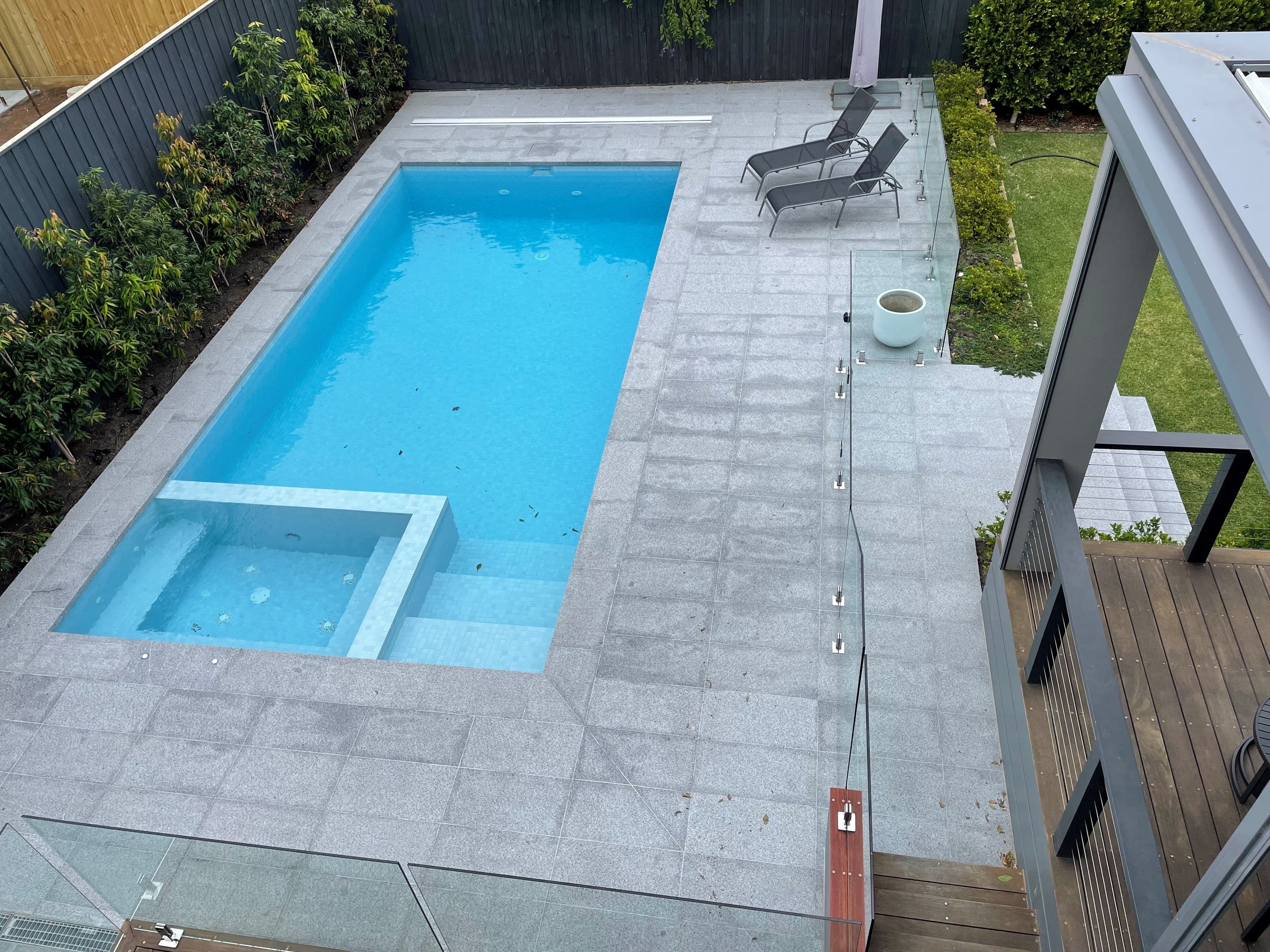
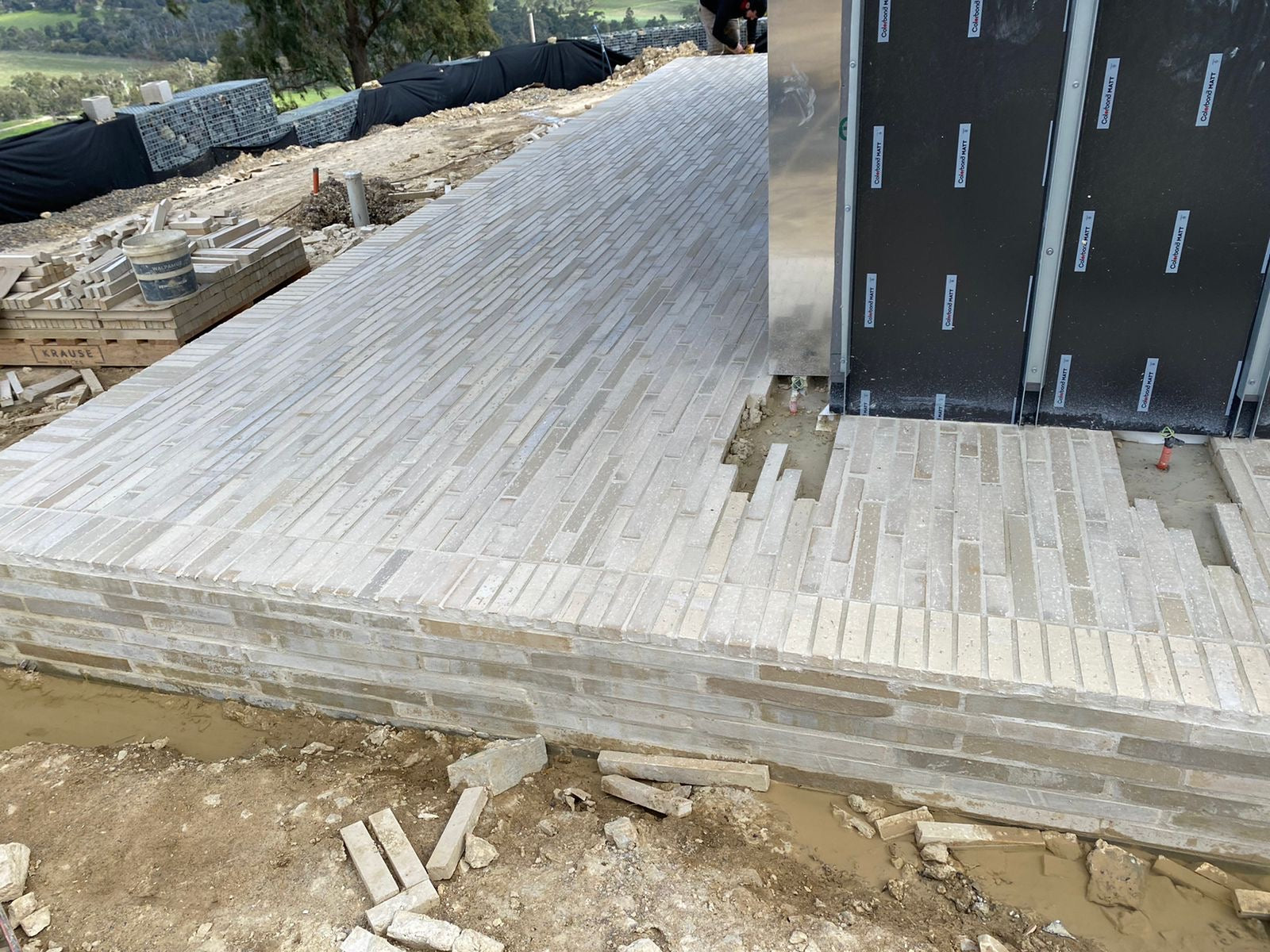
Outdoor paving is exposed to everything: UV, rain, frost, pool chemicals, biological growth. Over time, that exposure degrades an unsealed surface from the inside. Efflorescence pushes through joints as moisture evaporates. Corrosion from salt and pool water works at the surface. Biological growth takes hold in open pores and becomes progressively harder to remove.
A penetrating sealer does not coat the surface. It bonds within the pore structure and significantly slows those processes. The result is a surface that holds up in the elements, stays cleaner with less effort, and needs a maintenance coat every 3 to 5 years rather than a costly strip and reseal.
After a few years in the same outdoor environment, the difference between sealed and unsealed pavers is visible. One is still performing. The other shows every season it has been through.
Organic and tannin staining from leaves and garden runoff will still occur on a sealed surface. It is not bulletproof. The difference is that on a sealed paver, it cleans off. On an unsealed one, it often doesn't.
Short version: Use a penetrating, water based paver sealer. Clean the surface first with a diluted stone cleaner (1:100). Apply two coats wet on wet in opposite directions. Light foot traffic after 1-2 hours, full chemical cure at 30 days. A maintenance coat every 3 to 5 years maintains peak performance.
Why paver sealing matters

Porous surfaces left unsealed absorb everything: moisture, pool chemicals, garden runoff, biological growth. Over time that accumulation changes the surface at depth. Staining that won't clean out. Surface degradation that is not visible until it is already significant.
Sealing addresses the main failure modes of outdoor paving. It prevents efflorescence by reducing the moisture carrying soluble salts to the surface. It reduces corrosion risk from pool chemicals and coastal salt exposure. It slows moisture ingress, which matters in climates with sustained damp or temperature variation.
The practical benefit most people notice first is ease of maintenance. A sealed surface does not absorb contamination at the same rate as an unsealed one. Routine cleaning stays quick. After a few years, the difference between sealed and unsealed pavers in the same environment is obvious: one cleans up fast, the other has layers of staining and biological growth that a hose will not shift.
The cost of addressing contamination after the fact is substantially higher than sealing correctly in the first place. A professional strip and reseal is more expensive, more disruptive, and sometimes not fully reversible if contamination has penetrated deeply.
What type of paver sealer to use
There are two categories of paver sealer: penetrating and topical.
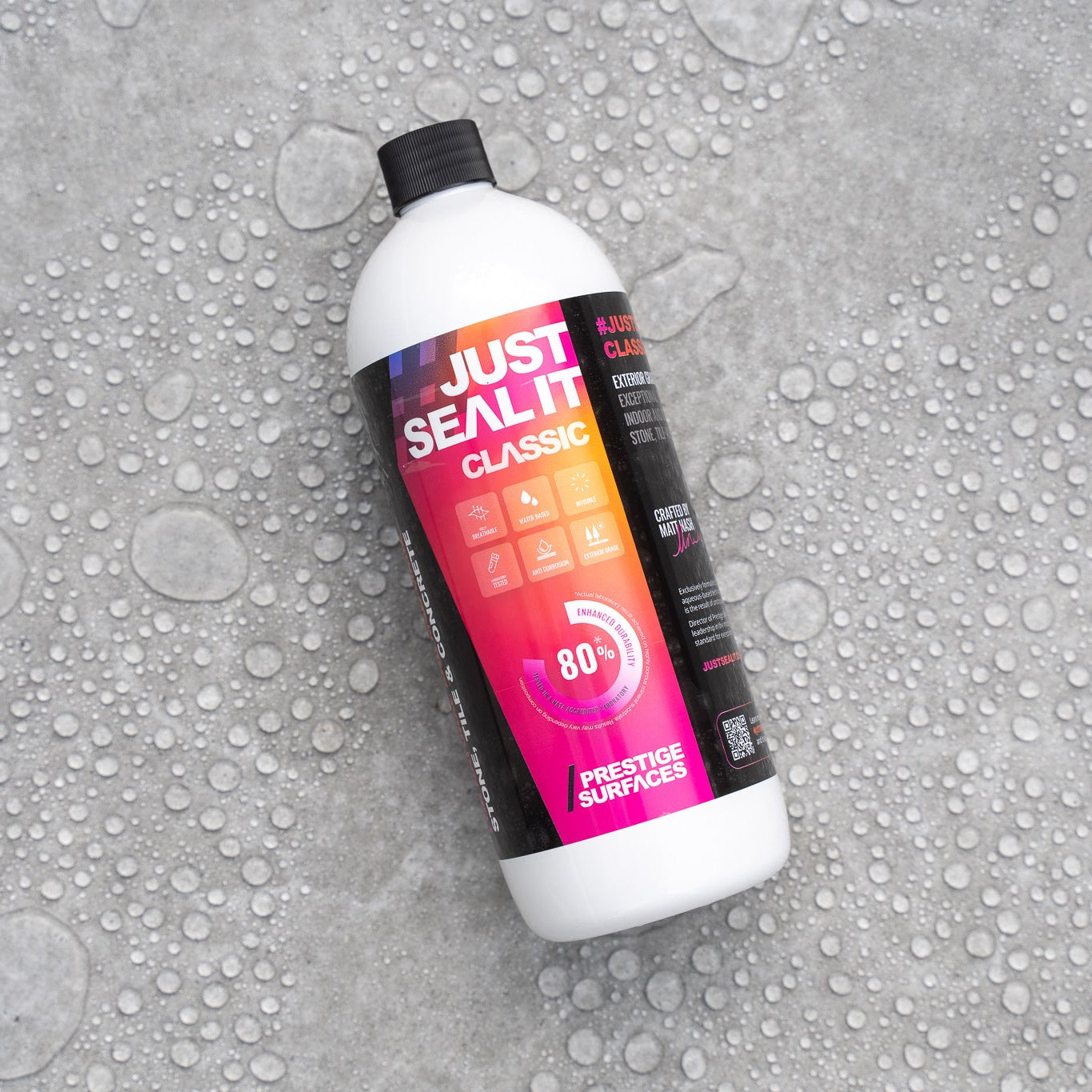
A penetrating sealer chemically bonds within the mineral structure of the paver rather than coating the surface. Protection forms from inside the pore structure: invisible, with no change to the paver's appearance. Unlike topical coatings, there is nothing sitting on the surface to peel, flake, or delaminate.
A topical sealer sits on the surface as a film. Film forming sealers look good initially. Then moisture works underneath, the coating lifts, and reapplication becomes difficult because you are sealing over a compromised surface. On natural stone especially, topical sealers fail and leave the surface in worse condition than if it had never been sealed.
One works from the inside. The other sits on top and eventually fails. The difference matters.
For most outdoor pavers (concrete, travertine, sandstone, bluestone, limestone), Classic Sealer is the right product. For pool surrounds and coastal environments with salt exposure, Plus Sealer provides additional durability. The CCAA paving guidance provides independent reference on this.

How to prepare pavers for sealing

Preparation determines whether the sealer works. A sealer applied over a dirty, contaminated, or wet surface cannot penetrate correctly. The result is poor protection, uneven finish, and possible haze or residue.
Clean the surface with Stone Wash diluted 1:100. Apply with a brush or low pressure sprayer, scrub if needed, and rinse thoroughly. For pavers with visible algae, lichen, or biological growth, apply sodium hypochlorite first to kill the growth, then follow with Stone Wash to neutralise and remove residue.
Note: If pavers contain calcium carbonate (limestone, travertine, marble), avoid acid based cleaners. They etch the surface. Stone Wash is pH neutral and safe for all surfaces. The Natural Stone Institute provides guidance on cleaner pH requirements for calcium carbonate-sensitive surfaces.
Allow pavers to dry completely before applying sealer. Not a fixed number of hours. Bone dry means no visible moisture, no cool patches underfoot, no moisture reading if you test with a meter. In humid conditions this may take longer than you expect.
How to apply paver sealer
Apply in two coats, wet on wet. This means the second coat goes on before the first has dried, typically within 5-15 minutes of the first coat, depending on temperature and absorption.
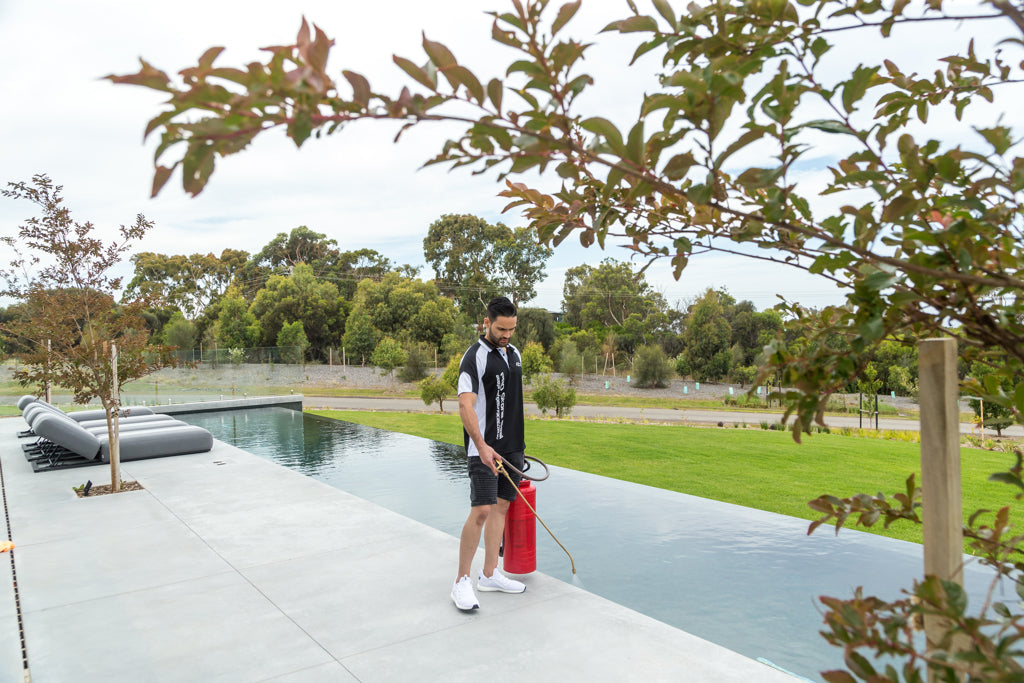
Use a microfibre applicator pad or a low pressure garden sprayer for large areas. Apply the first coat in one direction across the surface. Apply the second coat immediately in the perpendicular direction. This cross coat technique ensures even coverage across the full pore structure.

Temperature: 10-30 degrees C. Below 10 degrees C, the sealer does not cure correctly. Above 30 degrees C, it dries before it can penetrate. Check the surface temperature, not just the ambient temperature. Pavers in direct sun can be 10-15 degrees C warmer than air temperature.
Common application mistakes to avoid:
- Applying too much product in one coat. Two thin coats outperform one thick coat every time. Thick applications pool and dry as residue rather than penetrating.
- Sealing over a damp surface. If there is any moisture in the pore structure, the sealer cannot penetrate past it. Wait longer than you think is necessary.
- Applying in direct sun on hot pavers. The sealer dries before it can penetrate and leaves a surface residue.
- Leaving thick patches. If sealer pools in low spots, back roll it out. Excess sits on the surface rather than penetrating and dries as a cloudy residue.
- Keep traffic off for 1-2 hours. Light foot traffic is fine after that. Furniture back at 24 hours. Vehicles need 48 hours minimum.
Drying and curing times

Surface dry: 1-2 hours at standard temperatures. Light foot traffic is safe after that point.
Furniture and fixtures: 24 hours.
Vehicles, heavy loads, and pressure washing: 48 hours minimum.
Full chemical cure: 30 days. During the cure period, the sealer is still forming its bond with the substrate. Avoid pressure washing, harsh chemical cleaners, and abrasive contact during this time. The surface will perform well for general use. The 30 day guidance applies to stress-testing the seal.
Visible surface effects (such as water sheeting off the surface) reduce naturally over weeks and months of outdoor exposure. This is normal behaviour. The sealer's protection operates inside the material, not at the surface level.
When to reseal pavers
The chemistry behind Classic Sealer and Plus Sealer is built to hold under foot traffic, vehicle loads, and the UV exposure that destroys surface coatings. It bonds within the mineral structure of the paver rather than sitting on top, which is why it won't peel or flake when the surface takes a beating. What reduces slightly over time is the peak hydrophobic performance at the surface. A maintenance coat every 3 to 5 years restores it. No stripping. No starting over.
What changes over time is the paver surface itself. If pavers are wearing, being regularly cleaned with harsh chemicals, or in an extreme environment (heavy salt exposure, sustained pool chemical contact), the surface material gradually reduces. A maintenance coat every 3 to 5 years keeps performance at peak levels.
Visible surface water effects are not an indicator of when to reseal. Surface water effects reduce naturally over weeks and months after application. This is normal and doesn't mean protection has gone. For most surfaces, a maintenance coat every 3 to 5 years is the right interval. High traffic surfaces and pool or coastal environments may benefit from one closer to 3 years.
For ongoing care timing and what to look for, the maintenance guide covers resealing indicators, routine cleaning, and handling staining that has penetrated.
Frequently asked
Do I need to seal my pavers?
Most pavers in outdoor environments benefit from sealing. It's not always urgent. But the cost of not sealing shows up 3-5 years later as staining, surface degradation, and damage that's harder to reverse. If your pavers are around a pool, near the coast, or showing early staining, seal sooner rather than later.
What is the best type of paver sealer?
A penetrating, water based sealer is the right choice for most concrete and natural stone pavers. It works from inside the material, leaves no visible finish, and doesn't peel or yellow over time. Avoid film forming or wet look topical sealers on natural stone. They trap moisture and eventually fail.
How do you apply paver sealer?
Clean the surface thoroughly, let it dry completely, then apply two coats wet on wet in opposite directions using a low pressure sprayer or microfibre applicator. Don't let the first coat dry before applying the second. Light foot traffic is fine after 1-2 hours. Full cure takes 30 days.
How long does paver sealer last?
Classic Sealer and Plus Sealer bond with the mineral matrix below the surface. What diminishes slightly over time, with UV and heavy traffic, is the peak hydrophobic performance. A maintenance coat every 3 to 5 years brings that back to optimal. Not starting from scratch. Boosting a system that's largely intact.
How often should I reseal my pavers?
For most surfaces, a maintenance coat every 3 to 5 years is the right interval. High traffic surfaces and pool or coastal environments may need it closer to 3 years. If you're unsure, email us with a photo.
Can I seal pavers myself, or do I need a professional?
Most homeowners can seal their own pavers with the right product and preparation. The main factors are surface cleaning, drying time, and application consistency. Larger areas, pool surrounds, or complex environments benefit from professional application, but DIY is straightforward for standard outdoor paving.
Will paver sealer change the colour or appearance of my pavers?
A penetrating sealer is invisible. It doesn't change the colour, sheen, or texture of the paver. If the surface looks wet, glossy, or darker after sealing, a topical product was used. Penetrating sealers leave no visible trace.
How do I prepare pavers for sealing?
Clean with a pH neutral stone cleaner diluted 1:100 and let the surface dry completely. Treat visible algae or biological growth with sodium hypochlorite first, then neutralise. Apply in temperatures between 10-30 degrees C. Do not seal over staining or dirt. The sealer needs clean pores to penetrate correctly. Clean first.
Will sealing stop organic and tannin staining?
Sealing significantly slows how quickly organic material and tannins absorb into the surface, but it does not make the paver immune to staining. Leaf matter, garden runoff, and tannins can still stain if left sitting. The difference is that on a sealed surface they can be cleaned off. On an unsealed surface they often can't. Use a pH neutral stone cleaner for routine maintenance.
Still stuck? Get the right product

Not sure which sealer suits your surface, how much you'll need, or whether your surface needs cleaning first: email hello@justsealit.com.au with a photo and we'll tell you. Most questions take five minutes to answer. We'd rather you get it right the first time than buy twice.